The short answer
Buy a moka pot if you want strong, simple coffee without buying a machine and a grinder. Buy an espresso machine if you want real espresso and steamed milk - and budget for a grinder that reaches espresso fineness.
The pressure difference
Scroll the table sideways to see every column.
Quick picks
The answer first. Tap any row to jump to the full reasoning for that pick.
Prices shown are checked daily against the retailer, as of October 25, 2026. We never write a price into the text of a page.
| # | Product | Best for | Award | Price |
|---|---|---|---|---|
| 1 | 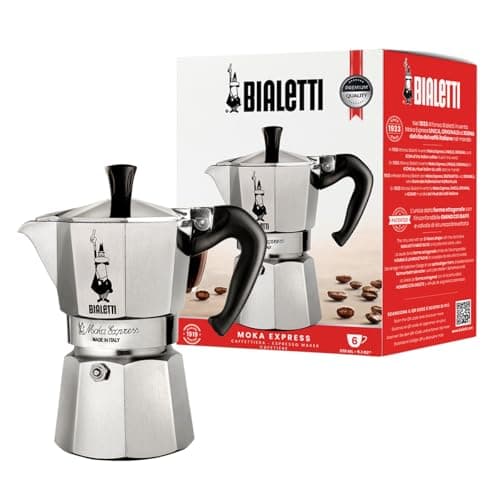 | Strong coffee without the cost of a machine and grinder | Choose this for strong coffee, simply | |
| 2 | 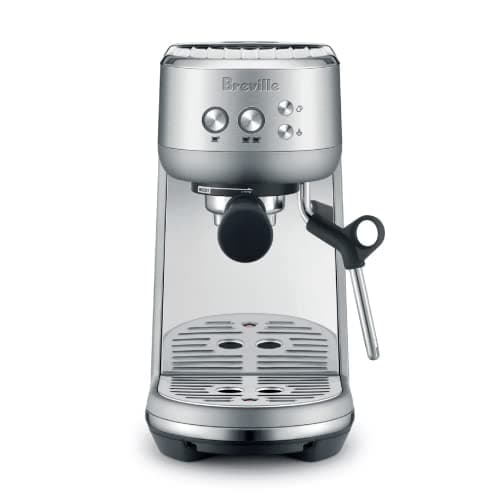 | Espresso, cappuccinos and flat whites | Choose this for real espresso |
1. Choose this for strong coffee, simply
Bialetti Moka Express
Budget tier · The octagonal aluminum stovetop pot that defines the category.
Stovetop, no electricity, and strong coffee that stands up to milk.
The Moka Express brews by steam pressure: water in the lower chamber is heated until pressure pushes it up through the coffee. The result is strong and heavy.
It is sold from 1 cup to 12 cup, and it must be brewed at its rated size, so choose the size you will use.
Cast aluminum works on gas and electric hobs, and needs an adapter plate for induction.
It needs a medium-fine grind rather than an espresso grind, so a modest grinder - or even good pre-ground coffee - works.
Specification
- Material
- Cast aluminum (a stainless line is also sold)
- Sizes
- 1 to 12 cup
- Cooktops
- Gas and electric; needs an adapter plate for induction
What it does well
- Sizes from 1 to 12 cup - by far the widest range in the category
- No paper, no capsules, no electronics, and almost nothing to break
- Parts and gaskets are stocked everywhere and cost very little
Where it gives ground
- Aluminum will not work on an induction cooktop without a separate adapter
- You must fill the basket and boiler properly, so a big pot cannot make a small brew
- Produces little or no crema - it is not espresso
Skip it if
Skip it if you want real espresso or steamed milk. It makes neither - see moka pots.
2. Choose this for real espresso
Breville Bambino
Entry tier · A compact 54 mm espresso machine with a manual steam wand and no grinder.
9 bar extraction and a steam wand - if you pair it with a proper grinder.
The Bambino is a pump machine: low-pressure pre-infusion, then 9 bar, from a ThermoJet heater ready in about three seconds, with a 54 mm portafilter and an 18 g dose.
Nine bar is what defines espresso. It emulsifies oils into crema and produces the texture a moka pot cannot.
Its manual steam wand textures milk properly, which a moka pot cannot do at all.
It needs a grinder that reaches espresso fineness, which is a second purchase a moka pot does not require - see is the Bambino worth it.
Specification
- Portafilter
- 54 mm, 18 g dose
- Heating
- ThermoJet, ready in 3 seconds
- Extraction
- Low-pressure pre-infusion, then 9 bar
- Footprint
- 11.9 x 6.1 x 13.5 in
- Grinder
- None - buy separately
What it does well
- Three-second heat-up means it is genuinely usable on a weekday
- The narrowest footprint of any machine here
- Real steam wand you control yourself
Where it gives ground
- No grinder, so the real budget is machine plus grinder
- Manual milk texturing has a learning curve
- Small tank means frequent refills if you pull several drinks
Skip it if
Skip it if you will not buy a capable grinder. Without one, a moka pot will serve you better.
What that means in the cup
Moka coffee is strong and heavy, closer to a concentrated brew than to espresso. Espresso's 9 bar extraction produces crema and a thicker texture, and it is the base for proper milk drinks.
Neither is better in the abstract. Many people who buy an espresso machine hoping for strong coffee would have been happier - and much better off - with a moka pot.
The real cost difference
A moka pot is a single inexpensive object. An espresso setup is a machine plus a capable grinder, and usually a scale, which is a considerably larger commitment in money and counter space.