
The short answer
Buy the AeroPress for a clean, forgiving cup that travels and cleans in seconds. Buy a moka pot for strong, heavy stovetop coffee that stands up to milk and scales to a household. Neither makes espresso.
Two different processes
Scroll the table sideways to see every column.
Quick picks
The answer first. Tap any row to jump to the full reasoning for that pick.
Prices shown are checked daily against the retailer, as of October 25, 2026. We never write a price into the text of a page.
| # | Product | Best for | Award | Price |
|---|---|---|---|---|
| 1 | 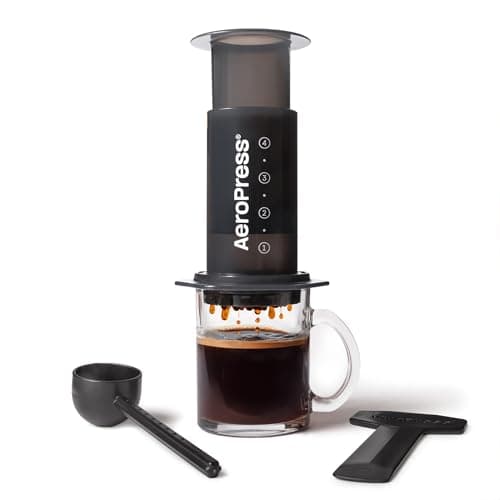 | One to three cups, cleanly, in a couple of minutes | Choose this for a clean cup | |
| 2 | 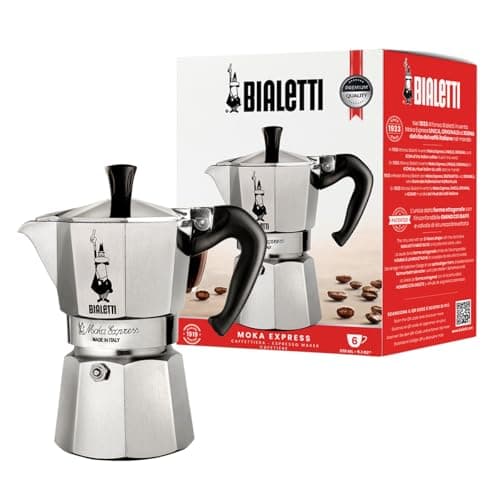 | Strong coffee for one or a household, with milk | Choose this for strength |
1. Choose this for a clean cup
AeroPress Original
Manual tier · A hand-pressed immersion brewer using a paper or metal filter.
Clean, fast and forgiving - and it travels.
The AeroPress brews up to 10 oz, 1 to 3 cups, by immersion: the grounds steep in the water, then you press it through a paper or metal mesh filter. It weighs about 6.5 oz.
Pressing through paper gives a clean, low-sediment cup, and immersion is forgiving - every particle gets the same contact time, so an inconsistent grinder matters less than it does in pour-over.
It brews in under two minutes and cleans in seconds: the puck ejects into the bin and the chamber wipes clean.
It makes a concentrate with a fine grind and little water, but it is not espresso and does not produce espresso's crema.
Specification
- Capacity
- 10 oz, 1-3 cups
- Weight
- About 6.5 oz
- Filters
- Paper or metal mesh
What it does well
- Almost impossible to brew a bad cup with
- Forgiving of grinder inconsistency in a way pour-over is not
- Cleans up in about ten seconds
Where it gives ground
- Not espresso, whatever the marketing around it says
- One or two cups at a time
- Plunging takes real hand pressure
Skip it if
Skip it if you want a heavy, intense stovetop cup for several people. The moka pot does that; the AeroPress makes one to three cups at a time.
2. Choose this for strength
Bialetti Moka Express
Budget tier · The octagonal aluminum stovetop pot that defines the category.
Strong, heavy stovetop coffee in sizes from 1 to 12 cups.
The Moka Express brews by steam pressure: water in the lower chamber is heated until pressure pushes it up through the coffee into the top chamber. The result is strong and heavy.
It is sold from 1 cup to 12 cup - but it has to be brewed at its rated size, so choose the size you will actually use.
Cast aluminum heats quickly on gas and electric hobs; it needs an adapter plate for induction.
The things to manage are heat and timing. On high heat it scorches the coffee, so medium heat and taking it off as it sputters are the technique.
Specification
- Material
- Cast aluminum (a stainless line is also sold)
- Sizes
- 1 to 12 cup
- Cooktops
- Gas and electric; needs an adapter plate for induction
What it does well
- Sizes from 1 to 12 cup - by far the widest range in the category
- No paper, no capsules, no electronics, and almost nothing to break
- Parts and gaskets are stocked everywhere and cost very little
Where it gives ground
- Aluminum will not work on an induction cooktop without a separate adapter
- You must fill the basket and boiler properly, so a big pot cannot make a small brew
- Produces little or no crema - it is not espresso
Skip it if
Skip it if you want a clean, light cup, or have an induction hob and no adapter - see moka pots.
Neither is espresso
Both are sold as espresso alternatives, and both fall short of the definition. Espresso is defined by roughly 9 bar of pressure; a moka pot works at around 1 to 2 bar of steam pressure, and an AeroPress is pressed by hand.
That is not a criticism of either. Both make excellent coffee in their own right - just not espresso. If espresso is the goal, a manual lever is the cheapest device that genuinely makes it.
Cleanup and travel
The AeroPress wins clearly on both. The puck ejects, the parts are plastic and effectively unbreakable, and it fits in a bag. It needs only hot water from any source.
A moka pot needs a hob or stove and a few minutes to cool before it can be opened safely, and its gasket and filter plate want a rinse rather than a scrub. On a camp stove it is excellent; in a hotel room it is useless - see camping coffee makers.