The short answer
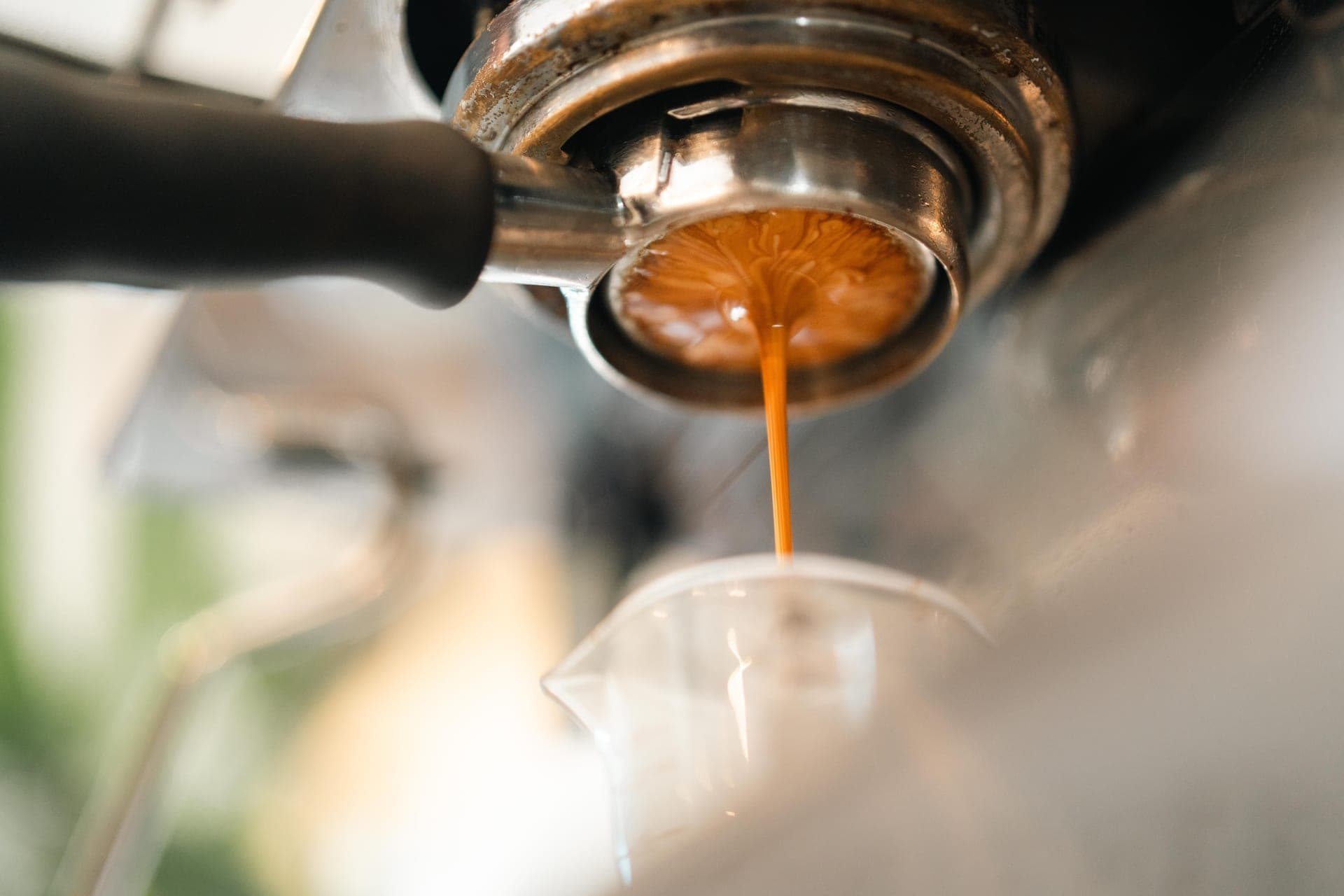
An americano is espresso with hot water added afterwards. Unlike a lungo, which runs extra water through the coffee, the espresso is extracted normally and then diluted - so the drink is milder without picking up the bitterness that a longer extraction brings.
Side by side
Scroll the table sideways to see every column.
That middle column is the point. The americano is the only one of the three that gets larger without extracting further, which is why it is the correct answer for anyone wanting a longer, milder espresso-based drink.
Why dilution beats extension
Extraction is sequential: acids dissolve first, then sugars, then the bitter compounds. A well-pulled espresso stops before that last group dominates.
A lungo keeps going, so the extra liquid carries a disproportionate share of the bitter fraction. An americano stops at the same point as an espresso and adds neutral water, so the balance of the shot is preserved and simply spread across more volume.
That is the whole mechanism, and it is the reason cafes make americanos rather than lungos when someone asks for a black coffee.
Quick picks
The answer first. Tap any row to jump to the full reasoning for that pick.
Prices shown are checked daily against the retailer, as of October 23, 2026. We never write a price into the text of a page.
| # | Product | Best for | Award | Price |
|---|---|---|---|---|
| 1 | 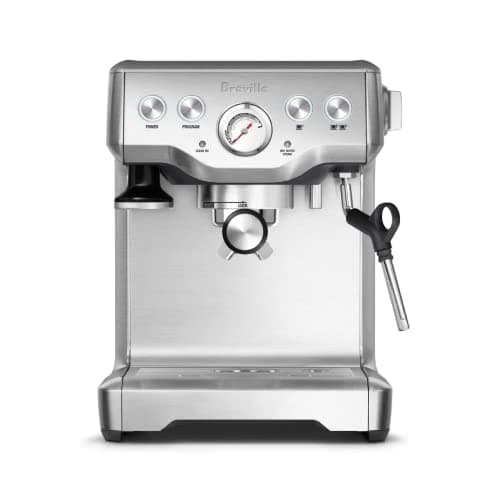 | Households drinking long black coffee daily | A machine with a tank that suits it | |
| 2 | 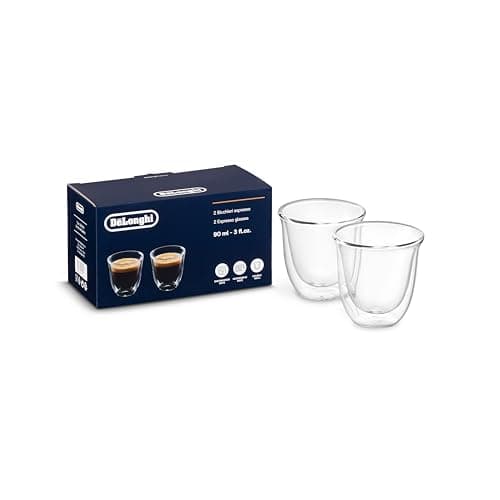 | Straight espresso, not americanos | The wrong cup for this drink | |
| 3 | 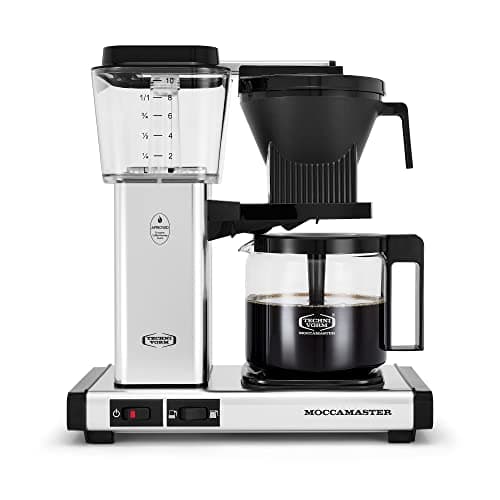 | Anyone making four americanos a morning | If you drink several a day, consider this instead |
1. A machine with a tank that suits it
Breville Infuser
Mid tier · A grinder-less 54 mm machine with PID and a larger tank than the Bambino line.
Americanos use a lot of water, and a 1.8 L tank stops that being a chore.
An americano uses several times the water of a straight espresso, which makes tank capacity a practical rather than theoretical concern.
The Infuser publishes a 61 fl oz / 1.8 L removable water tank with a replaceable filter, a 54 mm stainless portafilter, a 1650 W thermocoil with electronic PID and low-pressure pre-infusion.
PID temperature control matters here because an americano is a long drink where the espresso is doing all the flavor work - a badly extracted shot has nowhere to hide once diluted.
Auto-purge resets brew temperature after steaming, which keeps consecutive drinks consistent.
Specification
- Portafilter
- 54 mm stainless, commercial-style spouts
- Heating
- 1650 W thermocoil with electronic PID
- Water tank
- 61 fl oz / 1.8 L, removable, filtered
- Extraction
- Low-pressure pre-infusion
What it does well
- PID plus a big tank at a grinder-less price
- Auto-purge resets brew temperature after steaming
- Pairs well with a serious standalone grinder
Where it gives ground
- Slower to heat than the ThermoJet machines
- Older design; the Bambino line gets more attention
- Manual steam wand only
Skip it if
Skip it if you want a machine ready in seconds. A thermocoil takes real time to heat.
2. The wrong cup for this drink
De Longhi Double Wall Espresso Glasses
Entry tier · Double-walled borosilicate espresso glasses in the standard 3 oz demitasse size.
Included as a warning: an americano needs a bigger vessel than a demitasse.
These are excellent for what they are, and they are the wrong glass for this drink - which is worth saying because espresso glassware gets bought for americano drinkers regularly.
They hold 3 oz - the standard demitasse size - in double-walled borosilicate glass, sold in sets of two and six, and are dishwasher safe.
Three ounces is a double espresso with a little room. An americano is that plus four to six ounces of water, so it needs a vessel two or three times larger.
For a straight shot they are genuinely good: the double wall keeps a small volume hot and the glass shows the crema.
Specification
- Capacity
- 3 oz
- Material
- Borosilicate glass, double walled
- Sets
- Sold in twos and sixes
- Care
- Dishwasher safe
What it does well
- Double wall keeps a small shot hot far longer than a single-wall glass
- You can see the crema, which a ceramic cup hides
- No condensation and the outside stays touchable
Where it gives ground
- Glass is thin and these do break
- Double-walled glass is harder to warm through before pulling a shot
- 3 oz is right for espresso and too small for a cortado
Skip it if
Skip them if americano is your drink. Buy a 6 to 8 oz cup instead, and keep these for straight shots.
3. If you drink several a day, consider this instead
Technivorm Moccamaster KBGV Select
Upper-mid tier · A hand-assembled drip brewer certified by the SCA, with a copper heating element.
An americano is black coffee made the hard way. Sometimes filter is the better answer.
Making four americanos means pulling four shots and diluting each one. Making four cups of filter coffee means pressing one switch.
The Moccamaster publishes a copper heating element bringing water to 196 to 205 F and holding it there, brewing a full 1.25 L / 40 oz / 10-cup carafe in four to six minutes, with SCA Certified Home Brewer status.
The drinks are not identical - an americano retains some of espresso's body and a trace of crema, and filter coffee has more clarity - but they occupy similar territory.
If you are drinking long black coffee in volume, a certified brewer is the more sensible tool and it frees the espresso machine for milk drinks.
Specification
- Certification
- SCA Certified Home Brewer
- Brew temperature
- 196-205 F
- Capacity
- 1.25 L / 40 oz / 10 cups
- Brew time
- 4-6 minutes for a full carafe
- Build
- Hand-assembled in the Netherlands, metal and glass
What it does well
- Reaches and holds real brewing temperature, which most drip machines do not
- Every part is replaceable - these get repaired, not landfilled
- Half-carafe setting adjusts saturation time rather than just volume
Where it gives ground
- No timer, no programming, no app
- Tall enough to be awkward under a low cabinet
- Costs more than several espresso machines
Skip it if
Skip it if you specifically like what espresso brings to an americano. That is a real preference and filter does not replicate it.
The ratio
A common starting point is one part espresso to three or four parts water - a double shot of about 36 g with 110 to 150 g of hot water. There is no fixed standard, and personal preference varies more here than in almost any other coffee drink.
Start at 1:3, taste, and adjust. If it tastes thin, use less water rather than pulling a longer shot.
Does pour order matter?
It changes the crema and the temperature, and it does not change the extraction.
- Espresso into water preserves more crema on top, because the shot lands on the surface rather than being poured through.
- Water into espresso breaks the crema up and mixes the drink more thoroughly.
- Temperature favors pouring the water first, because the water cools less than the shot would while waiting.
Neither is wrong. If you care about the appearance, pour the shot last.
Long black and americano
The two names describe the same components in different orders. A long black is conventionally espresso poured onto hot water; an americano is conventionally water poured onto espresso. In practice the terms are used loosely and the drinks are close to identical.
The honest alternative
If you drink several americanos a day, it is worth asking whether you want espresso at all. Filter coffee occupies similar territory - black, long, no milk - and a certified drip machine makes eight cups unattended rather than four shots pulled individually.
An americano does keep some of espresso's body and a trace of crema, which filter coffee does not. If that is what you like, the extra work is the point.