The short answer
Buy the Sette 270 and use a scale you already own. The 270Wi is the same grinder - same 40 mm conical burrs, same 270 steps, same 3.5 to 5.5 g per second - with an Acaia scale built into the base that doses to 0.1 g and stores three presets. That is genuinely useful if you pull several shots in a row or are tired of watching a scale, but it costs around $200 for convenience rather than capability. If you do not already own a 0.1 g espresso scale, buy one with the 270 and you are still ahead; if you would rather spend that money on grinding hardware, a 64 mm flat burr grinder is the alternative at the same total.
What grind by weight actually means
Most grinders dose by time. You set a duration, the grinder runs for it, and you hope the output is the dose you wanted. Grind by weight puts a scale in the grinder and stops it when the target weight has actually been delivered.
The reason that is more than a gimmick is that grind output drifts. Flow rate changes with the grind setting, with bean density, with roast level and with how old the beans are. Dose by time and your 18 g quietly becomes 17.4 g when you go finer, which shows up in the cup as a shot that runs differently for no apparent reason.
So the feature removes a real variable. The question is only whether it removes one you were not already removing with a scale on the drip tray.
Scroll the table sideways to see every column.
Quick picks
The answer first. Tap any row to jump to the full reasoning for that pick.
| # | Product | Best for | Award | Price |
|---|---|---|---|---|
| 1 | 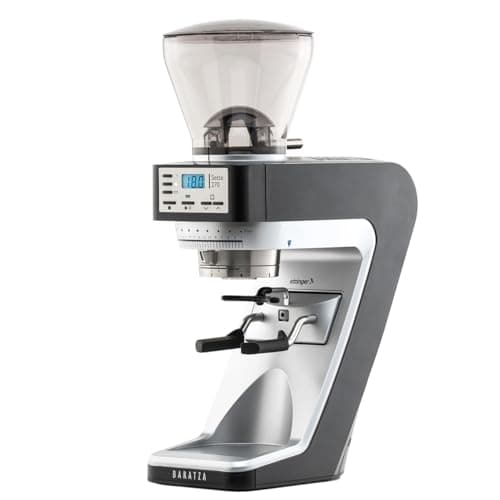 | Anyone who already has a 0.1 g scale on the counter | Top pick for most buyers | |
| 2 | 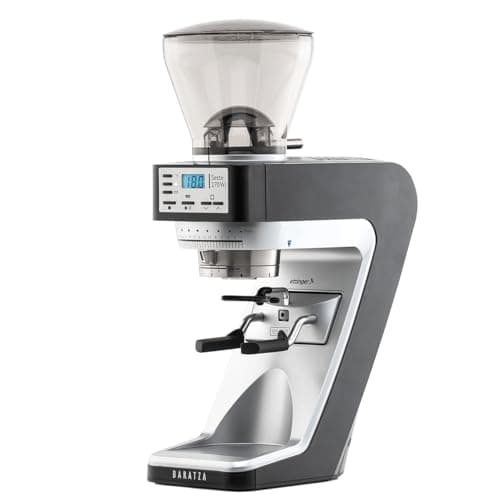 | Repeat doses, several drinks in a row, and anyone tired of watching a scale | Best if you want the dose handled for you | |
| 3 | 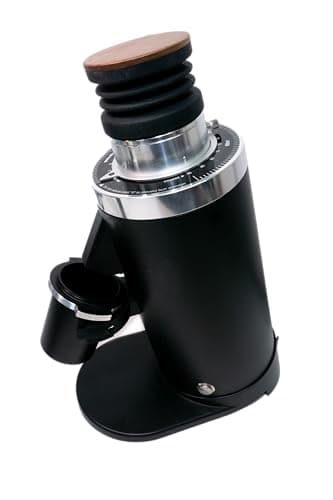 | Light roasts and clarity, if you will weigh the dose yourself | The alternative at the 270Wi's price |
1. Top pick for most buyers
Baratza Sette 270
Upper-mid tier · A straight-through espresso grinder with 270 adjustment steps and very low retention.
The same burrs, the same 270 steps, and a scale you probably already own does the rest.
The Sette 270 is the grinder both of these machines are. 40 mm conical burrs made in Liechtenstein, 270 adjustment steps arranged as 30 macro by 9 micro, 290 W, a 10 oz hopper and an output of 3.5 to 5.5 g per second.
Its defining feature is the straight-through path. Coffee falls from the burrs more or less directly into the basket rather than traveling through a chute, so almost nothing is retained between doses. That is what makes it a genuine single-dosing tool and why it is still recommended years after release.
270 steps is real resolution - enough to chase a shot properly rather than jumping past the setting you wanted.
Dosing without the built-in scale means putting a scale under the portafilter and either grinding to weight by watching it, or grinding by time and checking. Both work, and espresso people are already weighing the dose anyway.
It is loud - genuinely loud rather than grinder-loud - the macro-and-micro system takes time to think in, and its filter range is a compromise because this is an espresso tool. The scale is the one thing it does not have.
Specification
- Burrs
- 40 mm conical, made in Liechtenstein
- Settings
- 270 steps (30 macro x 9 micro)
- Output
- 3.5-5.5 g per second
- Power
- 290 W
- Hopper
- 10 oz
What it does well
- Straight-through path means almost nothing is left behind between doses
- 270 steps is enough resolution to chase a shot properly
- Very fast for a home grinder
Where it gives ground
- Loud - genuinely loud, not grinder-loud
- The macro and micro system takes a while to think in
- Filter range is a compromise; this is an espresso tool
Skip it if
Skip it if you have no scale and do not want one, or if hands-free repeat dosing is specifically what you are buying.
2. Best if you want the dose handled for you
Baratza Sette 270Wi
Prosumer tier · The Sette 270 with a built-in Acaia scale that grinds to a target weight instead of a time.
An Acaia scale built in, grinding to 0.1 g with three presets, straight into the portafilter.
The 270Wi is the 270 with a scale built into the base. It uses Acaia weighing technology, holds the dose to 0.1 g, and stores three adjustable weight presets.
The difference in use is that you stop dosing by time and start dosing by weight. Set 18 g, press the preset, and the grinder stops when 18 g has actually landed - rather than when a timer thinks 18 g should have landed.
That matters because grind output is not constant. A finer setting flows more slowly, beans age and change density, and a different bean runs at a different rate. A timer calibrated on Monday is wrong by Friday; a scale is not.
Baratza states the grinder filters out unpredicted vibrations - door closures, footsteps, an unsteady surface - which is the engineering that makes a scale under a running grinder trustworthy at all.
It costs around $200 more than the 270 for the same burrs, the same steps and the same output rate. It is just as loud, and a scale you already own will weigh the same dose for nothing - the honest case against it is that this is convenience, not capability.
Specification
- Burrs
- 40 mm conical
- Grind settings
- Up to 270
- Dosing
- Grind by weight, accurate to 0.1 g
- Presets
- Three adjustable weight presets
- Output rate
- 3.5 to 5.5 g per second, by grind setting
- Hopper
- 10 oz
What it does well
- Weighs the dose as it grinds, straight into the portafilter
- Vibration filtering keeps the scale honest on a real kitchen counter
- Very low retention, like the rest of the Sette line
Where it gives ground
- Costs about $200 more than the same grinder without the scale
- The Sette line is loud, and the scale does not change that
- A separate scale you already own does the same job for less
Skip it if
Skip it if you already own a 0.1 g scale and do not mind using it, or if you single-dose by weighing beans before grinding - in which case the output scale is redundant.
3. The alternative at the 270Wi's price
DF64 Gen 2
Upper-mid tier · The 64 mm flat-burr single-dose grinder that made the format mainstream at home.
Spend the scale money on 64 mm flat burrs instead.
This is the comparison the 270Wi has to survive, and the arithmetic is not kind to it. Check the buy buttons on this page: the DF64 Gen 2 plus a good standalone espresso scale comes to less than the 270Wi alone, and that combination gets you a larger, different burr set.
The DF64 Gen 2 uses 64 mm flat burrs rather than 40 mm conicals. A larger flat burr set produces a narrower particle distribution, which generally reads as more clarity in the cup - most audible on light roasts and single origins.
It is also a single-dose design with very low retention, so it covers the workflow reason people like the Sette line.
What you give up is the Sette's speed and its straight-through simplicity, and you still have to weigh the dose with a separate scale.
The question is honest and worth sitting with: would you rather have a convenience feature on 40 mm conicals, or 64 mm flats and keep using the scale you own? Conical versus flat burrs is the background to that choice.
Specification
- Burrs
- 64 mm flat stainless; aftermarket sets available
- Adjustment
- Stepless
- Retention
- Under 0.1 g
- Motor
- 250 W, 1400 rpm at 110/120 V
- Hopper
- 50 g
- Size
- 13 cm W x 22.5 cm D x 30 cm H, 6.8 kg
What it does well
- 64 mm flats are the burr size the espresso world benchmarks against
- Burrs are swappable, so the grinder can be re-tuned rather than replaced
- Ionizer probes in the chute keep static manageable
Where it gives ground
- Heavy and tall for a home counter
- Stepless adjustment with no detents demands note-keeping
- Version numbering across sellers is genuinely confusing
Skip it if
Skip it if grind-by-weight convenience is specifically what you want, or if you value the Sette's very fast, very low-retention workflow over burr geometry.
When the built-in scale is worth the money
- You pull several shots in a row. Presets and hands-free dosing compound across drinks in a way they never do for one.
- Other people use the grinder. A preset is a far better interface to hand someone than a time and a scale.
- You switch beans often. Every new bag changes flow rate, which is exactly what dosing by time gets wrong.
- You do not own a 0.1 g scale. The gap narrows considerably once you price the scale you would have to buy.
When it is not
- You single-dose by weighing beans first. If you weigh 18 g of beans into the grinder, weighing the output again is redundant.
- You already have an espresso scale on the drip tray. It does the same job, and you will be using it for the yield anyway.
- You make one drink a day. The convenience has very little to compound against.
- You would rather have bigger burrs. A 64 mm flat burr grinder plus a standalone scale currently totals less than the 270Wi does on its own.
What neither version fixes
Both are loud. The Sette line's noise is its most-reported characteristic, and the scale does nothing about it. If a quiet grinder matters, the quiet grinder roundup is the page to read instead.
Both are espresso tools with a compromised filter range, and both use 40 mm conical burrs. If what you actually want is more clarity in the cup rather than a tidier workflow, burr geometry is the lever and the scale is not - the burr shape question covers why.
And both leave the same decision about single dosing versus hopper feeding, which is a workflow question rather than a quality one. Single dose versus hopper grinders is the honest version of that trade.