The short answer
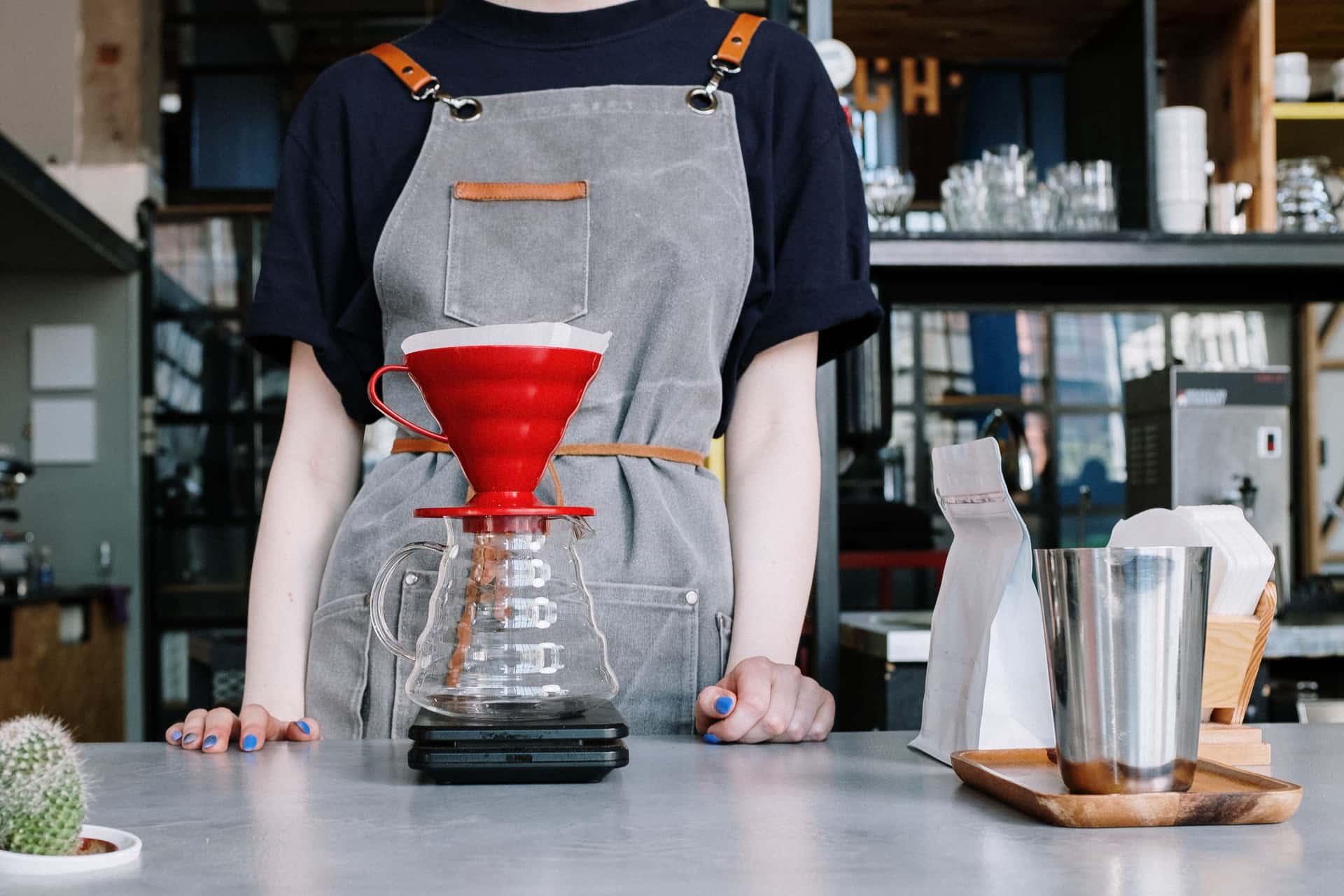
Choose the AeroPress if you have an entry grinder, no gooseneck kettle, or two minutes. Choose the V60 if you have a good grinder, a gooseneck kettle, and want to keep improving. The AeroPress is the more forgiving brewer; the V60 is the more capable one.
The mechanism, briefly
An AeroPress is immersion: coffee sits in a fixed volume of water for a set time, then you separate them. Every particle - fine or coarse - gets the same contact time.
A V60 is percolation: water flows through the coffee bed continuously. Contact time depends on where a particle is in the bed and how the water finds its way through, which is why an uneven bed produces uneven extraction.
That single mechanical difference explains everything else about how these two behave.
Side by side
Scroll the table sideways to see every column.
Quick picks
The answer first. Tap any row to jump to the full reasoning for that pick.
Prices shown are checked daily against the retailer, as of October 23, 2026. We never write a price into the text of a page.
| # | Product | Best for | Award | Price |
|---|---|---|---|---|
| 1 | 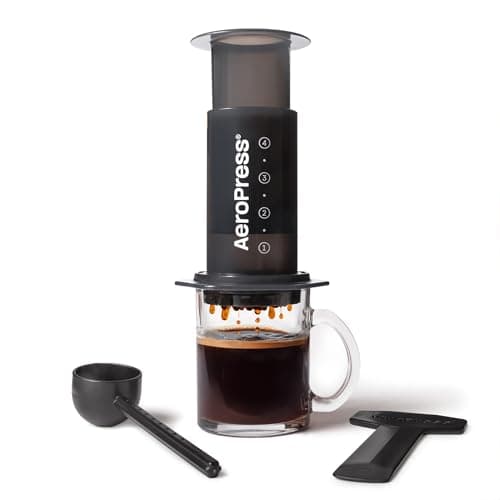 | Entry grinders, no gooseneck kettle, and speed | Choose this if your grinder is modest | |
| 2 | 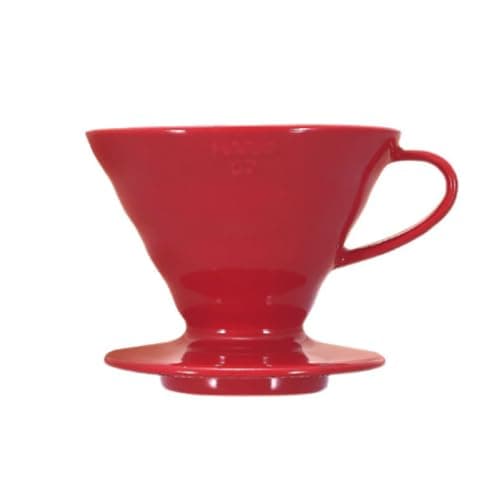 | A good grinder, a gooseneck kettle, and an interest in technique | Choose this if you have the grinder |
1. Choose this if your grinder is modest
AeroPress Original
Manual tier · A hand-pressed immersion brewer using a paper or metal filter.
Immersion means an uneven grind produces an average cup rather than a bad one.
The AeroPress brews up to 10 oz, makes 1 to 3 cups and weighs about 6.5 oz. Coffee steeps in the chamber and is pressed through a filter by hand.
The reason to choose it over a V60 is almost never taste preference - it is equipment. Immersion gives every particle the same contact time, so a grinder producing a wide spread of particle sizes yields a slightly muddled cup rather than a channeled, sour-and-bitter one.
It also needs no gooseneck kettle, because there is no pour to control. Any kettle works.
Total time is under two minutes and cleanup is about ten seconds. In practice that is what makes it the brewer people actually use on weekday mornings.
Specification
- Capacity
- 10 oz, 1-3 cups
- Weight
- About 6.5 oz
- Filters
- Paper or metal mesh
What it does well
- Almost impossible to brew a bad cup with
- Forgiving of grinder inconsistency in a way pour-over is not
- Cleans up in about ten seconds
Where it gives ground
- Not espresso, whatever the marketing around it says
- One or two cups at a time
- Plunging takes real hand pressure
Skip it if
Skip it if you own a good grinder and want the clarity percolation gives. The AeroPress has a lower ceiling and it is a real ceiling.
2. Choose this if you have the grinder
Hario V60 Ceramic Dripper 02
Manual tier · The 60-degree cone dripper that defines modern pour-over.
The highest ceiling in home brewing, available only if the equipment supports it.
The V60 is a 60-degree cone with inner spiral ribs and a single large hole, in Arita-yaki ceramic, size 02 at W140 x D120 x H102 mm, brewing 1 to 4 cups.
Because the hole imposes almost no restriction, flow is decided by your grind and your pour. That is what gives it a higher ceiling than any immersion brewer - and what makes it dependent on equipment.
The spiral ribs hold the paper off the wall so air escapes and the bed expands during the bloom.
It needs a gooseneck kettle and a grinder that does not produce a lot of fines. With both, it will show you more of what a coffee is than an AeroPress can.
Specification
- Geometry
- 60-degree cone, single large hole
- Ribs
- Inner spiral ribs
- Capacity
- 1-4 cups
- Material
- Arita-yaki ceramic, made in Japan
- Size
- W140 x D120 x H102 mm
What it does well
- The single large hole hands flow control to you rather than the dripper
- Ceramic holds heat far better than plastic
- More published recipes exist for the V60 than for any other brewer
Where it gives ground
- Unforgiving: an uneven pour shows up in the cup
- Ceramic needs preheating and can chip
- Needs a gooseneck kettle to be worth owning
Skip it if
Skip it if you do not own a gooseneck kettle. Without flow control the single large hole works against you.
Why your grinder should decide this
A grinder producing a wide spread of particle sizes is the normal condition of an entry-level setup. In a V60, the fines migrate to the bottom of the bed, restrict flow there, and force water to find easier paths - which is channeling. The result is coffee that is simultaneously over-extracted where the water lingered and under-extracted where it did not, which tastes both bitter and sour.
In an AeroPress, the same grind simply steeps. The fines over-extract slightly and the boulders under-extract slightly, and the result is an averaged, entirely drinkable cup.
So the honest recommendation is: if your pour-over tastes muddy and you own a modest grinder, the problem is not your technique and the answer is not a better dripper. Either buy a better grinder or brew immersion.
What the V60 gives you that nothing else does
Deliberate control. Because flow is set by your pour, you can change the outcome on purpose - pour faster for a lighter cup, slower for a deeper one, pour in the center or at the edges to change how the bed behaves.
That is genuinely enjoyable if you want it and genuinely tedious if you do not. Nobody should feel obliged to enjoy the V60.
You can own both
These are among the cheapest pieces of equipment in coffee, and they serve different mornings. Many people brew an AeroPress on a weekday and a V60 at the weekend, and that is a completely reasonable way to live. The manual brewer roundup covers how they fit alongside each other.