The short answer
Buy the COSORI if you follow recipes: its five presets include 195 and 205 F, the two temperatures most coffee recipes name, and every water-contact surface is stainless. Buy the Stagg EKG if you want any temperature between 135 and 212 F, a stopwatch on the kettle, and the most controllable spout in common use - and you are willing to pay grinder money for a kettle.
Does exact temperature matter?
It matters less than the internet suggests and more than nothing. Most filter recipes land between 195 and 205 F, and both kettles hit both ends of that band - the COSORI as presets, the Stagg as any point on a dial.
Where a free dial earns its money is light roasts, which often want water close to boiling, and tea, where 170 or 180 F is a different drink from 212. If you brew both coffee and tea seriously, the dial is the feature.
For a single daily V60 on a medium roast, a preset at 205 F is the whole requirement - see how to brew pour-over coffee.
The spout is the real difference
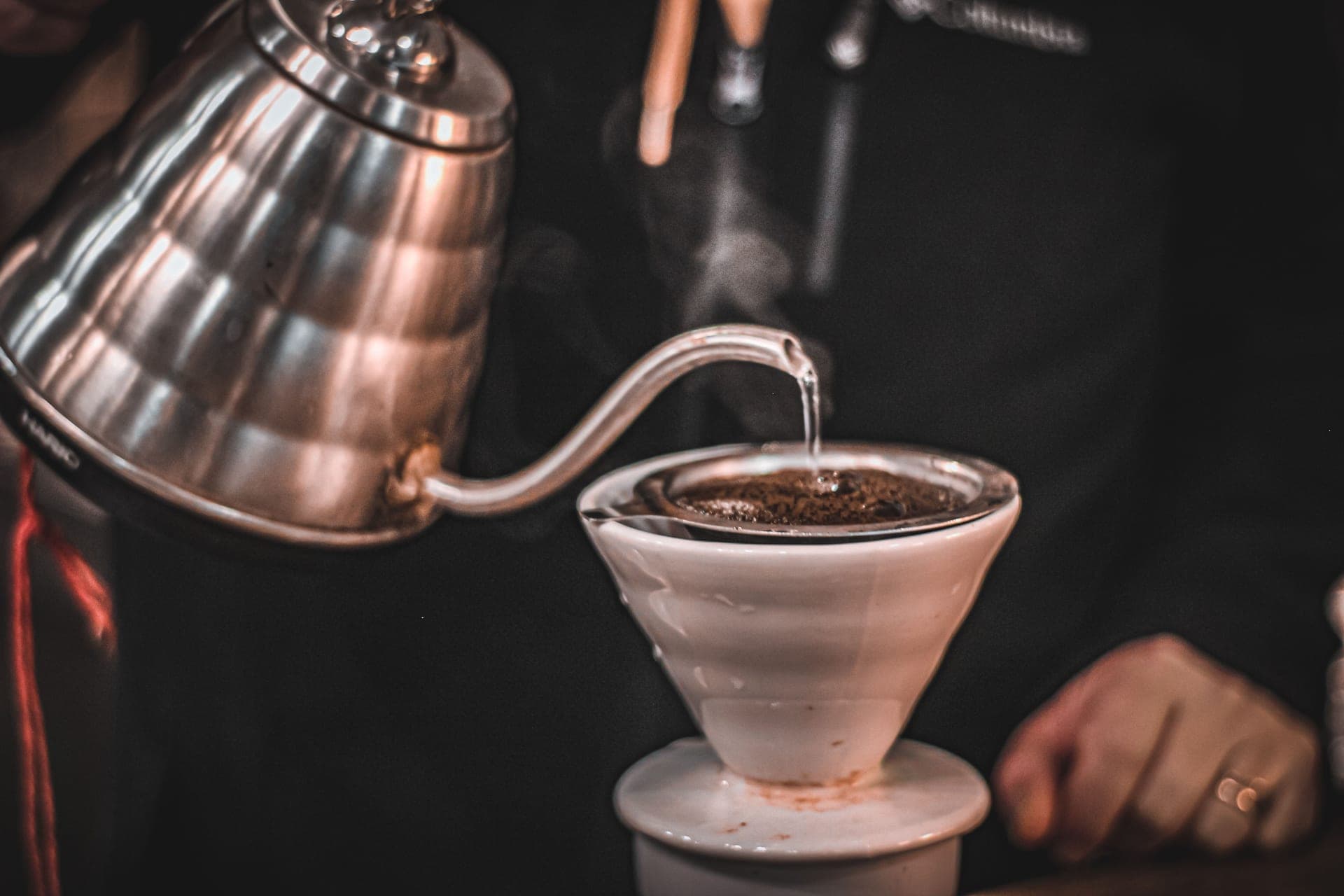
A gooseneck exists to give you a slow, steady, placeable stream. How well it does that is a function of spout geometry and how the kettle balances as it empties, which is exactly where the Stagg is better than everything near it.
That matters most when your technique is the variable: a deliberate center pour, a tight spiral, a controlled bloom. If you pour briskly and use an immersion-style recipe, the advantage shrinks to almost nothing.
Quick picks
The answer first. Tap any row to jump to the full reasoning for that pick.
| # | Product | Best for | Award | Price |
|---|---|---|---|---|
| 1 | 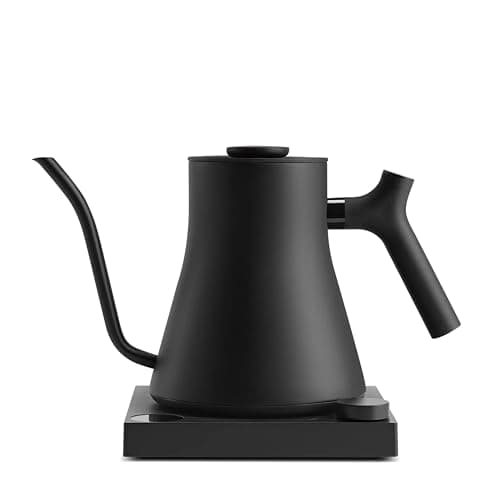 | Pour-over where technique matters | If the pour is the point | |
| 2 | 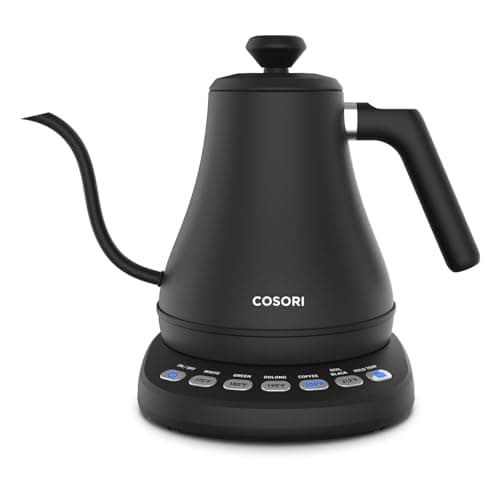 | Pour-over on a sensible budget | If you want most of it for less |
1. If the pour is the point
Fellow Stagg EKG
Upper-mid tier · A variable-temperature electric gooseneck kettle with a hold function.
135-212 F variable temperature, hold up to 60 minutes, and a spout that does what you ask.
The Stagg EKG holds any temperature from 135 to 212 F, with hold settings of 15, 30, 45 or 60 minutes and a 1200 W element behind them.
Its spout is the reason people pay for it: the balance and taper give the most controllable flow of any kettle in common use, which is the difference between pouring where you intend and pouring where the kettle goes.
A built-in stopwatch means bloom timing happens on the kettle rather than on your phone - small, and used every single brew.
Capacity is 0.9 L, with a 0.6 L version available. That is one or two brews rather than coffee and tea in the same session.
It costs more than some grinders, and the counterweighted handle is genuinely polarizing - some owners love it, some never settle with it.
Specification
- Capacity
- 0.9 L (0.6 L version available)
- Temperature
- 135-212 F variable
- Hold
- 15, 30, 45 or 60 minutes
- Power
- 1200 W
What it does well
- The spout is the best-balanced pour of any kettle in common use
- Hold mode means the second pour is at the same temperature as the first
- Built-in stopwatch for bloom timing
Where it gives ground
- Costs more than some grinders
- 0.9 L is small for making coffee and tea in the same session
- The counterweighted handle is polarizing
Skip it if
Skip it if you brew with a recipe that says 205 F and you never deviate. Presets cover that for much less.
2. If you want most of it for less
COSORI Electric Gooseneck Kettle
Budget tier · A stainless gooseneck kettle with five temperature presets and a keep-warm hold.
Five presets covering the temperatures coffee and tea use, and no plastic in the water path.
The COSORI gives five presets - 170, 180, 195, 205 and 212 F - which between them cover every common coffee and tea recipe.
Every water-contact surface is food-grade stainless: kettle, lid and spout. On a kettle at this price that is not a given, and it is the specification worth checking before you buy anything cheaper.
Its 1200 W element boils a full 0.8 L in three to five minutes, and it will hold temperature for up to 60 minutes like the Stagg.
Spout control is good rather than Stagg-good. For a V60 at a moderate pour rate the difference is small; for a slow, deliberate spiral it is noticeable.
There is no brew timer, and you pick from presets rather than dialing a free temperature.
Specification
- Capacity
- 0.8 L
- Presets
- 170 / 180 / 195 / 205 / 212 F
- Hold
- Up to 60 minutes
- Power
- 1200 W; boils full in 3-5 minutes
- Contact surfaces
- Food-grade stainless kettle, lid and spout
What it does well
- Every water-contact surface is stainless, not plastic
- Presets cover the temperatures coffee and tea actually use
- A fraction of the Stagg outlay for most of the function
Where it gives ground
- Presets rather than a free temperature dial
- Spout control is good, not Stagg-good
- No brew timer
Skip it if
Skip it if you chase single degrees. Between 195 and 205 F there is nothing in between here.
Side by side
Scroll the table sideways to see every column.
Hold mode is the underrated feature on both
Hold keeps the water at temperature instead of letting it fall while you weigh and grind. Without it, the second pour of a three-minute brew is meaningfully cooler than the first.
Both kettles do this for up to an hour, which is the single biggest practical reason to buy either over a stovetop gooseneck - see is a gooseneck kettle worth it.
Capacity and what it rules out
Both kettles are small: 0.9 L for the Stagg, 0.8 L for the COSORI. A single mug of pour-over takes roughly 300 to 350 g of water including the rinse, so either covers two brews and neither covers coffee plus a teapot.
That is a deliberate design choice rather than a shortcoming - a narrow gooseneck kettle pours better when it is not heavy. If you need volume, keep a normal kettle for tea and use the gooseneck for coffee.
Which one is yours
- You follow published recipes: the COSORI. Its presets are those recipes.
- You brew coffee and tea at different temperatures: the Stagg's dial.
- You are working on pour technique: the Stagg's spout.
- You want the money in a grinder instead: the COSORI, and spend the difference on burrs.
- You need more than 0.9 L: neither - look at a larger stovetop kettle.