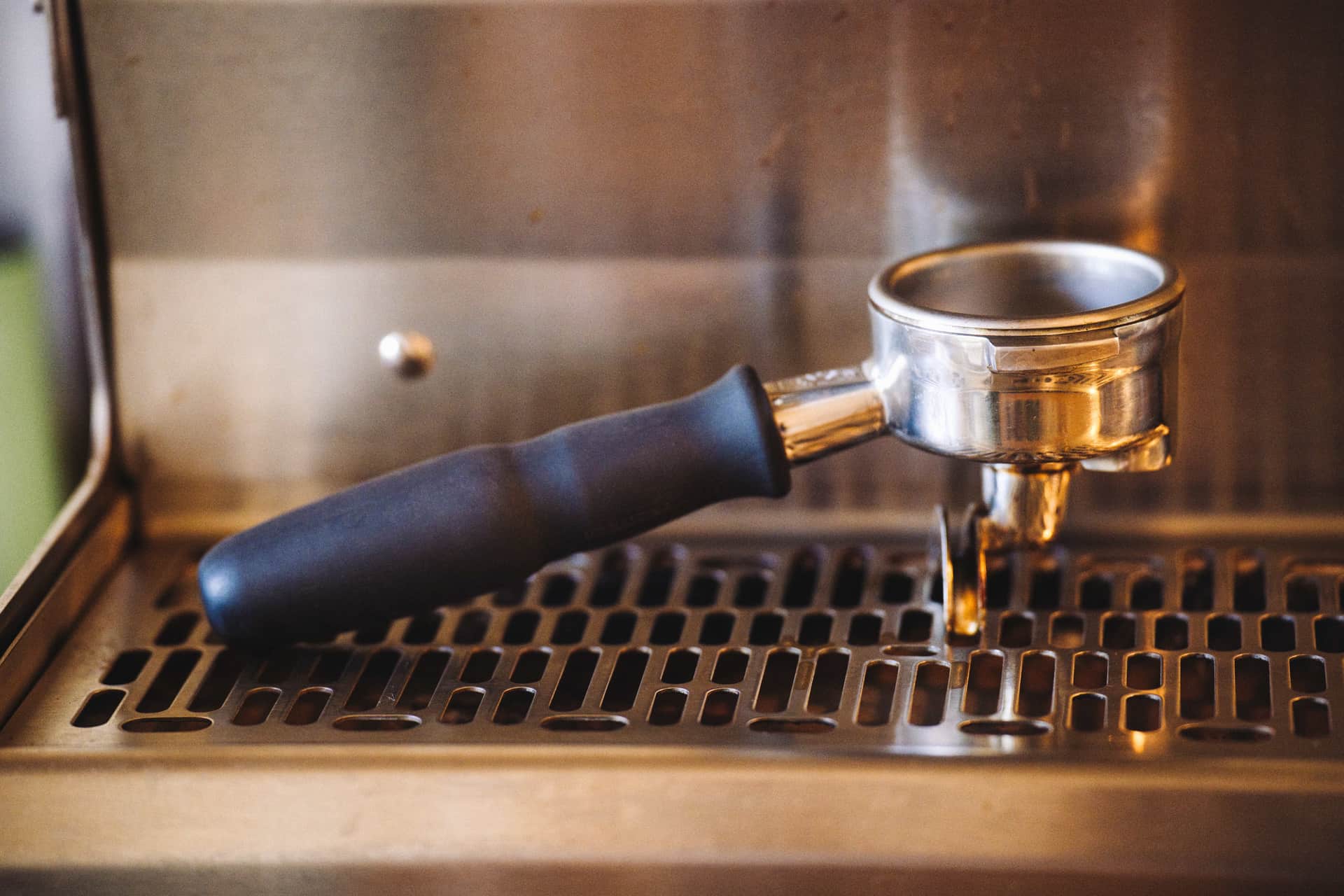
The short answer
A heat exchanger runs brew water through a tube inside a single steam boiler, so it brews and steams at the same time with one boiler, at roughly single-boiler size and cost. The catch is the cooling flush: water sitting in the brew path overheats while the machine idles, so you run a short flush - typically a few seconds - and wait about 30 to 45 seconds for the brew path to settle before pulling a shot. A dual boiler does the same job with a separate, independently controlled brew boiler, so there is no flush and brew temperature holds even under heavy steaming. You pay for that with money, size and twice the components. Note that HX machines are largely sold through specialty retailers rather than the program this site links to, so the buyable recommendations below are a dual boiler and the single boilers people genuinely cross-shop against it.
What a heat exchanger actually is
An HX machine has one boiler, and it is held at steam temperature - well above the temperature you want for espresso. A tube, usually copper, runs through that boiler. Fresh water travels through the tube on its way to the group and is heated by the surrounding boiler as it passes.
That is the whole trick. The boiler stays hot enough to make steam, and the water for your shot is heated in transit rather than being stored at brew temperature. One boiler does both jobs at once, which is what a single boiler cannot do.
On most prosumer HX machines the group is an E61, and the heavy brass acts as a thermal dampener - taking the edge off water that arrives slightly too hot, and adding heat to water that arrives slightly too cool. The architecture and the group are designed around each other, which is why the E61 group gets discussed as a package.
The cooling flush, which is the real difference
Here is the consequence of putting the brew path inside a steam boiler: while the machine sits idle, the water in that path keeps absorbing heat. It ends up hotter than brew temperature, sometimes well above it.
So before pulling a shot on an idle HX machine, you run a cooling flush - a short burst of water through the group to push the overheated water out and draw fresh water into the exchanger. Published guidance generally puts a typical flush at a few seconds, until the flow runs smoothly and stops sputtering, then allows roughly 30 to 45 seconds for the new water to come up to brew temperature.
None of that is difficult. It is a routine, and HX owners stop thinking about it within a week. But it is a routine, and how long the machine has been idle changes it - which is precisely the judgment a dual boiler removes.
Scroll the table sideways to see every column.
Quick picks
The answer first. Tap any row to jump to the full reasoning for that pick.
| # | Product | Best for | Award | Price |
|---|---|---|---|---|
| 1 | 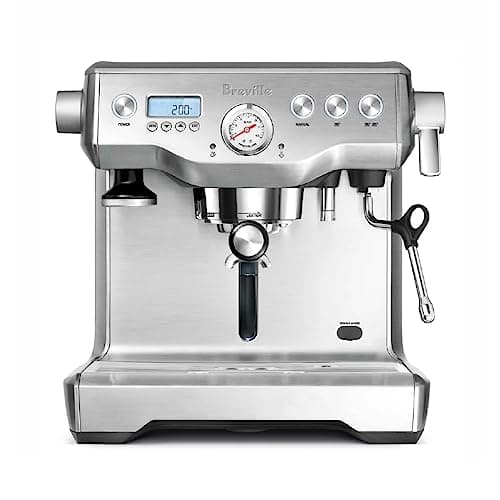 | Milk drinks back to back, with temperature you do not have to manage | The dual boiler you can actually buy | |
| 2 | 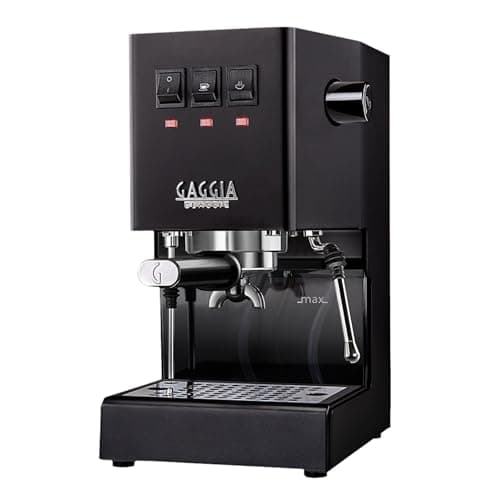 | One or two milk drinks at a time, on the standard accessory ecosystem | Best single boiler at the 58 mm standard | |
| 3 | 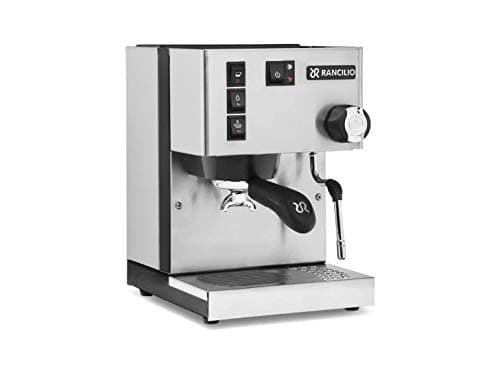 | Someone who wants prosumer materials without prosumer plumbing | The single boiler closest to prosumer build | |
| 4 | 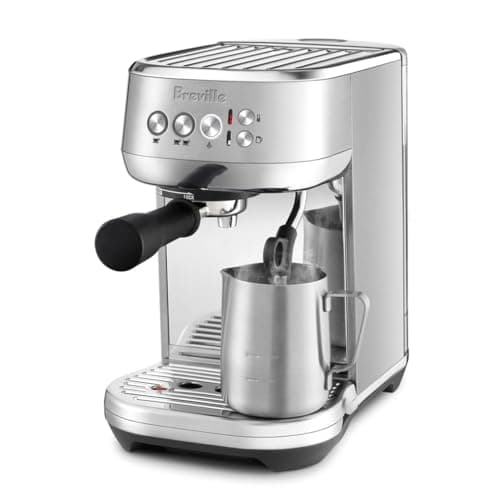 | Small kitchens and short mornings, one drink at a time | The layout neither camp talks about |
1. The dual boiler you can actually buy
Breville Dual Boiler
Prosumer tier · A true dual-boiler 58 mm machine: brew and steam at once, PID on the brew boiler.
Two PID-controlled boilers, 58 mm group, and no cooling flush to learn.
This is the dual boiler layout at the only point in the market where it is readily available through this site's program. It has a dedicated brew boiler and a dedicated steam boiler, each held at its own temperature.
That separation is the entire argument for a dual boiler. The brew boiler never has to climb to steam temperature and come back down, so brew temperature stays where you set it even while the steam wand is working hard.
It also removes the routine an HX machine imposes. There is no cooling flush, no waiting 30 to 45 seconds for the brew path to recover, and no judgment call about how long the machine has been idle.
It uses the 58 mm commercial basket standard, so baskets, tampers, puck screens and bottomless portafilters are all the widely available sizes rather than brand-specific parts - see machines with a 58 mm portafilter.
It is the most expensive machine on this page by a wide margin, it is physically large, and a dual boiler is twice the boilers, twice the sensors and twice the eventual service. For straight espresso with no milk, you are paying for a capability you will not use.
Specification
- Portafilter
- 58 mm stainless, 22 g dose
- Boilers
- Dual stainless steel, separate espresso and steam
- Control
- PID on the espresso boiler
- Extraction
- Low-pressure pre-infusion, then 9 bar
- Footprint
- 37.9 x 40.3 x 37.1 cm
What it does well
- Brew and steam simultaneously - the actual reason to buy dual boiler
- 58 mm commercial basket size opens the whole accessory market
- PID plus programmable pre-infusion
Where it gives ground
- Big, heavy and power-hungry
- Overkill if you drink one straight espresso a day
- Still needs a grinder at a matching level to be worth it
Skip it if
Skip it if you drink espresso straight, or make one milk drink at a time - the second boiler sits idle and you have bought it anyway.
2. Best single boiler at the 58 mm standard
Gaggia Classic Evo Pro
Mid tier · A 58 mm single-boiler machine with commercial parts and a large modification community.
One boiler, switch between brew and steam, commercial basket size.
A single boiler is the layout most home machines use: one boiler, heated to brew temperature for espresso, then switched up to steam temperature for milk. You cannot do both at once.
What makes this the sensible comparison point against an HX is the basket. It is a 58 mm machine, so it sits on the same accessory ecosystem as the prosumer HX machines people cross-shop, at a fraction of the price.
The practical cost of a single boiler is waiting. Brew the shot, flip to steam, wait for the boiler to climb, steam the milk. For one or two drinks this is a minute you will not notice; for six it becomes the reason you wanted an HX.
Without PID, brew temperature is managed with a routine rather than a setting, which is the trade at this price. The existing single boiler versus dual boiler guide covers that layout question in full.
It will not brew and steam simultaneously, and no amount of technique changes that. If simultaneity is the requirement, this is the wrong layout and the question becomes HX or dual boiler.
Specification
- Portafilter
- 58 mm
- Power
- 1425 W total; 1375 W to the boiler
- Boiler
- 140 ml max capacity, 105 ml operating
- Water tank
- 2.1 L / 72 fl oz
- Steam
- Two-hole professional wand
- Valve
- 3-way solenoid
What it does well
- 58 mm from the start - every basket, tamper and portafilter fits
- The 3-way solenoid gives a dry puck, which cheap machines do not
- Serviceable and heavily documented; parts are everywhere
Where it gives ground
- No PID as shipped; brew temperature drifts with the thermostat
- Long recovery between brewing and steaming
- The modification path is a hobby, not a feature
Skip it if
Skip it if you routinely make several milk drinks in a row for other people. That is exactly the job a single boiler is worst at.
3. The single boiler closest to prosumer build
Rancilio Silvia
Prosumer tier · A single-boiler 58 mm machine built from commercial-line parts.
A commercial-style brass group on a single boiler, with the same switch-and-wait routine.
The Silvia is the machine people usually land on when they want prosumer build quality but stop short of an HX or a dual boiler. It is a single boiler with a heavy brass group and a 58 mm basket.
Thermal mass is the reason it belongs in this conversation. A heavy brass group acts as a temperature dampener, evening out water that arrives slightly too hot or too cool - the same property that makes an E61 group behave the way it does on HX machines.
It is still a single boiler, so it still switches between brew and steam. What the mass buys is stability within a shot, not simultaneity across a drink.
Its steam is genuinely strong for a single boiler, which is why it has a long reputation for milk once you have waited for it to get there.
Temperature surfing - timing the shot against the boiler's heating cycle - is the routine this machine is famous for demanding. That is a real learning cost, and it is the thing PID exists to remove.
Specification
- Group
- Brass brewing group, 58 mm commercial basket standard
- Portafilter
- Chrome-plated brass; takes filters up to 21 g
- Baskets
- 8/16 g and 14/18 g
- Boiler
- 0.3 L single boiler, brew and steam (Rancilio does not publish the material)
- Water tank
- 2 L
- Element
- 120 V, 950-1000 W
- Pump
- Single vibration pump
- Temperature
- Manual regulation by thermostat - no PID
- Dimensions
- 235 x 340 x 290 mm
- Weight
- 14 kg / 30.8 lb
What it does well
- A brass brewing group and chrome-plated brass portafilter hold heat like far more expensive machines
- Commercial parts and a repair path measured in decades
- Steam power well beyond its price class
Where it gives ground
- No PID; temperature surfing is part of the routine unless you add one
- Single boiler means waiting between brewing and steaming
- Unforgiving of a bad grinder - it will show you every flaw
Skip it if
Skip it if you want the machine to manage temperature for you. This one expects you to learn its rhythm.
4. The layout neither camp talks about
Breville Bambino Plus
Entry tier · The Bambino with automatic milk texturing added.
No boiler at all: a thermojet heats water on demand in seconds.
Heat-on-demand is the fourth layout, and it is worth knowing because it solves a different problem from either machine above: it removes warm-up time almost entirely.
There is no boiler holding a reservoir at temperature. Water is heated as it moves, so the machine is ready in a few seconds rather than the 20 to 30 minutes a brass-group HX wants before it is thermally settled.
Like a single boiler, it cannot brew and steam at once - it switches, just very quickly. For one drink at a time the practical difference against a single boiler is small.
It is a 54 mm machine, so it is on Breville's accessory sizing rather than the commercial 58 mm standard. That matters when you start buying baskets and portafilters.
It is not a temperature-stability instrument and nobody should buy it as one. It is the right answer to a different question: how do I get a decent milk drink in under five minutes from cold.
Specification
- Portafilter
- 54 mm stainless, 18 g dose
- Heating
- ThermoJet, ready in 3 seconds
- Pump
- 15 bar Italian pump, 9 bar extraction
- Milk
- Automatic texturing, 16 fl oz / 480 ml jug
- Footprint
- 11.9 x 7.4 x 14.3 in
What it does well
- Automatic milk texturing gets a usable microfoam without practice
- Same three-second heat-up as the standard Bambino
- Fits a narrow counter with a grinder beside it
Where it gives ground
- You are paying for the milk automation, not better espresso
- Still no grinder
- Auto-steam removes the control an enthusiast eventually wants
Skip it if
Skip it if simultaneous brewing and steaming is the requirement, or if you want the 58 mm accessory ecosystem.
When a heat exchanger is the better buy
- You want simultaneous brew and steam without dual-boiler money. This is the case HX exists for.
- You want an E61 group and the materials that come with it. Most HX machines in this class are built around one.
- Counter space is limited. An HX takes roughly the room a single boiler does.
- A short pre-shot routine does not bother you. The flush is a habit, not a hardship.
When a dual boiler is worth the difference
- You steam a lot, in volume. Heavy steam demand is where an HX's brew temperature wanders and a dual boiler's does not.
- You want to set a brew temperature and have it be true. A PID on a dedicated brew boiler is the only layout here that delivers that directly.
- Other people use the machine. A flush routine that depends on idle time is a bad thing to hand to a guest.
- You are chasing light roasts. Those are the shots where a degree or two of brew temperature is audible in the cup.
What you can actually buy, stated plainly
The heat exchanger tier is dominated by specialty brands - Profitec, ECM, Lelit, Rocket, Bezzera - and those are largely sold through specialty retailers rather than the program this site links to. Rather than write a recommendation whose buy button cannot exist, the machines above are the ones you can genuinely purchase: one dual boiler, two single boilers at the 58 mm standard, and the heat-on-demand layout for contrast.
If an HX machine is what you want after reading this, buy it from a specialty espresso retailer who will also service it. That is the honest advice, and it is the same position this site takes on the E61 group.