The short answer
Arabica and Robusta are two different coffee species, and the trade between them is crema and strength against clarity and sweetness. Robusta produces noticeably thicker, longer-lasting crema, carries roughly double the caffeine of Arabica - commonly cited figures are about 1.2 to 1.5 percent of dry bean weight for Arabica against 2.2 to 2.7 percent for Robusta - contains more chlorogenic acids and therefore tastes more bitter, and is cheaper to grow. Arabica is sweeter, more acidic and more aromatic, and is what essentially all specialty coffee is. Traditional Italian espresso blends include Robusta on purpose, with roaster pages citing something like 10 to 30 percent; modern specialty espresso is usually 100 percent Arabica. If you want crema and a forgiving grind, buy a blend that publishes its Robusta content, such as Lavazza Super Crema at 60/40. If you want to taste origin, buy all-Arabica.
What each species actually gives you
These are two distinct plants, not two grades of the same thing. Arabica grows at higher altitude, is harder to farm and more disease-prone; Robusta is hardier, higher-yielding and cheaper. That agronomy is why Robusta is the commodity species and Arabica is the specialty one - and it is also why 'Robusta' has acquired a reputation that confuses the question.
Scroll the table sideways to see every column.
Quick picks
The answer first. Tap any row to jump to the full reasoning for that pick.
| # | Product | Best for | Award | Price |
|---|---|---|---|---|
| 1 | 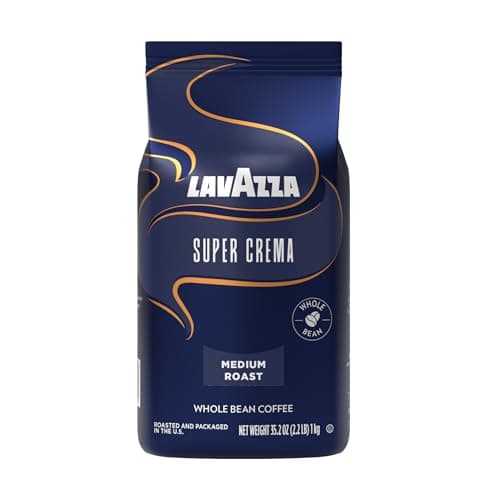 | Thick crema, a forgiving grind, and milk drinks | The Robusta pick, with a published blend | |
| 2 | 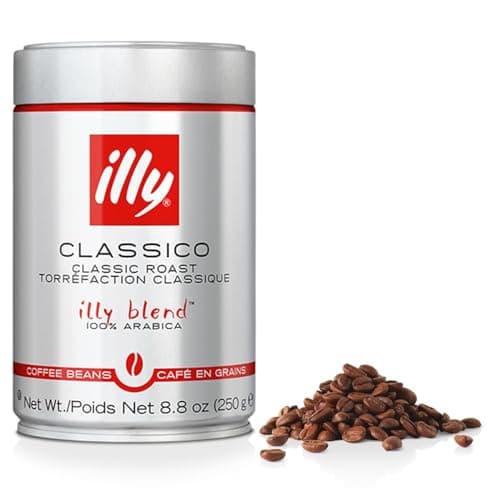 | Clean, consistent espresso where crema is not the goal | The all-Arabica counterweight | |
| 3 | 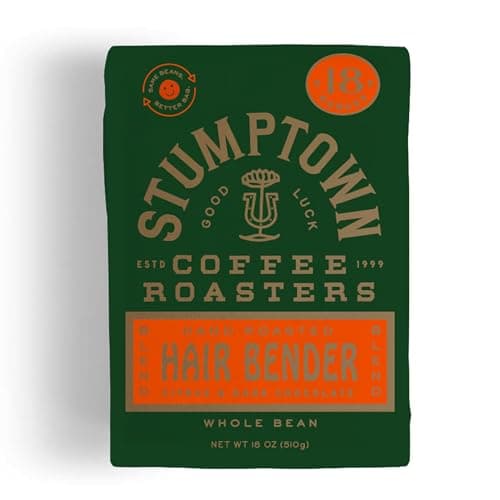 | A capable setup where you want to taste something | What modern specialty does instead | |
| 4 | 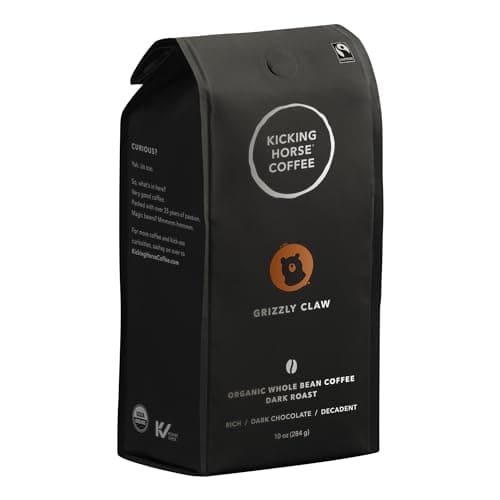 | Heavy, chocolate-forward coffee without Robusta | If body is what you were really after |
1. The Robusta pick, with a published blend
Lavazza Super Crema
Everyday tier · A medium-roast Arabica and Robusta espresso blend sold in 2.2 lb bags.
60/40 Arabica and Robusta - and it behaves exactly as that composition predicts.
This is the bag to buy if you want to taste what Robusta does, and the reason it is the pick is that Lavazza publishes the ratio: 60 percent Arabica, 40 percent Robusta.
A published blend matters because most bags do not state their species split at all, which makes the Robusta question unanswerable for them. Here you know what you are drinking.
Forty percent Robusta is a lot by modern standards and it does what the composition suggests: noticeably thicker and longer-lasting crema than an all-Arabica coffee, and a fuller, heavier body.
It is also forgiving. Robusta-containing blends tolerate a grind that is slightly off, which makes this a sensible bag to dial a new machine in on rather than wasting expensive single origins. It is a medium, full-bodied roast from Brazil, Central America and Indonesia with published notes of hazelnut and brown sugar, in 2.2 lb bags.
What you give up is detail. This is a blend built for consistency and crema rather than origin character, roast dates on supermarket kilo bags are rarely recent, and 2.2 lb is a lot of coffee to finish while it is fresh.
Specification
- Blend
- 60/40 Arabica and Robusta
- Origins
- Brazil, Central America, Indonesia
- Roast
- Medium, full-bodied
- Notes
- Hazelnut, brown sugar
- Bag
- 2.2 lb / 1 kg
What it does well
- Robusta in the blend produces the thick crema beginners are chasing
- Very forgiving of a slightly-off grind setting
- Cheap per shot, and available everywhere
Where it gives ground
- Roast date is rarely recent by the time it reaches you
- A kilo is a lot of coffee to get through while fresh
- Not a bean for tasting origin character
Skip it if
Skip it if you want to taste origin character or bright acidity. This blend is engineered for the opposite.
2. The all-Arabica counterweight
illy Classico Whole Bean
Everyday tier · A nine-origin all-Arabica medium roast in pressurized tins.
Nine Arabicas, 100 percent, in a nitrogen-flushed pressurized tin.
The direct comparison: an espresso blend that states it is 100 percent Arabica, built from nine origins across South and Central America, India and Africa.
Put side by side with the Lavazza, this is the clearest way to learn what the species trade actually is. The illy is cleaner, more aromatic and lighter in body, and it produces visibly less crema. Neither is a fault - they are different products.
Its packaging is a genuine technical advantage rather than a marketing one: illy replaces the air in the tin with nitrogen at above atmospheric pressure, which protects the beans far better than a valve bag.
The result is unusual consistency. The tin you buy next year tastes like the one you bought this year, which is the entire proposition and the reason it is a useful control when you are learning.
All-Arabica means less crema, which disappoints people who equate crema with quality. The tins are small at 8.8 oz, the price per pound is high, and the consistency comes at the cost of much character - published notes are caramel, orange blossom and jasmine.
Specification
- Blend
- Nine Arabicas, 100 percent Arabica
- Origins
- South and Central America, India, Africa
- Roast
- Medium
- Notes
- Caramel, orange blossom, jasmine
- Packaging
- Pressurized tin, nitrogen-flushed
- Size
- 8.8 oz / 250 g
What it does well
- The pressurized tin genuinely protects the beans in a way a valve bag does not
- Consistent from tin to tin, year after year
- All-Arabica, so it is far cleaner than a Robusta blend
Where it gives ground
- Small tin, high price per pound
- Consistency comes at the cost of any real character
- Less crema than a Robusta-containing blend
Skip it if
Skip it if you want thick crema or want to explore. Consistency is the product here, and exploration is its opposite.
3. What modern specialty does instead
Stumptown Hair Bender
Specialty tier · A medium-roast blend built to work as espresso and as filter.
A medium-roast specialty blend that chases sweetness rather than crema.
Worth including because it shows where the species argument has landed in specialty coffee: modern specialty espresso is overwhelmingly all-Arabica, and it competes on sweetness and clarity rather than on crema.
Hair Bender is a medium roast blending Central and South American, East African and Indonesian coffees, 100 percent Arabica, with published notes of sweet citrus, dark chocolate and raisin.
It was built to work as espresso specifically and also brews well as filter, which is unusual and useful if you own one grinder and switch methods.
The practical advantage over both bags above is freshness: specialty roasters print roast dates and ship close to roasting, and that is worth more in the cup than any species argument.
It costs multiples of a supermarket kilo bag, 12 oz means ordering often, and its acidity will surprise anyone coming from dark supermarket blends. It will also look disappointing next to the Lavazza in crema terms, which is the whole point of this page.
Specification
- Roast
- Medium
- Origins
- Central and South America, East Africa, Indonesia
- Notes
- Sweet citrus, dark chocolate, raisin
- Beans
- 100 percent Arabica
What it does well
- One of the few blends that is genuinely good both as espresso and as pour-over
- Roast dates are recent and printed on the bag
- The fruit is present without being sour
Where it gives ground
- Costs multiples of a supermarket kilo bag
- 12 oz bags mean ordering often
- The acidity will surprise anyone coming from dark-roast blends
Skip it if
Skip it if you are still using a pressurized basket - its qualities are invisible through one.
4. If body is what you were really after
Kicking Horse Grizzly Claw
Everyday tier · An organic Fairtrade dark-leaning blend the roaster names for French press.
An all-Arabica dark-leaning blend that gets weight from roast rather than species.
This is the useful third option, because most people reaching for Robusta actually want body and sweetness rather than Robusta specifically - and roast level delivers both.
Kicking Horse lists Grizzly Claw as organic Arabica from Central and South America, with published notes of rich dark chocolate, cacao nibs, brown sugar and roasted hazelnut, and an aroma of condensed sugar cane and cocoa powder. The Amazon listing designates it a dark roast; Kicking Horse's own page describes it by flavor rather than naming a level.
A darker roast is more soluble and more forgiving, which is the same practical benefit a Robusta blend offers, arrived at by a different route.
It carries Fairtrade, Canada Organic and kosher certification at a supermarket price, and the 10 oz bag is a size a one-person household finishes fresh.
Darker, chocolate-forward profiles hide origin character by design, dark roasts go flat faster once opened, and oily beans are harder on grinders. Roast dates are also less recent than a specialty roaster shipping direct.
Specification
- Roast
- The Amazon listing designates it dark roast; Kicking Horse describes it by flavor rather than naming a level
- Origins
- Central and South America
- Notes
- Rich dark chocolate, cacao nibs, brown sugar, roasted hazelnut
- Aroma
- Condensed sugar cane and cocoa powder
- Certifications
- Fairtrade, Canada Organic, kosher
- Brew methods named by the roaster
- French press, drip and pour-over
- Bag sizes
- 10 oz and 2.2 lb
What it does well
- The roaster names French press itself, which most bags at this price do not
- Chocolate and brown sugar are the notes immersion brewing shows best
- Three certifications at a supermarket price
Where it gives ground
- Kicking Horse does not publish a roast level on its own product page
- Darker, chocolate-forward profiles hide origin character by design
- Roast dates are less recent than a specialty roaster shipping direct
Skip it if
Skip it if you want brightness or origin detail. This is weight and chocolate, deliberately.
The crema question, and the part nobody agrees on
That Robusta produces more crema is not in dispute - it is consistent across every source and it is why traditional Italian espresso blends contain it. Why it does is genuinely contested.
One explanation credits higher lipid content, another credits lower fat with higher bean density, and a third credits more dissolved carbohydrates and proteins emulsifying under pressure. Those explanations are not compatible with each other, and this site is not going to pick one and present it as settled.
What matters for a buying decision survives the disagreement: Robusta content raises crema, and if crema is what you are chasing, the lever is the blend rather than your technique. Just understand the trade - you are choosing appearance and body over clarity.
Caffeine: roughly double, with a caveat
Robusta carries about twice the caffeine of Arabica by dry bean weight. Commonly cited ranges are 1.2 to 1.5 percent for Arabica and 2.2 to 2.7 percent for Robusta, and some sources quote higher figures for high-caffeine Robusta cultivars.
The caveat is that this is a property of the bean, not of your cup. How much caffeine you actually drink depends far more on dose and brew method than on species - a large filter coffee made with Arabica contains more caffeine than a single Robusta-blend espresso, because the dose and water volume differ by much more than the species does.
How much Robusta is in an espresso blend
Roaster pages for traditional Italian-style blends cite figures in the region of 10 to 30 percent Robusta, with some blends quoted at 70 to 80 percent Arabica against 20 to 30 percent premium Robusta. Lavazza Super Crema publishes 60/40, which is high and is why it is the clearest example to taste.
Modern specialty espresso has moved the other way and is now usually 100 percent Arabica. Note that these blend ratios come from roaster marketing pages rather than from any standard, so treat them as what the roaster states rather than as a category rule.
Most bags do not state a species split at all. If the Robusta question matters to you, that absence is itself the answer - buy a bag that publishes it. Best coffee beans for espresso names bags that do, and espresso beans versus coffee beans covers what the label on the front actually means.