The short answer
For French press, buy a medium to medium-dark roast with chocolate, caramel or nut notes rather than a bright washed light roast, and prefer a bag whose roaster actually names French press among its methods. The best all-round pick is Kicking Horse Grizzly Claw - organic, Fairtrade, chocolate-forward, and listed by the roaster for press, drip and pour-over. Counter Culture Big Trouble is the specialty option for anyone who dislikes acidity, and Stumptown Hair Bender is the bag to buy if the same coffee also has to make espresso. Avoid light washed coffees: a metal filter leaves the oils and fines in the cup, which muddies the clarity those beans are grown and roasted for, and the coarse grind a press needs fights the fine grind a light roast wants.
The filter decides the bag
This is the whole argument, and it is why this page exists separately from the espresso and pour-over bean pages on this site.
A French press is pure immersion with a metal mesh. The plunger pushes grounds down; it does not filter the liquid. Coffee oils and fine particles stay in the cup by design, and those oils are what give a press its characteristic weight and texture.
A paper filter does the opposite. It absorbs oils and traps fines, which is why a V60 or Chemex cup reads as clean, bright and tea-like. Same beans, different drink.
So the bag should be chosen for the filter. Oils carry chocolate, caramel, nut and brown-sugar notes well; they muddy delicate florals and sharp acidity. Buy coffee whose weight you want to taste.
Scroll the table sideways to see every column.
Quick picks
The answer first. Tap any row to jump to the full reasoning for that pick.
| # | Product | Best for | Award | Price |
|---|---|---|---|---|
| 1 | 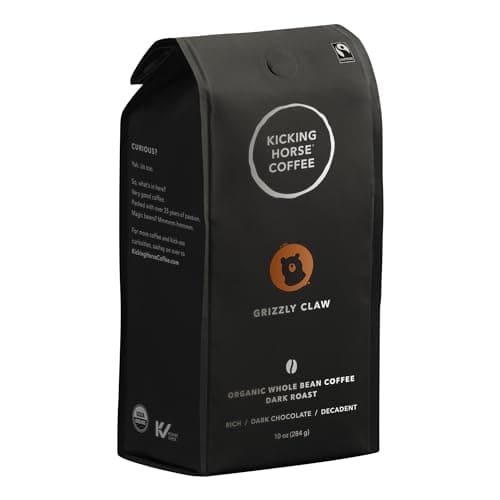 | A daily press bag that does not need careful handling | Top pick | |
| 2 | 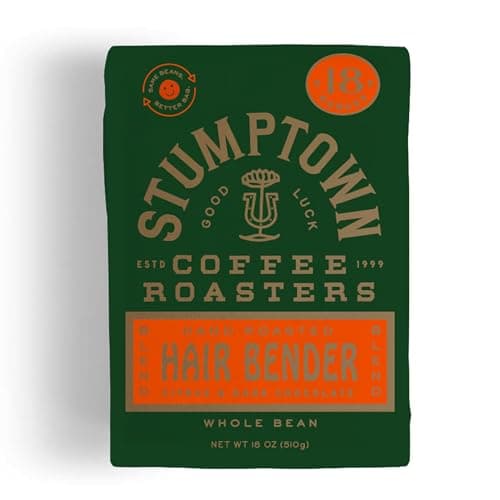 | One grinder, one bag, more than one brewer | Best one bag for a mixed household | |
| 3 | 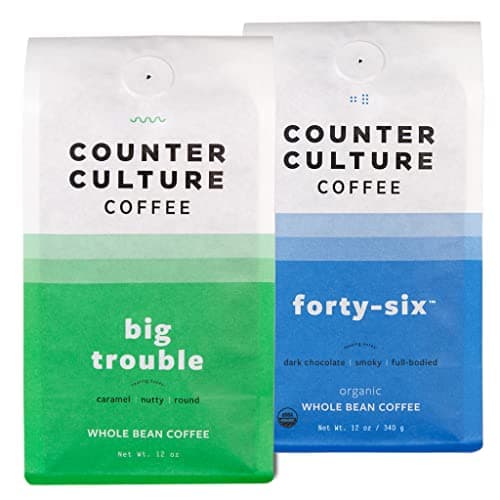 | Moving up from supermarket coffee without moving to bright light roasts | Best low-acid specialty | |
| 4 | 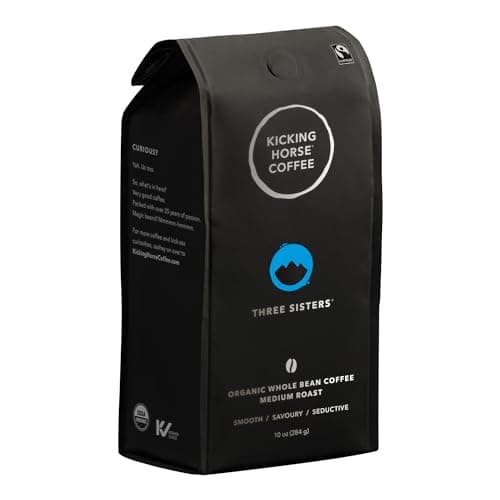 | Certifications and a realistic bag size without specialty pricing | Best certified value | |
| 5 | 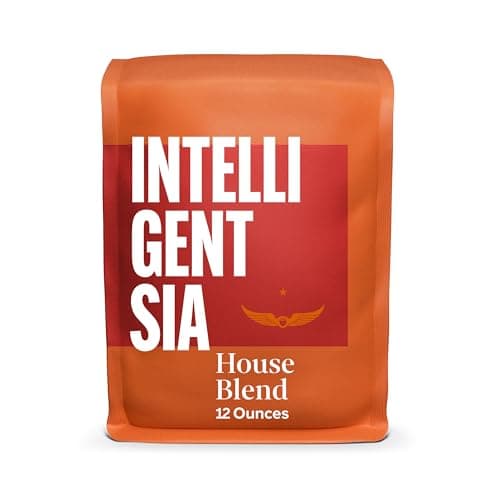 | Pour-over, where it is one of the best bags at the price | Skip this for French press |
1. Top pick
Kicking Horse Grizzly Claw
Everyday tier · An organic Fairtrade dark-leaning blend the roaster names for French press.
Organic, Fairtrade, chocolate-forward, and the roaster names French press itself.
Grizzly Claw is the pick because it is built for exactly what a press does. Kicking Horse publishes notes of rich dark chocolate, cacao nibs, brown sugar and roasted hazelnut, with an aroma of condensed sugar cane and cocoa powder, from Central and South American organic Arabica.
Those are the notes immersion brewing shows best. A metal filter leaves the coffee oils in the cup, and oils carry exactly that kind of weight - chocolate, sugar, nut - where they flatten delicate florals.
The roaster names French press, drip and pour-over as its methods. Most bags at this price say nothing at all about brew method, and a roaster naming the press is a roaster who built the profile for it.
It carries Fairtrade, Canada Organic and kosher certification at a supermarket price, and the 10 oz bag is a size a one-person household finishes while it is still fresh - which matters more to the cup than almost any other variable.
Two honest notes: Kicking Horse does not publish a roast level on its own product page, describing the coffee by flavor instead, though the Amazon listing designates it a dark roast. And darker, chocolate-forward profiles hide origin character by design - that is the trade, not a defect.
Specification
- Roast
- The Amazon listing designates it dark roast; Kicking Horse describes it by flavor rather than naming a level
- Origins
- Central and South America
- Notes
- Rich dark chocolate, cacao nibs, brown sugar, roasted hazelnut
- Aroma
- Condensed sugar cane and cocoa powder
- Certifications
- Fairtrade, Canada Organic, kosher
- Brew methods named by the roaster
- French press, drip and pour-over
- Bag sizes
- 10 oz and 2.2 lb
What it does well
- The roaster names French press itself, which most bags at this price do not
- Chocolate and brown sugar are the notes immersion brewing shows best
- Three certifications at a supermarket price
Where it gives ground
- Kicking Horse does not publish a roast level on its own product page
- Darker, chocolate-forward profiles hide origin character by design
- Roast dates are less recent than a specialty roaster shipping direct
Skip it if
Skip it if you want to taste where the coffee came from. This bag is built for weight and chocolate.
2. Best one bag for a mixed household
Stumptown Hair Bender
Specialty tier · A medium-roast blend built to work as espresso and as filter.
Genuinely good as press, filter and espresso - which very few blends manage.
Hair Bender earns a place for a specific household: a press in the morning, a shot at the weekend, and no appetite for keeping three bags on the go.
It is a medium roast blending Central and South American, East African and Indonesian coffees, 100 percent Arabica, with published notes of sweet citrus, dark chocolate and raisin.
In a press the dark chocolate and raisin come forward and the citrus recedes, which is the opposite of how the same bag reads through paper. That is normal - the filter, not the bean, is doing it.
Buying one bag for several methods also means buying fresher coffee, because you get through it faster. Two half-finished bags going stale is a worse outcome than one slightly compromised choice.
It is the most expensive bag here per ounce, 12 oz means ordering often, and its acidity will surprise anyone coming from supermarket dark roast. If the press is the only thing you own, the picks above and below suit it better.
Specification
- Roast
- Medium
- Origins
- Central and South America, East Africa, Indonesia
- Notes
- Sweet citrus, dark chocolate, raisin
- Beans
- 100 percent Arabica
What it does well
- One of the few blends that is genuinely good both as espresso and as pour-over
- Roast dates are recent and printed on the bag
- The fruit is present without being sour
Where it gives ground
- Costs multiples of a supermarket kilo bag
- 12 oz bags mean ordering often
- The acidity will surprise anyone coming from dark-roast blends
Skip it if
Skip it if French press is all you brew. You are paying for espresso versatility you will not use.
3. Best low-acid specialty
Counter Culture Big Trouble
Specialty tier · A medium-dark specialty blend built around low acidity.
Specialty sourcing in a medium-dark profile built around low acidity.
Big Trouble is the bag for someone who wants better coffee but does not enjoy acidity, which is a much more common position than specialty coffee marketing admits.
It is a medium-dark blend with published notes of caramel and nuts, described as round with low acidity, drawn from the same partners that supply the roaster's single-origin offerings.
That combination is genuinely useful for a press: specialty-grade sourcing in a profile where the heavier body of an immersion brew is an asset rather than something muddying a delicate cup.
It is sweet enough in milk that sugar becomes unnecessary, which matters because a press is often used to make a big mug with milk rather than a tasting cup.
It is deliberately low-acid, so anyone chasing fruit will find it dull, and availability shifts with the season by the roaster's own account. It is currently stocked as a two-pack of 12 oz bags paired with another Counter Culture blend, so it is the largest single purchase here.
Specification
- Roast
- Medium-dark
- Notes
- Caramel, nutty, round; low acidity
- Sourcing
- Blend, from the roaster single-origin partners
- Format
- Currently stocked as a two-pack of 12 oz bags, paired with another Counter Culture blend
What it does well
- Specialty sourcing without the bright acidity that puts people off
- Works for someone moving up from supermarket dark roast
- Sweet enough in milk that no sugar is needed
Where it gives ground
- Deliberately low-acid, so it will bore anyone chasing fruit
- Specialty pricing
- The single 12 oz bag comes and goes; the two-pack is what is reliably stocked
Skip it if
Skip it if you like bright, fruity coffee - this blend is engineered for the opposite.
4. Best certified value
Kicking Horse Three Sisters
Everyday tier · An organic Fairtrade blend of light, medium and dark roasts the roaster recommends for pour-over.
Organic, Fairtrade and kosher, with the roaster naming press among its methods.
Three Sisters is the balanced alternative to Grizzly Claw from the same roaster, and it is the cheaper of the two.
Kicking Horse publishes notes of stone fruit and cocoa with an aroma of sweet dried fruit, toasted coconut and chocolate malt, sourced from Central and South America, and names French press, drip and pour-over as its brew methods.
It is a blend of light, medium and dark roasts rather than a single roast level. For a press that is a reasonable choice: you get balance and a bag that is hard to brew badly, at the cost of some transparency.
Fairtrade, Canada Organic and kosher certification at this price is the strongest argument for it, and the 10 oz bag is again a sensible amount to finish fresh.
On a coarse press grind the cocoa tends to dominate the stone fruit it is sold on, and roast dates are less recent than a specialty roaster shipping direct. If you want the chocolate-forward version of this profile, Grizzly Claw is the more committed bag.
Specification
- Roast
- A blend of light, medium and dark roasts
- Origins
- Central and South America
- Notes
- Stone fruit and cocoa; aroma of dried fruit, toasted coconut, chocolate malt
- Certifications
- Organic, Fairtrade, kosher
- Brew methods named by the roaster
- French press, drip and pour-over
- Bag sizes
- 10 oz and 2.2 lb
What it does well
- The roaster names pour-over itself, which most supermarket bags do not
- Three certifications at well under specialty pricing
- The 10 oz bag is a realistic amount to finish fresh
Where it gives ground
- Roast dates are less recent than a specialty roaster shipping direct
- Blending three roast levels trades clarity for balance
- The cocoa note dominates the stone fruit on a coarse grind
Skip it if
Skip it if transparency is the goal - blending three roast levels is designed to do the opposite.
5. Skip this for French press
Intelligentsia House Blend
Specialty tier · A washed light-roast blend of Colombian and Guatemalan coffees.
An excellent light washed blend, and the wrong tool pairing for a metal filter.
This is a genuinely good coffee and it is here as the clearest illustration of why the method changes the bag. It is the top pick on this site's pour-over bean page and the one to skip for a press.
It is a light roast, washed, from Colombia and Guatemala, with published notes of orange, red apple and caramel.
Everything that makes it excellent through paper works against it in a press. Light roasting preserves acidity and delicate aromatics; washed processing strips the fruit pulp for clarity. Then a metal filter leaves the oils and fines in the cup, which muddies exactly that clarity, and the acidity reads as sourness rather than brightness.
There is a mechanical problem too. Light roasts are denser and less soluble, so they need hotter water and finer grinds - and a press needs a coarse grind to keep fines out of the cup. Those two requirements pull in opposite directions.
Buy it, and brew it in a cone. The best coffee beans for pour-over is where it belongs, and it is the pick there for the same reasons it is the skip here.
Specification
- Roast
- Light
- Origins
- Colombia and Guatemala
- Process
- Washed
- Notes
- Orange, red apple, caramel
- Bag size
- 12 oz
What it does well
- A light washed blend is the easiest way to hear what a cone dripper does
- Washed process means clarity rather than ferment
- Priced below most light specialty blends
Where it gives ground
- Light roasts need hotter water and a finer grind than dark ones
- Too bright for anyone coming straight from supermarket dark roast
- A coarse-stepped grinder will struggle to find its setting
Skip it if
Skip it for French press. Buy it happily for a V60, a Chemex or a Kalita.
Why light roasts fight a press
There are two independent reasons, and together they are why the skip pick on this page is a coffee this site recommends elsewhere.
The first is flavor. Light roasting preserves the bean's own acidity and aromatics, and washed processing is chosen to make those legible. Immersion with a metal filter adds oils and fines on top of them, which blurs the detail you paid for and reads as sourness rather than brightness.
The second is mechanical and less often mentioned. Light roasts are denser and less soluble, so they want a finer grind and hotter water to extract properly. A press wants a coarse grind, because fines pass straight through the mesh and settle as grit. You cannot satisfy both at once.
Grind matters more here than the bag does
Worth stating plainly on a page about beans: on a French press, grind evenness has a larger effect on the cup than which of these four bags you buy.
A press is the most grind-punishing common brewer, because there is no paper to catch what an uneven grinder produces. A blade grinder makes both boulders and dust; the dust goes through the mesh and the boulders never extract, so the cup is simultaneously muddy and weak. No bag fixes that.
If the press cup has been disappointing, the grinder is the first thing to examine and the bag second. Best grinders for French press covers what the method needs, and the best French presses covers the hardware.
Bag size and freshness, briefly
Roast date still beats origin for most people, and the argument is made in full on the espresso bean page rather than repeated here.
For a press specifically, buy a size you will finish within two to three weeks of opening. Press brewing is often a larger daily volume than espresso, so bigger bags make more sense here than anywhere else on this site - but a 2.2 lb bag is still a poor idea for one person unless you decant and seal.