
The short answer
Buy the AeroPress if you want one forgiving brewer: immersion plus a paper filter makes the cleanest cup of the three and tolerates an uneven grind. Buy a French press if you brew several cups at once and want heavy body. Buy a moka pot if you want a small, very strong cup, usually with milk. They are three different processes, so they make three genuinely different drinks from the same beans.
The three processes, which is the whole difference
Everything that follows comes from the mechanism, so it is worth being precise about what each one does.
- AeroPress: immersion, then pressure through paper. Coffee steeps, then you press it through a paper filter in about 30 seconds.
- French press: immersion only. Coffee steeps for around four minutes and a mesh plunger separates the grounds from the liquid without filtering it.
- Moka pot: steam pressure, on a stove. Boiling water in the base is forced up through the coffee by its own steam pressure, through a metal screen.
Scroll the table sideways to see every column.
Quick picks
The answer first. Tap any row to jump to the full reasoning for that pick.
| # | Product | Best for | Award | Price |
|---|---|---|---|---|
| 1 | 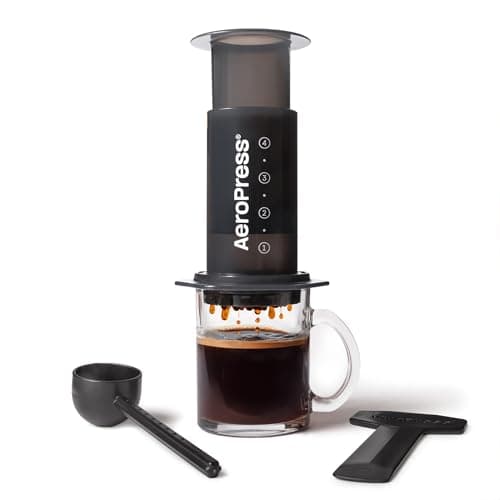 | One or two cups, a modest grinder, and no patience for cleanup | Top pick of the three | |
| 2 | 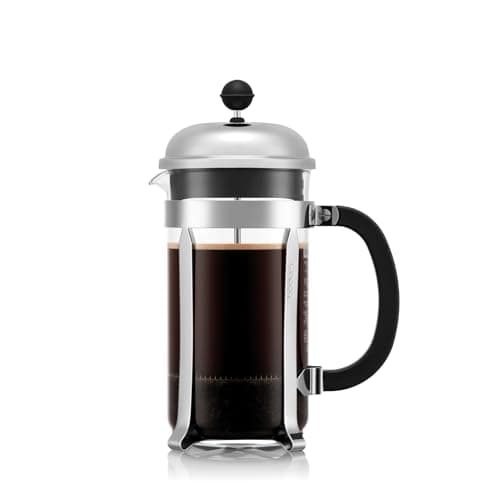 | Several cups at once, and anyone who wants texture over clarity | Best for body and batch size | |
| 3 | 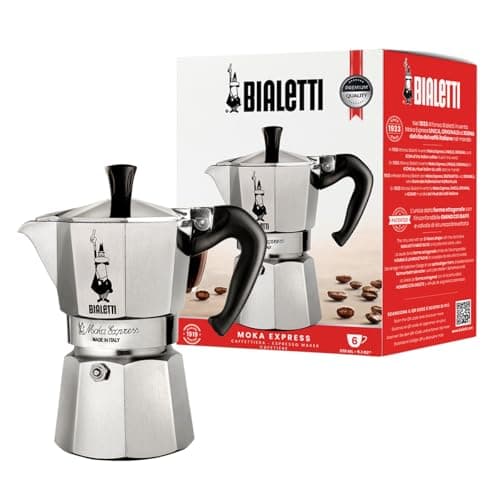 | A small, intense cup, usually with milk | Best for a strong, small cup |
1. Top pick of the three
AeroPress Original
Manual tier · A hand-pressed immersion brewer using a paper or metal filter.
The most forgiving of the three and the only one that filters out the fines.
The AeroPress is immersion followed by a short press through a paper filter. That combination is why it is the easiest of these three to get right: the steep does the extraction, and the paper catches everything the steep loosened.
The paper filter is the whole argument. A French press leaves fines and oils in the cup by design, and a moka pot pushes them through a metal screen. Paper removes both, which is what makes an AeroPress cup taste clean on a grinder that is not especially even.
That matters most if your grinder is a blade or an entry burr. Uneven grounds produce a lot of dust, and dust is what makes a French press cup taste muddy and gritty at the bottom. The AeroPress simply filters the problem out.
Cleanup is one motion: pop the puck into the bin and rinse. A French press needs the grounds scooped and the mesh unscrewed; a moka pot needs cooling, disassembly and drying.
Its limit is volume. The Original brews 10 oz, enough for one or two cups, and no amount of technique changes that. For more at once, see the AeroPress sizes compared.
Specification
- Capacity
- 10 oz, 1-3 cups
- Weight
- About 6.5 oz
- Filters
- Paper or metal mesh
What it does well
- Almost impossible to brew a bad cup with
- Forgiving of grinder inconsistency in a way pour-over is not
- Cleans up in about ten seconds
Where it gives ground
- Not espresso, whatever the marketing around it says
- One or two cups at a time
- Plunging takes real hand pressure
Skip it if
Skip it if you brew for three or more people at once, or if the body of a metal-filtered cup is the thing you like about coffee.
2. Best for body and batch size
Bodum Chambord French Press
Budget tier · The classic 34 oz French press: borosilicate carafe in a chrome-plated steel frame.
The heaviest-bodied cup of the three, and the only one that fills a carafe.
A French press is pure immersion: grounds sit in water for four minutes, then a mesh plunger pushes them down rather than filtering the liquid. Oils and fine particles stay in the cup.
That is a feature, not a fault. The oils carry weight and aroma that paper absorbs, which is why a French press cup feels thicker than anything an AeroPress makes. If you like coffee that coats the mouth, this is the mechanism that does it.
It is also the only one of the three that scales. The 34 oz Chambord makes four cups in one go, which neither of the others can approach - a moka pot is fixed at its size and an AeroPress is a single press.
The cost is grind sensitivity in the opposite direction from the AeroPress. A French press wants a coarse, even grind, and if your grinder produces a lot of dust you will taste it as grit and muddiness. This is the brewer that most rewards a decent burr grinder - see grinders for French press.
Cleanup is the worst of the three: wet grounds have to come out of the carafe, and the mesh assembly needs unscrewing periodically.
Specification
- Capacity
- 34 oz, 3-4 cups
- Carafe
- Borosilicate glass
- Filter
- Stainless steel mesh plunger
- Frame
- Chrome-plated steel, made in Portugal
What it does well
- No paper, no capsules, no consumables at all
- Full-bodied cup that no paper filter can produce
- Every part is replaceable and cheap
Where it gives ground
- Metal mesh lets fines and oils through - that is the trade, not a defect
- Punishes an inconsistent grinder harder than any other brewer
- Glass carafe in a household with a tile floor
Skip it if
Skip it if you own a blade grinder, or if sediment in the last mouthful bothers you.
3. Best for a strong, small cup
Bialetti Moka Express
Budget tier · The octagonal aluminum stovetop pot that defines the category.
Steam pressure makes something much closer to a strong espresso than to filter coffee.
A moka pot is neither immersion nor pour-over. Water in the base boils, steam pressure forces it up through a basket of coffee and into the top chamber. It happens on a stove, not in a mug.
The result is the most concentrated of the three by a wide margin, which is why it gets called stovetop espresso. It is not espresso - the pressure is roughly one to two bar against the nine bar an espresso machine produces - but it is in a different category of strength from the other two. The full comparison is in moka pot vs espresso machine.
It is the brewer with the least margin for error. The grind has to be finer than filter but coarser than espresso, the heat has to come off at the right moment, and an overheated pot produces a burnt, bitter cup that no recipe rescues.
It is also fixed in volume. A six-cup Moka Express makes six moka-sized servings and cannot make fewer well, because a partly filled base changes how the pressure builds.
Where it wins outright is durability and cost of ownership. There is no filter to buy, nothing electronic to fail, and an aluminum Moka Express outlasts almost anything else in a kitchen. For a hob that will not take aluminum, see moka pots for induction.
Specification
- Material
- Cast aluminum (a stainless line is also sold)
- Sizes
- 1 to 12 cup
- Cooktops
- Gas and electric; needs an adapter plate for induction
What it does well
- Sizes from 1 to 12 cup - by far the widest range in the category
- No paper, no capsules, no electronics, and almost nothing to break
- Parts and gaskets are stocked everywhere and cost very little
Where it gives ground
- Aluminum will not work on an induction cooktop without a separate adapter
- You must fill the basket and boiler properly, so a big pot cannot make a small brew
- Produces little or no crema - it is not espresso
Skip it if
Skip it if you want a mug-sized cup of filter coffee, or if you would rather not stand over a stove to make it.
The filter decides the cup more than the recipe does
If you remember one thing from this page, it is that paper removes oils and fine particles and metal does not. That single difference explains most of what people describe when they say one brewer tastes cleaner and another tastes richer.
It also explains why the three brewers tolerate different grinders. Paper hides an uneven grind by filtering out the dust it produces. Metal mesh puts that dust in your cup, which is why a French press on a cheap grinder tastes muddy while an AeroPress on the same grinder tastes fine.
Neither the AeroPress nor the moka pot is espresso
Both get described as espresso makers and neither is one. An espresso machine builds around nine bar of pressure against a finely ground, tamped puck. An AeroPress press is roughly one bar of hand pressure; a moka pot generates about one to two bar from steam.
What the moka pot does produce is a genuinely concentrated coffee that works the way espresso does in milk drinks, which is why it is a fixture in Italian kitchens. If an actual espresso is the goal, the honest answer is a machine - what to look for is here.
Cost of ownership over a year
All three are cheap to buy, and they diverge afterwards. The AeroPress needs paper filters, which are inexpensive but a running cost and a thing to remember. A French press needs nothing consumable, though the mesh assembly wears. A moka pot needs nothing at all, and the gasket is a rare and cheap replacement.
If you want zero consumables and no electronics, the moka pot is the one that lasts decades. If you want the lowest-effort daily routine, the AeroPress is the one you will actually keep using.
Which to buy, by situation
- One person, one or two cups, entry grinder. AeroPress.
- Two or more people at the same time. French press.
- You want a small, strong cup, usually with milk. Moka pot.
- You travel and want coffee in a hotel room. AeroPress, or specifically the Go.
- You want the cup with the most texture and own a real burr grinder. French press.
If none of those is clearly you, the AeroPress is the safest first purchase of the three, because it is the one whose results depend least on the equipment around it.