The short answer
Buy Stumptown Hair Bender if you want one bag that works for espresso and filter and arrives with a recent roast date on it. If you want to taste origin rather than roast, buy Intelligentsia House Blend - a washed light roast. If bright coffee tastes sour to you, buy Counter Culture Big Trouble, which is specialty sourcing with the acidity deliberately dialed out. For a cheap everyday dark mug, Peets Major Dickasons. Avoid oily dark roasts if you grind by hand or brew pour-over.
Pick the roast level before anything else
Origin, altitude and processing all change a coffee, but roast level changes it more than all of them, and it is the only one printed clearly on the front of the bag. Decide this and most of the shelf disappears.
- Light - tastes of the bean: fruit, acidity, tea-like clarity. Needs hotter water, a finer grind and a grinder with fine enough steps to find the setting.
- Medium - the compromise that works on the widest range of equipment, and the right default if you brew more than one way.
- Medium-dark - specialty sourcing with the acidity pulled back. The honest answer for people who want better coffee but do not enjoy sour coffee.
- Dark - tastes of the roast: smoke, char, heavy chocolate. Forgiving on bad equipment, hard on grinders, and the clear winner in a big milky mug.
Quick picks
The answer first. Tap any row to jump to the full reasoning for that pick.
Prices shown are checked daily against the retailer, as of October 17, 2026. We never write a price into the text of a page.
| # | Product | Best for | Award | Price |
|---|---|---|---|---|
| 1 | 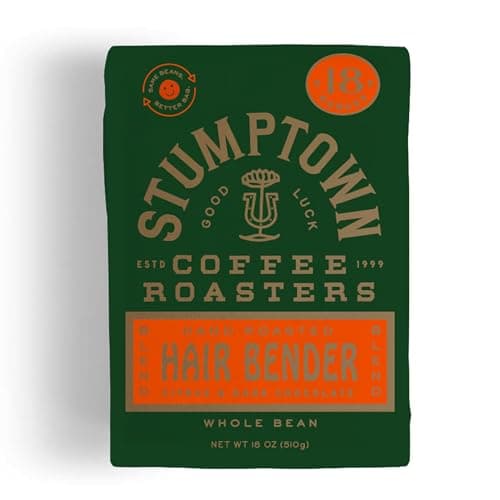 | One bag for a household that brews more than one way | Top pick | |
| 2 | 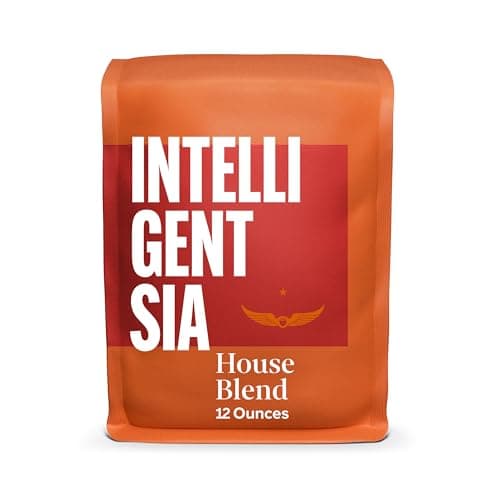 | Pour-over, and anyone who wants to taste origin rather than roast | Best light roast | |
| 3 | 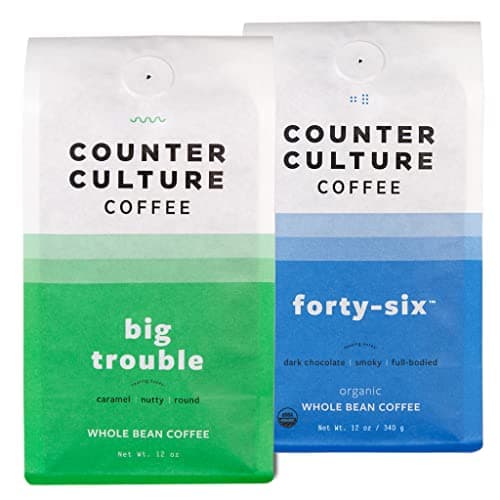 | Someone moving up from supermarket dark roast without the shock | Best low-acid specialty | |
| 4 | 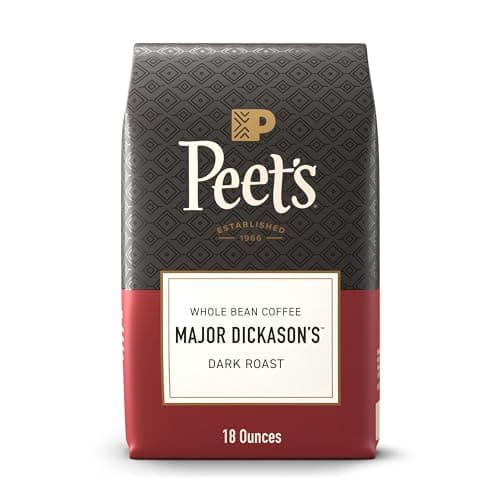 | A big mug of unambiguous dark coffee, every day, cheaply | Best everyday dark roast | |
| 5 | 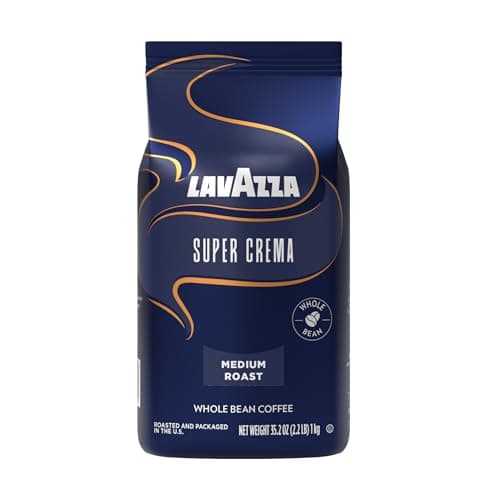 | Pulling a lot of shots cheaply while learning | Best value in bulk | |
| 6 | 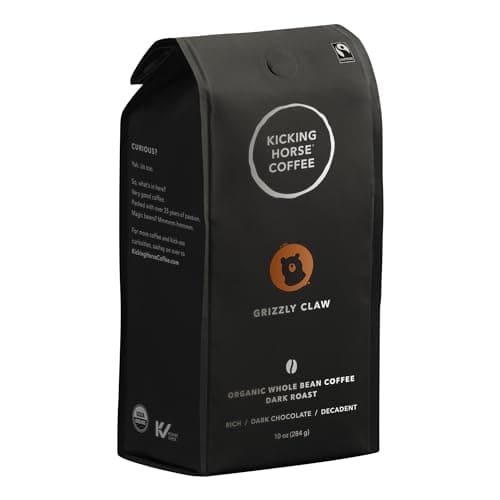 | French press specifically, on an electric grinder | Skip this for most setups |
1. Top pick
Stumptown Hair Bender
Specialty tier · A medium-roast blend built to work as espresso and as filter.
A medium roast that works as both espresso and filter, with the roast date printed on the bag.
Most blends are built for a method. Hair Bender is one of the few that genuinely holds up as espresso and as pour-over, which makes it the right answer when one bag has to serve a house with a machine and a dripper in it.
It is 100 percent Arabica, drawn from Central and South America, East Africa and Indonesia, and Stumptown lists sweet citrus, dark chocolate and raisin. That combination is what makes it flexible - there is fruit for a filter brew and enough chocolate body to survive milk in a latte.
The practical reason it leads: Stumptown prints recent roast dates. Freshness beats origin for how good your coffee tastes, and a dated bag is the only way to know what you are getting.
The fruit is present without tipping into sourness, which is the usual failure of a medium roast bought by someone who has been drinking dark.
It costs multiples of a supermarket kilo bag, the 12 oz size means ordering often, and if you are coming straight from dark roast the acidity will be a surprise on the first morning.
Specification
- Roast
- Medium
- Origins
- Central and South America, East Africa, Indonesia
- Notes
- Sweet citrus, dark chocolate, raisin
- Beans
- 100 percent Arabica
What it does well
- One of the few blends that is genuinely good both as espresso and as pour-over
- Roast dates are recent and printed on the bag
- The fruit is present without being sour
Where it gives ground
- Costs multiples of a supermarket kilo bag
- 12 oz bags mean ordering often
- The acidity will surprise anyone coming from dark-roast blends
Skip it if
Skip it if you want a heavy, low-acid, chocolate-forward cup. Big Trouble below is built for exactly that palate.
2. Best light roast
Intelligentsia House Blend
Specialty tier · A washed light-roast blend of Colombian and Guatemalan coffees.
A washed light roast of Colombian and Guatemalan coffees - orange, red apple, caramel.
A light roast is the only way to taste the coffee rather than the roasting. Dark roasting adds its own flavors - smoke, char, bitterness - which is a legitimate style, but it covers whatever the bean brought with it.
This is a washed blend of Colombian and Guatemalan coffees with orange, red apple and caramel notes. Washed processing is the detail worth knowing: the fruit is removed before drying, which gives clarity rather than the heavy ferment of a natural process.
A light washed blend is also the easiest way to hear what a cone dripper actually does. Brew this in a V60 and the differences between a fast pour and a slow one are audible in the cup, where a dark roast would flatten them.
It is priced below most light specialty blends, which is unusual - light roasts normally carry a premium - and it comes in a 12 oz bag.
Light roasts are harder to brew. They need hotter water and a finer grind than dark ones, and a coarse-stepped grinder will struggle to find the setting. They are also too bright for anyone coming straight from supermarket dark roast.
Specification
- Roast
- Light
- Origins
- Colombia and Guatemala
- Process
- Washed
- Notes
- Orange, red apple, caramel
- Bag size
- 12 oz
What it does well
- A light washed blend is the easiest way to hear what a cone dripper does
- Washed process means clarity rather than ferment
- Priced below most light specialty blends
Where it gives ground
- Light roasts need hotter water and a finer grind than dark ones
- Too bright for anyone coming straight from supermarket dark roast
- A coarse-stepped grinder will struggle to find its setting
Skip it if
Skip it if your grinder has coarse steps or you brew on a machine that never gets properly hot. A light roast will taste sour rather than bright - see best coffee beans for pour-over.
3. Best low-acid specialty
Counter Culture Big Trouble
Specialty tier · A medium-dark specialty blend built around low acidity.
Specialty sourcing with the acidity deliberately dialed out - caramel, nutty, round.
This is the bag for the most common real-world situation: someone wants better coffee but does not actually like bright, fruity coffee, and every specialty recommendation they try tastes sour to them.
Big Trouble is a medium-dark specialty blend built around low acidity, with caramel and nutty notes and a round body. It is deliberately not a fruit bomb - Counter Culture built it to be the approachable one.
That makes it the safest specialty gift and the safest first specialty purchase. It is sweet enough in milk that no sugar is needed, and it does not require a precise brew to avoid tasting harsh.
It is a blend drawn from the roaster's single-origin partners, so the sourcing is the same as their more adventurous coffees even though the profile is tamer.
Stock note worth knowing before you order: the single 12 oz bag comes and goes, and the format that is reliably available is a two-pack of 12 oz bags paired with another Counter Culture blend. And being deliberately low-acid, it will bore anyone chasing fruit.
Specification
- Roast
- Medium-dark
- Notes
- Caramel, nutty, round; low acidity
- Sourcing
- Blend, from the roaster single-origin partners
- Format
- Currently stocked as a two-pack of 12 oz bags, paired with another Counter Culture blend
What it does well
- Specialty sourcing without the bright acidity that puts people off
- Works for someone moving up from supermarket dark roast
- Sweet enough in milk that no sugar is needed
Where it gives ground
- Deliberately low-acid, so it will bore anyone chasing fruit
- Specialty pricing
- The single 12 oz bag comes and goes; the two-pack is what is reliably stocked
Skip it if
Skip it if you want to taste origin character. Low acidity is the design goal here and clarity is what it trades away - the Intelligentsia above is the opposite choice.
4. Best everyday dark roast
Peets Major Dickasons Blend
Everyday tier · A dark-roast blend of Latin American and Indo-Pacific beans.
A dark blend of Latin American and Indo-Pacific beans - earth, spice, dark chocolate, toasted nuts.
Dark roast is a style, not a mistake, and this is the one to buy if it is the style you want. It is a dark blend of Latin American and Indo-Pacific coffees, 100 percent Arabica, with earth and spice over dark chocolate and toasted nuts.
Its real virtue is that it is completely unambiguous. There is no learning curve, no sourness to dial out and no risk of a bag tasting thin - it is heavy and roasty on any equipment, including a machine that does not brew hot enough.
It also cuts through milk better than most medium roasts, which is why it is the sensible default for a household drinking large milky coffees rather than small black ones.
It is widely stocked, so restocking is never a project - a genuine advantage over specialty bags that go out of season.
Three honest costs. Dark roasts go flat quickly once opened. The oily surface of dark beans is hard on grinder burrs and chutes. And there is no origin character to speak of, which is the point but is also the ceiling.
Specification
- Roast
- Dark
- Origins
- Latin America and Indo-Pacific
- Notes
- Earth and spice; dark chocolate, toasted nuts
- Beans
- 100 percent Arabica
What it does well
- Dark, heavy and completely unambiguous - it is what it says
- Cuts through milk better than most medium roasts
- Widely stocked, so restocking is never a project
Where it gives ground
- Dark roasts go flat quickly once opened
- Oily beans are hard on grinder burrs and chutes
- No origin character to speak of - that is the point, but it is a limit
Skip it if
Skip it if you brew pour-over and want clarity. A dark roast in a V60 mostly tastes of roast - see best coffee beans for French press for where it belongs.
5. Best value in bulk
Lavazza Super Crema
Everyday tier · A medium-roast Arabica and Robusta espresso blend sold in 2.2 lb bags.
A 60/40 Arabica and Robusta espresso blend in a 2.2 lb bag - hazelnut and brown sugar.
This is the bag to buy when you are using coffee up rather than savoring it - learning to dial in a machine, or pulling several drinks a day where specialty pricing becomes absurd.
It is a medium, full-bodied blend of 60 percent Arabica and 40 percent Robusta from Brazil, Central America and Indonesia, with hazelnut and brown sugar notes, sold in 2.2 lb bags.
The Robusta is why it is here. Robusta produces the thick, persistent crema that beginners are chasing and that pure Arabica blends often will not give, especially on an entry machine.
It is also very forgiving of a slightly-off grind setting, which is exactly what you want when you are wasting shots learning. Cheap per shot, and stocked everywhere.
The trade-offs are real: the roast date is rarely recent by the time it reaches you, a kilo is a lot of coffee to get through while fresh, and it is not a bean for tasting origin character.
Specification
- Blend
- 60/40 Arabica and Robusta
- Origins
- Brazil, Central America, Indonesia
- Roast
- Medium, full-bodied
- Notes
- Hazelnut, brown sugar
- Bag
- 2.2 lb / 1 kg
What it does well
- Robusta in the blend produces the thick crema beginners are chasing
- Very forgiving of a slightly-off grind setting
- Cheap per shot, and available everywhere
Where it gives ground
- Roast date is rarely recent by the time it reaches you
- A kilo is a lot of coffee to get through while fresh
- Not a bean for tasting origin character
Skip it if
Skip it if you pull one or two shots a day. A kilo will stale before you finish it and a 12 oz specialty bag is better coffee - see best coffee beans for espresso.
6. Skip this for most setups
Kicking Horse Grizzly Claw
Everyday tier · An organic Fairtrade dark-leaning blend the roaster names for French press.
A good immersion coffee, and the wrong bag for a hand grinder or a cone dripper.
This bag is here as a warning about a category rather than a criticism of the coffee, which is decent and well certified - Fairtrade, Canada Organic and kosher, which is three more than most supermarket bags.
It is a dark-leaning blend from Central and South America with rich dark chocolate, cacao nibs, brown sugar and roasted hazelnut, and an aroma of condensed sugar cane and cocoa powder. Kicking Horse names French press, drip and pour-over itself.
Note how we have to describe the roast level: the Amazon listing designates it dark roast, while Kicking Horse describes it by flavor and does not publish a level on its own product page. That gap is worth knowing about before you buy.
The practical problem is oil. Darker beans carry oil on the surface, and surface oil is what gums up a hand grinder's burr chamber and clogs the chute on a cheap electric grinder. On a 38 mm hand grinder it also makes the grind noticeably harder work.
In a cone dripper a chocolate-forward dark roast mostly tastes of roast - the clarity a V60 exists to produce has nothing to show. It belongs in an immersion brew, where that body is the point.
Specification
- Roast
- The Amazon listing designates it dark roast; Kicking Horse describes it by flavor rather than naming a level
- Origins
- Central and South America
- Notes
- Rich dark chocolate, cacao nibs, brown sugar, roasted hazelnut
- Aroma
- Condensed sugar cane and cocoa powder
- Certifications
- Fairtrade, Canada Organic, kosher
- Brew methods named by the roaster
- French press, drip and pour-over
- Bag sizes
- 10 oz and 2.2 lb
What it does well
- The roaster names French press itself, which most bags at this price do not
- Chocolate and brown sugar are the notes immersion brewing shows best
- Three certifications at a supermarket price
Where it gives ground
- Kicking Horse does not publish a roast level on its own product page
- Darker, chocolate-forward profiles hide origin character by design
- Roast dates are less recent than a specialty roaster shipping direct
Skip it if
Skip it for pour-over and for hand grinders. If French press is the method, it is a reasonable buy - see best coffee beans for French press.
The five bags compared
Scroll the table sideways to see every column.
Freshness beats everything on this page
A mid-priced bag roasted two weeks ago will beat an expensive one roasted four months ago, every time. Coffee does not spoil, it goes flat - the aromatics that make it taste of anything leave, and what is left is brown and bitter.
So the first thing to look for is a printed roast date, not a best-before date. A best-before date tells you the roaster is not confident enough in their turnover to print the real one. Of the bags here, Stumptown prints recent roast dates; the supermarket blends generally do not.
Buy a size you will finish in three or four weeks. A 2.2 lb bag is only good value if it is gone while it is good - otherwise the cheap coffee is the expensive one.
Then match the bag to how you brew
Once roast level and freshness are settled, method is the last filter, and the method pages do that in more detail than this one can. For espresso the question is crema and forgiveness; for French press it is body; for pour-over it is clarity.
- Espresso - see best coffee beans for espresso and best espresso beans.
- French press and immersion - see best coffee beans for French press.
- Pour-over and filter - see best coffee beans for pour-over.