The short answer
Buy Kicking Horse Decaf. It is the only bag here that prints the decaffeination process on the front - Swiss Water Process, which removes caffeine with water, temperature and time rather than a solvent - and its dark, chocolate-forward roast is what an after-dinner cup actually wants. For an espresso machine, Lavazza DEK is the only decaf here with Robusta in it, which is what builds crema under pressure, and Lavazza names espresso as the intended method. For a household that drinks decaf daily, San Francisco Bay is Swiss Water in a 2 lb bag at a third of the cost per ounce. Buy whole bean, not ground: decaf stales faster than regular coffee.
Why decaf has the reputation it has
Decaf is not worse coffee because the caffeine was removed. It is usually worse coffee because of three things that tend to travel with it: it is mostly sold pre-ground, it sits on a shelf far longer than regular coffee because fewer people buy it, and the bags carry less information than any other category in the aisle.
The third is the one this page is built around. Decaffeination happens to green coffee, before roasting, and there are several methods - some using water, some using a solvent. A roaster that names its method has made a decision it is willing to stand behind. Of the six bags here, two name the process, one calls it natural without naming it, and three say nothing at all. That is the single most useful thing to know when buying decaf, and it is why the picks are ordered this way.
What Swiss Water actually is, and what nobody publishes
Swiss Water is a licensed process and the licensor describes it on its own site: it uses only water, temperature and time to remove caffeine, it was developed as the first alternative to chemical decaffeination, and it works through a green coffee extract that is itself caffeine and chemical free, with diffusion allowing only caffeine molecules to migrate outward. The company states it uses no esters and no solvents.
What it does not publish - and we looked - is a caffeine-removal percentage. You will see 99.9 percent quoted widely online; it is not on the licensor's own process page, so this site does not state a figure. Decaf is not caffeine-free, and if that distinction matters medically, it is a question for a pharmacist rather than a coffee site.
Quick picks
The answer first. Tap any row to jump to the full reasoning for that pick.
Prices shown are checked daily against the retailer, as of November 9, 2026. We never write a price into the text of a page.
| # | Product | Best for | Award | Price |
|---|---|---|---|---|
| 1 | 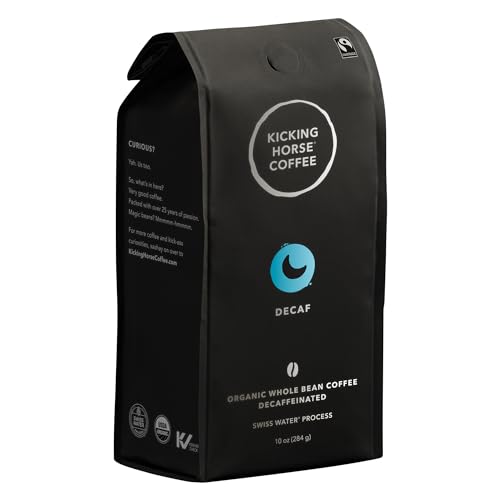 | An after-dinner cup in anything from a French press to an espresso machine | Top pick | |
| 2 | 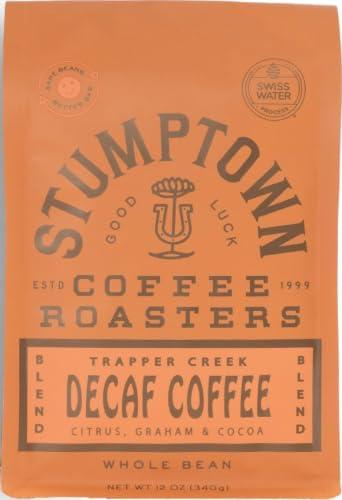 | Someone who drinks good coffee and wants the evening cup to be good too | Best specialty option | |
| 3 | 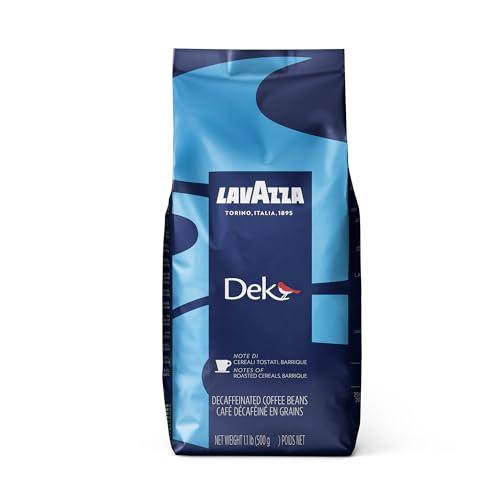 | A decaf shot that still looks like a shot | Best for an espresso machine | |
| 4 | 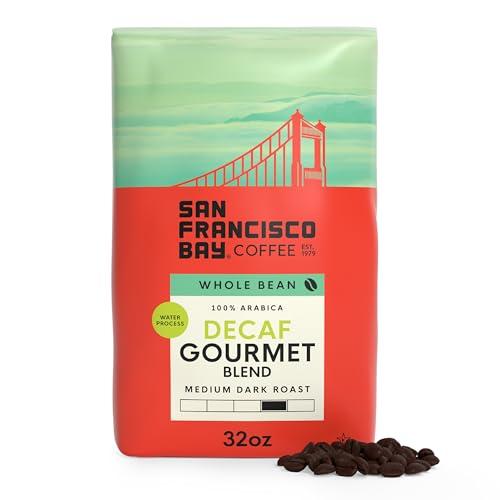 | A household where more than one person drinks decaf | Best value | |
| 5 | 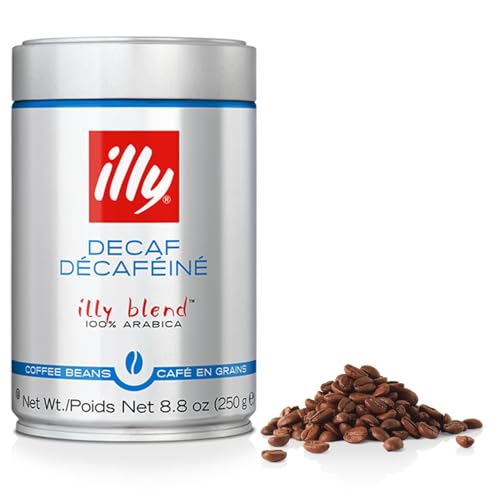 | Anyone who wants the evening cup to be identical every time | Most consistent | |
| 6 | 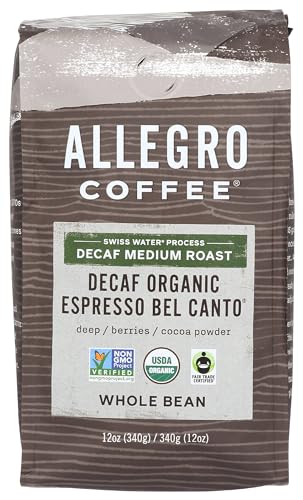 | Trying a specialty-grade decaf without committing much | Best cheap specialty bag | |
| 7 | 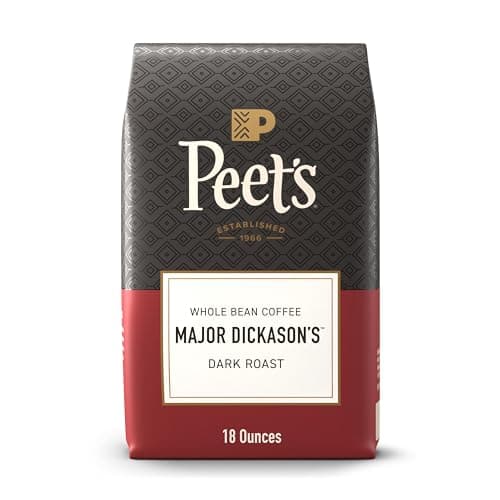 | Regular coffee, where we recommend it | Skip this one, if you want decaf |
1. Top pick
Kicking Horse Decaf
Specialty tier · A Swiss Water Process dark roast, certified organic and Fairtrade, in a 10 oz bag.
The one that prints the process on the bag: Swiss Water, dark roast, three certifications.
This is the top pick for a reason that has nothing to do with taste and everything to do with disclosure: Kicking Horse prints the decaffeination process on the front of the bag. Most decaf does not, and on a page about decaf that is the most useful fact available.
It is a Swiss Water Process decaf, which means caffeine is removed with water, temperature and time rather than a solvent. Swiss Water's own description of its method is that it uses only water, temperature and time, with a green coffee extract that is itself caffeine and chemical free, and no esters or solvents.
The roast is dark, and that is the right choice for this situation. An evening cup is usually drunk after food, often with milk, and a chocolate-forward dark roast holds up to both - Kicking Horse publishes notes of roasted hazelnuts, a chocolaty balanced body and a long finish, with a deep chocolate and nutty aroma.
It is certified organic, Fairtrade and Kosher, 100 percent Arabica, and Kicking Horse states it roasts from one ingredient only - green coffee, with no preservatives, additives, fillers or flavoring. For a decaf that is a meaningful claim, because flavoring is a common way to cover a thin decaf.
Kicking Horse names French press, drip, pour-over and espresso as suitable methods, which makes it the most flexible bag here. The 10 oz size is the smallest on the page and the price per ounce reflects that, and a dark roast hides origin character by design.
Specification
- Decaffeination
- Swiss Water Process, named on the bag
- Roast
- Dark
- Bag
- 10 oz
- Notes
- Roasted hazelnuts, chocolaty balanced body, long finish
- Certifications
- Organic, Fairtrade, Kosher, 100% Arabica
- Method guidance
- Kicking Horse names French press, drip, pour-over and espresso
What it does well
- The decaffeination method is printed on the bag, which most decaf does not do
- Dark and chocolate-forward, so it survives milk and a coarse grinder
- Three certifications and a single ingredient - green coffee, no additives
Where it gives ground
- 10 oz is the smallest bag here and the price per ounce reflects it
- A dark roast hides origin character by design
- Roasted in Canada, so US roast dates are less recent than a direct-ship roaster
Skip it if
Skip it if you want to taste fruit and acidity. A dark roast is built for body and sweetness, not clarity - the lighter bags below show more.
2. Best specialty option
Stumptown Trapper Creek Decaf
Specialty tier · Stumptown's decaf, from the roaster whose Hair Bender is this site's top bean pick.
Raisin, buttery and caramel, from the roaster this site already rates highest.
The complaint that drives people away from decaf is that it tastes like a weaker version of something. This is the bag on the page most likely to change that, because it comes from the roaster whose Hair Bender sits at the top of this site's bean pages.
Stumptown publishes notes of raisin, buttery and caramel, and describes the sweetness of raisins pairing with caramel in a creamy, buttery cup. That is a dessert profile rather than a generic smooth one, and it is exactly what an after-dinner cup wants.
The listing also carries the roaster's own line on the category - that decaf should not taste this good, but does - which is unusually direct marketing and matches what people actually expect from decaf.
Being from a specialty roaster, it ships closer to roasting than a supermarket bag, and roast date matters more to a decaf than to a regular coffee. Decaffeination is done before roasting, and a decaffeinated bean is more fragile and stales faster once roasted, so freshness is doing more work here than usual.
Two honest gaps. Stumptown's listing names no decaffeination process, so we do not claim one for it, and it publishes no roast level either, which is unusual for this roaster. We also could not read Stumptown's own page: stumptowncoffee.com returns HTTP 429 to automated fetches, as it did when we wrote the Hair Bender review.
Specification
- Notes
- Raisin, buttery and caramel
- Bag
- 12 oz by listed weight
- Roast
- Not stated on the listing
- Decaffeination
- Not stated on the listing
- Roaster
- Stumptown Coffee Roasters, Portland
- Siblings
- Same roaster as Hair Bender and Holler Mountain
What it does well
- The only specialty-roaster decaf here with published dessert-sweet tasting notes
- Comes from the roaster this site already rates highest on its bean pages
- Caramel and raisin are the notes that survive being drunk after a meal
Where it gives ground
- The listing names no decaffeination process, so we do not claim one
- No roast level is published either, which is unusual for Stumptown
- stumptowncoffee.com returns HTTP 429 to automated fetches, so the roaster's own page could not be read
Skip it if
Skip it if knowing the process matters to you. Kicking Horse and San Francisco Bay both name theirs and this one does not.
3. Best for an espresso machine
Lavazza DEK
Everyday tier · Lavazza's decaf espresso blend: Arabica and Robusta, dark roast, 1.1 lb.
The only decaf here with Robusta in it, which is what builds crema under pressure.
Decaf espresso is the hardest version of this problem. Decaffeinated beans behave differently under pressure, and the usual disappointment is a pale, thin shot with no crema on it. This is the bag that addresses that directly.
It is an Arabica and Robusta blend, and the Robusta is the whole point. Robusta produces noticeably thicker and longer-lasting crema than Arabica, which is why traditional Italian espresso blends contain it - and it is the one lever available for making a decaf shot look right.
Lavazza names the intended method on the listing rather than leaving it to you: best used with an espresso machine. None of the specialty bags here say that, and for a reader buying specifically for a machine it is the most useful line on the bag.
The roast is a creamy dark, with published notes of roasted cereals and barrique, blended and roasted in Italy. It is also produced in a nut-free facility and Lavazza states it contains only coffee.
Lavazza says the beans are decaffeinated using a natural process without saying which process, so this one sits in the middle on disclosure - more than silence, less than a named method. At 1.1 lb it is also more than a decaf-only household will finish while it is fresh.
Specification
- Roast
- Creamy dark roast
- Composition
- Arabica and Robusta blend
- Bag
- 1.1 lb
- Notes
- Roasted cereals and barrique
- Decaffeination
- Lavazza states a natural process, without naming it
- Intended use
- Lavazza's listing says best used with an espresso machine
What it does well
- The only decaf here with Robusta in it, which is what builds crema under pressure
- Lavazza names espresso as the intended method rather than leaving you to guess
- 1.1 lb at this price is strong value per ounce
Where it gives ground
- Lavazza calls the process natural but does not say which process
- A dark Robusta blend is built for body, not for clarity
- 1.1 lb is more than a decaf-only household finishes while it is fresh
Skip it if
Skip it for filter brewing. A dark Robusta blend built for crema is not what a pour-over cone is for - see the best coffee beans for pour-over.
4. Best value
San Francisco Bay Decaf Gourmet Blend
Everyday tier · A 2 lb Swiss Water Process bag aimed squarely at filter brewing.
Swiss Water Process, 2 lb, and explicitly aimed at filter brewing.
If decaf is what the house drinks rather than an occasional evening cup, the cost per ounce of a 10 oz specialty bag becomes the problem. This is the bag that fixes it without giving up the disclosure.
San Francisco Bay states that it decaffeinates all of its decaf coffees using the Swiss Water Process, and that there are no chemicals ever. Applying one named method across a whole range is a stronger signal than a single bag claiming it, because it is a sourcing decision rather than a product feature.
It is 2 lb, which is roughly three times the Kicking Horse bag and the lowest cost per ounce on the page by a wide margin. For two decaf drinkers that is a month rather than a week.
The roaster is explicit about what it is for: medium dark, 100 percent Arabica from Central and South America, and best for pour-over, drip and French press. A bag that names filter methods rather than claiming to suit everything is easier to buy correctly.
The size is also the catch, and it is the same one as any 2 lb bag. Decaf stales faster than regular coffee and 2 lb will outlast its freshness unless you decant into something airtight and open one portion at a time. The profile is blended for smoothness, so there is little origin detail in it.
Specification
- Decaffeination
- Swiss Water Process - the roaster states no chemicals ever
- Roast
- Medium dark
- Bag
- 2 lb
- Origin
- 100% Arabica from Central and South America
- Intended use
- The roaster names pour-over, drip and French press
- Certification
- Kosher
What it does well
- The largest bag here by a wide margin and the lowest cost per ounce
- Swiss Water is named outright, and applied to the roaster's whole decaf range
- Explicitly aimed at filter rather than sold as a vague all-rounder
Where it gives ground
- 2 lb will go stale in a decaf-only household unless it is decanted and sealed
- Medium-dark and blended for smoothness, so there is little origin detail
- No tasting notes beyond smooth and balanced
Skip it if
Skip it if one person drinks one decaf a week. You will be throwing most of it away stale - buy the 10 oz bag instead.
5. Most consistent
illy Decaf Classico
Everyday tier · The decaf version of illy Classico: 100% Arabica, medium roast, 8.8 oz.
The decaf Classico: all-Arabica, medium, and the same tin-to-tin predictability.
There is a real case for a coffee that never varies, and it is stronger for decaf than for anything else - this is the cup drunk at the end of the day, when nobody wants a surprise.
illy Decaf is the decaffeinated version of Classico, 100 percent Arabica, medium roast, with published notes of caramel, toasted bread and chocolate and a lingering sweetness. It is the cleanest, lightest profile on this page.
The consistency is the product. illy states eight decades of refining a single signature blend, and the regular Classico is one of the most predictable coffees sold - the tin you buy next year tastes like the one you buy this year. That carries across to the decaf.
The 8.8 oz size is the smallest here, and for a once-or-twice-a-week decaf drinker that is the correct size rather than a limitation. It is finished while it is still fresh, which is the thing that most often goes wrong with decaf.
Two trade-offs. 8.8 oz at this price is the highest cost per ounce on the page, and illy's listing names no decaffeination process. Being all-Arabica and medium it also produces less crema under pressure than the Lavazza, which is a trade rather than a fault.
Specification
- Roast
- Medium
- Composition
- 100% Arabica
- Bag
- 8.8 oz
- Notes
- Caramel, toasted bread and chocolate, with lingering sweetness
- Decaffeination
- Not stated on the listing
- Sibling
- The decaf counterpart to illy Classico
What it does well
- The same tin-to-tin consistency that makes regular illy Classico predictable
- All-Arabica and medium, which is the cleanest profile in this group
- The smallest bag here, so it is finished while it is still fresh
Where it gives ground
- 8.8 oz at this price is the highest cost per ounce on the page
- illy's listing names no decaffeination process
- Consistency is bought at the cost of much character, decaf or not
Skip it if
Skip it if you want character. Predictability is what you are buying, and that is the opposite of exploration - see illy Classico on the espresso bean page.
6. Best cheap specialty bag
Allegro Decaf Organic Espresso Bel Canto
Specialty tier · An organic decaf espresso blend in a 12 oz bag, and the cheapest bag on the page.
An organic decaf espresso blend with berry and cocoa notes, at the lowest price here.
Decaf is a category people are reluctant to spend on, usually because they have been disappointed before. This is the cheapest way onto this page that is still a specialty-grade organic bag.
Allegro calls it a specialty whole bean, medium roast, with published notes of deep, berries and cocoa powder. Berry and cocoa is an unusually specific note set at this price, and it is a different direction from everything else here - the other bags are nuts, caramel and chocolate.
It is sold as an organic espresso blend, so it is built for pressure like the Lavazza, but it is all medium-roast rather than a dark Robusta blend. In practice that makes it the most versatile of the two espresso-intended bags: it will take a filter brew without tasting flat.
At 12 oz it is sized for a household that drinks decaf a few times a week - large enough not to run out immediately, small enough to finish fresh.
The listing is thin. Allegro publishes the roast level and the tasting notes and very little else, including no decaffeination process. Availability also moves around more than the national brands on this page.
Specification
- Roast
- Medium
- Bag
- 12 oz
- Notes
- Deep, berries, cocoa powder
- Grade
- Allegro calls it specialty whole bean
- Decaffeination
- Not stated on the listing
- Intended use
- Named as an espresso blend
What it does well
- The lowest price on the page, and still an organic espresso blend
- 12 oz is the right size for a household that drinks decaf occasionally
- Berry and cocoa is an unusually specific note set for a decaf at this price
Where it gives ground
- Allegro's listing names no decaffeination process
- The listing carries almost no specification beyond roast level and notes
- Availability moves around more than the national brands here
Skip it if
Skip it if you want full disclosure or a published origin. This is the least documented bag here, which is part of why it is the cheapest.
7. Skip this one, if you want decaf
Peets Major Dickasons Blend
Everyday tier · A dark-roast blend of Latin American and Indo-Pacific beans.
A good dark roast, and the decaf version of it is sold ground, not whole bean.
This slot is here to answer the question people actually arrive with, which is whether they can buy the decaf version of the familiar supermarket bag they already like.
Major Dickason's is a well-made dark roast blending Latin American and Indo-Pacific beans, 100 percent Arabica, with published notes of earth and spice, dark chocolate and toasted nuts. The regular whole-bean 18 oz bag is a pick on this site's bean pages and deservedly so.
The decaf is a different product. Searching the live catalog on 2026-11-07, the decaf Major Dickason's that is actually in stock is a 10.5 oz GROUND bag - we found no whole-bean decaf version of it available. So for anyone who grinds their own, the straight swap does not exist.
That matters more for decaf than for regular coffee. Decaffeinated beans are more fragile and stale faster once roasted, so pre-ground decaf is the worst case in the whole category: a coffee that was already more delicate, ground weeks before you open it.
The honest recommendation is to buy the regular Major Dickason's whole bean if you want this profile with caffeine, and one of the bags above if you want decaf. We are not going to recommend a ground bag on a page about beans.
Specification
- Roast
- Dark
- Origins
- Latin America and Indo-Pacific
- Notes
- Earth and spice; dark chocolate, toasted nuts
- Beans
- 100 percent Arabica
What it does well
- Dark, heavy and completely unambiguous - it is what it says
- Cuts through milk better than most medium roasts
- Widely stocked, so restocking is never a project
Where it gives ground
- Dark roasts go flat quickly once opened
- Oily beans are hard on grinder burrs and chutes
- No origin character to speak of - that is the point, but it is a limit
Skip it if
Skip the decaf. For the caffeinated version in whole bean it is a good buy - see the best coffee beans.
What each bag actually tells you
Scroll the table sideways to see every column.
Decaf behaves differently, and the grinder is where you notice
Decaffeination is a wet process applied to green coffee, and beans that have been through it roast differently - they tend to darken faster and end up more brittle than the same coffee with its caffeine intact. The practical consequences are small but real, and nobody tells you about them.
- It grinds finer at the same setting. A more brittle bean fractures more readily, so the grind you dialed in for a regular coffee will come out finer in decaf. On an espresso setup, expect to go a step or two coarser rather than finer.
- It stales faster. This is the main one. Buy the smallest bag you will finish, keep it airtight, and treat a 2 lb bag as something to decant rather than to open and work through.
- It is hard to judge by color. Decaf beans often look darker-roasted than they are, so the usual visual check tells you less. Go by the roaster's published roast level, which is one more reason the table above matters.
The evening cup, specifically
Most decaf is bought for a particular moment - after dinner, after a meal with guests, at the end of a day when another coffee would cost you the night. That situation rewards a different bag from a morning coffee.
It is usually drunk after food, often with something sweet, and frequently with milk. That favors the darker, chocolate-and-caramel profiles at the top of this page over a light, bright, acidic coffee, which tastes thin against dessert. It is also usually one or two cups rather than a pot, which is why the smaller bags are not a compromise.
If you are serving it to a room, the arithmetic changes - coffee makers for a crowd covers the second-pot problem, which at a holiday meal is almost always the decaf pot.
What we deliberately do not claim
We do not state a caffeine content for any of these bags, because none of the roasters publishes one and a number we cannot source is not a number we will print. We do not score or rank them by taste, and we have not tasted them side by side - every description above is the roaster's own published copy.
We also could not read four of these roasters' own websites: kickinghorsecoffee.com, illy.com and lavazzausa.com returned 404 on the product pages we tried, and stumptowncoffee.com returns HTTP 429 to automated fetches. Everything quoted comes from each maker's own copy on its live retail listing, verified on 2026-11-07 - the same sourcing route used for the Hair Bender review, and stated here rather than hidden.