The short answer
Buy Hair Bender if you own one grinder and brew more than one way - it is the rare blend the roaster explicitly builds to work across espresso, filter and cold brew, and the published composition explains why it manages it. Note that the Amazon bag is 18 oz rather than Stumptown's 12 oz retail size, which makes it better value per ounce than its reputation suggests. Buy Holler Mountain instead if filter coffee is the whole job and you want organic certification. Buy Lavazza Super Crema if you are learning espresso and want a bean that forgives a grinder you have not dialed yet. Buy Peet's Major Dickason's if most of your coffee goes into milk, where a medium roast's fruit is wasted.
What "works no matter how you brew it" actually means
Most blends are built for a method. An espresso blend is roasted and composed to survive nine bars and a thirty-second contact time; a filter blend is built for three minutes of gravity through paper. The two jobs pull in opposite directions, which is why a bag optimized for one usually disappoints in the other.
Hair Bender's composition is the answer to how it covers both. Latin American coffees give it the clean sweetness and citrus acidity that filter brewing rewards. The Indonesian component gives it body and a darker, earthier register - the dark chocolate and raisin in the published notes - which is what keeps an espresso shot from tasting thin and sharp.
The practical consequence is that the same bag tastes different depending on what you do with it, and both versions are good. In a French press the chocolate and raisin come forward and the citrus recedes. In a V60 that inverts. This is not a flaw to dial out; it is the bean doing what it was built to do, and it is the reason this site picks it on five separate bean roundups.
What Stumptown does not publish
A specification review has to say what is missing as well as what is there. For Hair Bender, Stumptown publishes the roast level as medium, three origin regions, three tasting notes, and that it is 100 percent Arabica. That is it.
There is no published elevation, no varietal list, no processing method and no roast-level number - and no caffeine figure, which is a thing people search for and which we are not going to invent. "Complex flavor profile" is the roaster's phrase, and it is doing work that no published detail backs up. None of that makes it a worse coffee. It does mean that if you are the kind of buyer who wants to know whether your beans were washed or natural, from which farm, at what altitude, this bag will not tell you - and a single origin from the same roaster would.
The one sourcing detail Stumptown does commit to in writing is its Direct Trade program, defined by three principles: paying higher prices tied to quality, maintaining relationships with known producers over many years, and building collaborative partnerships. That is more specific than a certification logo and less verifiable than one. Treat it as a stated commitment rather than an audited claim.
Quick picks
The answer first. Tap any row to jump to the full reasoning for that pick.
Prices shown are checked daily against the retailer, as of November 4, 2026. We never write a price into the text of a page.
| # | Product | Best for | Award | Price |
|---|---|---|---|---|
| 1 | 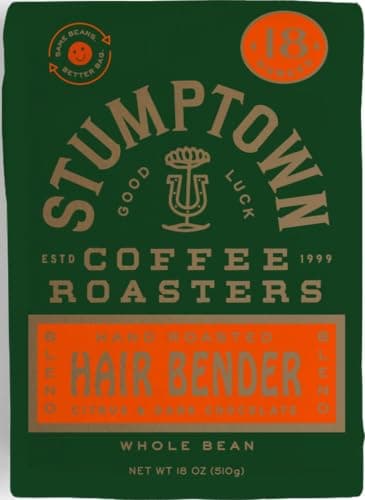 | One bag in a house that brews more than one way | The coffee reviewed | |
| 2 | 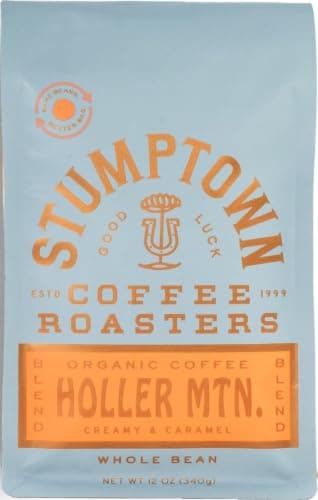 | A daily pour-over or drip bag from the same roaster | The same roaster, if filter is the job | |
| 3 | 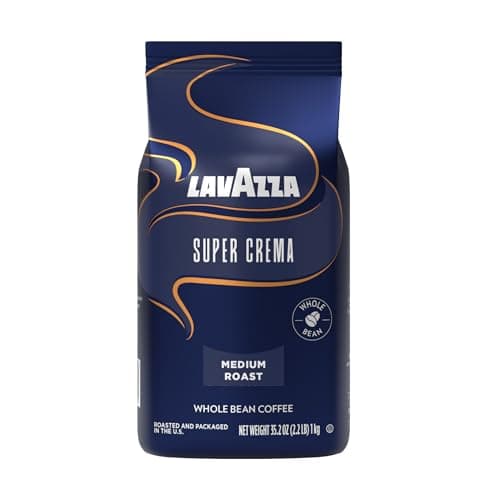 | Learning espresso, or milk drinks in volume | If espresso needs to be forgiving | |
| 4 | 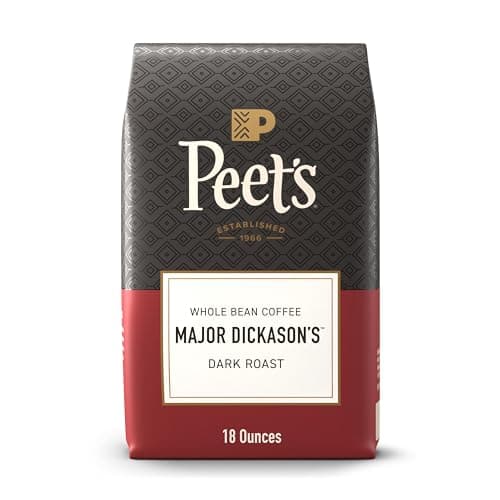 | Milk drinks, big batches, and anyone who finds medium roasts thin | The same bag size for much less |
1. The coffee reviewed
Stumptown Hair Bender
Specialty tier · A medium-roast blend built to work as espresso and as filter.
A medium-roast blend the roaster builds to work across every brew method, and it does.
Hair Bender is Stumptown's original blend and still its best known. The roaster's own description is the clearest statement of what it is for: "the sweet and balanced coffee that started it all", with "a flavor profile that shines no matter how you brew it".
The composition is published: 100 percent Arabica, drawn from Latin America, Indonesia and Africa, with tasting notes of sweet citrus, dark chocolate and raisin. The Indonesian component is the part that matters most to how it behaves - it is where the heavier, earthier body comes from, and it is why the same bag reads as chocolate and raisin in a press and as citrus in a V60.
Stumptown names espresso first in its own list of brewing methods, ahead of cold brew and pour-over, and that ordering is fair. A medium roast with this much sweetness pulls a shot that is neither the flat caramel of a dark espresso blend nor the aggressive acidity of a light single origin.
It is sold under Stumptown's Direct Trade program, which the roaster defines by three principles: paying higher prices tied to quality, working with producers it knows over many years, and building collaborative partnerships. That is a sourcing commitment rather than a flavor claim, and it is a real part of what the bag costs.
One practical thing worth knowing: the Amazon bag is 18 oz, not the 12 oz Stumptown sells at retail. Half again the coffee in one bag changes the per-ounce math more than most people expect, and it moves this bean from the top of the specialty price range to the middle of it. Compare the buttons on this page rather than assuming.
Specification
- Roast
- Medium
- Origins
- Central and South America, East Africa, Indonesia
- Notes
- Sweet citrus, dark chocolate, raisin
- Beans
- 100 percent Arabica
What it does well
- One of the few blends that is genuinely good both as espresso and as pour-over
- Roast dates are recent and printed on the bag
- The fruit is present without being sour
Where it gives ground
- Costs multiples of a supermarket kilo bag
- No published elevation, varietal or processing method - it is a blend, not a traceable single origin
- The acidity will surprise anyone coming from dark-roast blends
Skip it if
Skip it if you want to taste a specific farm. A blend engineered to work in every brewer is, by construction, not optimized for any one of them - that is the trade, and it is a real one.
2. The same roaster, if filter is the job
Stumptown Holler Mountain
Specialty tier · A certified organic medium-roast blend the roaster builds for both drip and espresso.
Certified organic, caramel-forward, and built with drip in mind rather than espresso.
This is the comparison people actually search for, and the two beans are genuinely different rather than two labels on one coffee.
Holler Mountain is a medium-roast blend of Central and South American coffees with East African coffee - no Indonesian component - and it is certified organic, which Hair Bender is not. Stumptown publishes its notes as citrus, caramel and berry jam.
Caramel is the operative word. Where Hair Bender leans on dark chocolate and raisin, Holler Mountain's sweetness is lighter and carries the fruit rather than sitting underneath it. In a cone that is the more forgiving profile: there is less heavy body to go muddy if your pour is uneven.
Stumptown publishes brewing guidance for drip and AeroPress as well as espresso on this one, and it is the bean this site picks first on best coffee beans for pour-over.
Against it: it comes in a 12 oz bag rather than Hair Bender's 18 oz, so reordering comes round faster if filter coffee is daily, and the berry note is easy to lose if your water is too hot.
Specification
- Roast
- Medium
- Origins
- Central and South America blended with East Africa
- Notes
- Citrus, caramel, berry jam
- Certification
- Certified organic
- Bag sizes
- 12 oz and 5 lb
What it does well
- The roaster publishes brewing guidance for drip and AeroPress as well as espresso
- Organic certification at a specialty roaster that prints roast dates
- Caramel sweetness carries the fruit rather than fighting it
Where it gives ground
- Costs several times a supermarket bag
- 12 oz means reordering often if pour-over is daily
- The berry note is easy to lose if the water is too hot
Skip it if
Skip it if espresso is half of what you make. Hair Bender's heavier body is the better shot, and the Indonesian component is why.
3. If espresso needs to be forgiving
Lavazza Super Crema
Everyday tier · A medium-roast Arabica and Robusta espresso blend sold in 2.2 lb bags.
Robusta in the blend, thick crema, and far less punishing of a grind that is slightly off.
If the honest answer to "is Hair Bender good for espresso" is yes-but, this is the bean that explains the but.
Super Crema is a 60/40 Arabica and Robusta blend from Brazil, Central America and Indonesia, roasted medium and full-bodied, with notes of hazelnut and brown sugar. The Robusta is the point: it produces the thick, persistent crema that people associate with espresso, and it does it almost regardless of what you do - see Arabica vs Robusta.
That forgiveness is the real feature. A medium-roast single-method specialty blend like Hair Bender rewards a dialed grinder and punishes a vague one. Super Crema will give you something drinkable from a setting that would make Hair Bender sour or hollow.
It also comes in a 2.2 lb bag, which is a lot of coffee per order and genuinely cheap per shot.
Against it, and this is the trade: the roast date is rarely recent by the time it reaches you, a kilo is a lot to get through while fresh, and it is not a bean for tasting origin character. You are buying consistency, not expression.
Specification
- Blend
- 60/40 Arabica and Robusta
- Origins
- Brazil, Central America, Indonesia
- Roast
- Medium, full-bodied
- Notes
- Hazelnut, brown sugar
- Bag
- 2.2 lb / 1 kg
What it does well
- Robusta in the blend produces the thick crema beginners are chasing
- Very forgiving of a slightly-off grind setting
- Cheap per shot, and available everywhere
Where it gives ground
- Roast date is rarely recent by the time it reaches you
- A kilo is a lot of coffee to get through while fresh
- Not a bean for tasting origin character
Skip it if
Skip it if you brew filter as well as espresso. Robusta in a V60 is not what anyone wants - see espresso beans vs coffee beans.
4. The same bag size for much less
Peets Major Dickasons Blend
Everyday tier · A dark-roast blend of Latin American and Indo-Pacific beans.
A dark roast that is completely unambiguous about what it is, in the same 18 oz bag.
This is the value cross-shop, and it is a fair one because the bag is the same size - 18 oz, like Hair Bender's Amazon format - so the per-ounce comparison is direct rather than a sleight of hand.
Major Dickason's is a dark roast of Latin American and Indo-Pacific beans, 100 percent Arabica, with published notes of earth and spice, dark chocolate and toasted nuts. It is heavy, low-acid and entirely unsubtle, and that is the design rather than a failure.
Where it genuinely wins: it cuts through milk better than most medium roasts. If most of what leaves your kitchen is a latte, the fruit in Hair Bender is largely wasted and the darker roast will read more clearly through steamed milk.
It is also stocked almost everywhere, so restocking is never a project.
Against it: dark roasts go flat fast once opened, the oily surface is hard on grinder burrs and chutes, and there is no origin character to speak of. You are buying a flavor, not a coffee.
Specification
- Roast
- Dark
- Origins
- Latin America and Indo-Pacific
- Notes
- Earth and spice; dark chocolate, toasted nuts
- Beans
- 100 percent Arabica
What it does well
- Dark, heavy and completely unambiguous - it is what it says
- Cuts through milk better than most medium roasts
- Widely stocked, so restocking is never a project
Where it gives ground
- Dark roasts go flat quickly once opened
- Oily beans are hard on grinder burrs and chutes
- No origin character to speak of - that is the point, but it is a limit
Skip it if
Skip it if you drink your coffee black and want to taste anything beyond roast. That is precisely what the specialty bags above are for.
Is Hair Bender good for espresso?
Yes, with one caveat that decides whether it is right for you. Stumptown lists espresso first among its brewing methods, and the blend has the body to support a shot - which many medium roasts do not.
The caveat is forgiveness. Hair Bender has real acidity, and acidity is unkind to an under-extracted shot: pull it coarse or short and the citrus turns sour rather than merely weak. A Robusta-containing espresso blend hides that mistake; this does not. If your grinder is dialed and you weigh your dose, that is an advantage, because the bean is telling you the truth about your technique. If you are still learning, it is a tax.
The site's full shortlist for shots is at best coffee beans for espresso, where this is the top pick for exactly that reason - and where the more forgiving options are named.
How it compares
Scroll the table sideways to see every column.
Who should buy it
- One-grinder households that brew more than one way, which is the case this bean exists for and the reason it appears across every bean roundup here.
- Anyone moving up from supermarket coffee who drinks it black, where the jump in sweetness and clarity is the most noticeable upgrade available for the money.
- Espresso drinkers with a dialed grinder, who will get a shot with genuine fruit rather than just roast.
- Anyone who has been put off specialty coffee by price, because the 18 oz Amazon format is a meaningfully different proposition from the 12 oz bags most specialty roasters sell.
Who should not
- Single-origin drinkers, who want elevation, varietal and process on the bag. None of it is published here.
- Anyone learning espresso on an unmeasured grinder, where this bean's acidity will punish a setting that a Robusta blend would forgive.
- Households where almost everything is a milk drink, since the fruit that justifies the price largely disappears under steamed milk.
- Anyone buying coffee by the kilo for cost, which is a different purchase entirely and a legitimate one.