The short answer
Buy the Gaggia Classic Evo Pro if you want an espresso machine you can still own in ten years. Durability in this category is decided by parts availability rather than by brand: the Gaggia pairs commercial parts - a 58 mm group, a 3-way solenoid valve, a small 140 ml boiler - with the largest modification and spare-parts community in home espresso. The Rancilio Silvia is the better-built object, with a brass brewing group and a chrome-plated brass portafilter on a 0.3 L boiler, and is the pick if materials matter more than the parts network. Avoid assuming the most expensive machine lasts longest: the Breville Dual Boiler is the most capable here and has twice the components to fail, and sealed thermoblock machines like the Bambino cannot be serviced at all.
The four things that decide whether a machine lasts
Longevity in home espresso is unusually predictable, because the failure modes are few and the same ones recur. These are the four that matter, in order.
- 1Can you get parts? This is first by a wide margin. A machine with a parts channel and a community outlives a better-built machine without one, because the thing that ends a machine's life is usually a $30 component nobody stocks.
- 2What is the boiler made of, and how big? Brass and stainless survive heat cycling and descaling better than aluminum. A smaller boiler heats less water, which means less scale accumulated per year.
- 3Is there a 3-way solenoid valve? It releases pressure after the shot so the group is not left wet and under load. It is a commercial feature and its absence shows up as wear around the group.
- 4How much electronics is in it? PID controllers, volumetric dosing and touch displays all work well and all add failure surface. Electronic failures are the ones most likely to make a repair uneconomic.
Notice what is not on that list: brand reputation, price and wattage. None of the three predicts how long a machine keeps working.
Scroll the table sideways to see every column.
Quick picks
The answer first. Tap any row to jump to the full reasoning for that pick.
| # | Product | Best for | Award | Price |
|---|---|---|---|---|
| 1 | 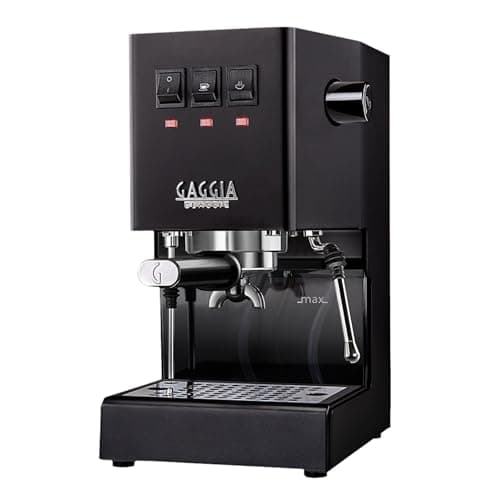 | Someone who intends to still own this machine in ten years | Top pick: most repairable | |
| 2 | 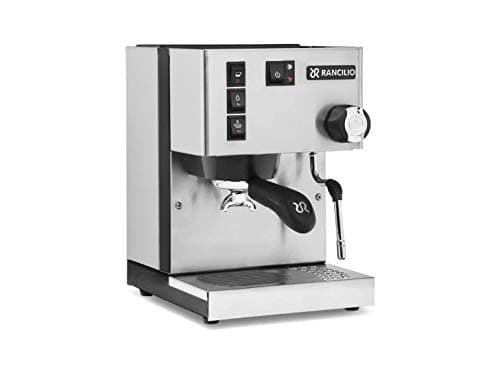 | Buying once, on materials rather than features | Best built | |
| 3 | 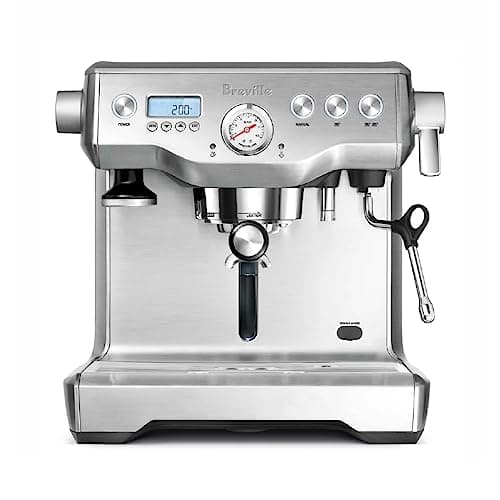 | Someone who wants capability now and accepts a shorter repair horizon | Most capable, most to go wrong | |
| 4 | 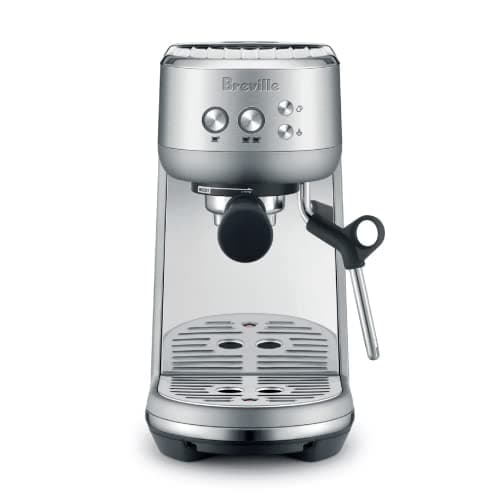 | Short mornings, small counters, and replacing rather than repairing | Best sealed unit | |
| 5 | 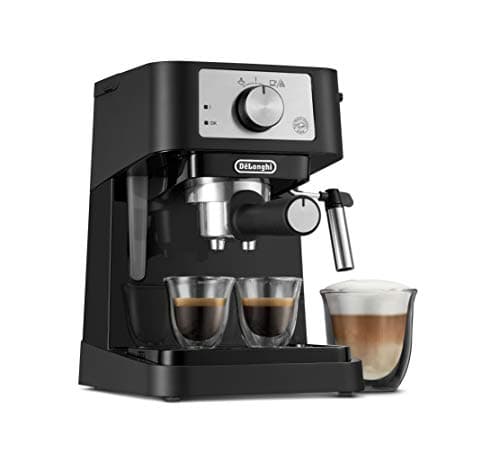 | Finding out whether you like making espresso at all | Skip this if longevity matters |
1. Top pick: most repairable
Gaggia Classic Evo Pro
Mid tier · A 58 mm single-boiler machine with commercial parts and a large modification community.
Commercial parts, the 58 mm standard, and the largest modification community in home espresso.
This is the machine to buy if longevity is the actual goal, and the reason is not build quality in the abstract - it is the parts ecosystem around it.
It uses a 58 mm commercial group, a 3-way solenoid valve and a two-hole professional steam wand. The solenoid is the detail that matters most: it dumps line pressure after the shot, which leaves a dry puck and keeps the group from sitting wet. That is a commercial design feature, not a home-machine one.
Its published electrics are 1425 W total with 1375 W to a 140 ml boiler (about 105 ml operating), on a 2.1 L tank. Small boiler, simple circuit, few things to go wrong.
The decisive advantage is the community. This machine has the deepest aftermarket and modification following of any home espresso machine, which in practice means guides, spare parts and people who have already solved whatever breaks. Nothing else here comes close on that axis - see machines with a 58 mm portafilter for why the basket standard feeds the same effect.
What you give up is convenience. It is a single boiler, so brewing and steaming happen one after the other, and there is no PID, so brew temperature is managed with a routine rather than set as a number.
Specification
- Portafilter
- 58 mm
- Power
- 1425 W total; 1375 W to the boiler
- Boiler
- 140 ml max capacity, 105 ml operating
- Water tank
- 2.1 L / 72 fl oz
- Steam
- Two-hole professional wand
- Valve
- 3-way solenoid
What it does well
- 58 mm from the start - every basket, tamper and portafilter fits
- The 3-way solenoid gives a dry puck, which cheap machines do not
- Serviceable and heavily documented; parts are everywhere
Where it gives ground
- No PID as shipped; brew temperature drifts with the thermostat
- Long recovery between brewing and steaming
- The modification path is a hobby, not a feature
Skip it if
Skip it if you want milk drinks at a button or a machine that needs no routine. Repairability is not the same as ease.
2. Best built
Rancilio Silvia
Prosumer tier · A single-boiler 58 mm machine built from commercial-line parts.
A brass brewing group and a 0.3 L boiler in a machine assembled from commercial-line parts.
The Silvia is the honest answer to 'which one is built best' in this price range. Rancilio publishes a brass brewing group and a chrome-plated brass portafilter on a 0.3 liter boiler, in a body weighing 14 kg - and notably does not state the boiler material itself.
The brass that is published is the part in the brew path, and that is the part that matters. A brass group and portafilter are thermal mass: they hold heat between shots, which is why this machine produces consistent shots once warm, and brass does not degrade the way aluminum and plastic do over years of heat cycling and descaling.
The electrics are deliberately plain: a 950 to 1000 W element at 120 V on a 2 L tank, single boiler, no PID from the factory. Fewer electronics is fewer failure points, and it is why these machines turn up working after a decade.
Rancilio builds it from the same parts bin as its commercial line, which is the structural reason parts exist and technicians recognize it.
It expects temperature surfing - timing the shot against the heating cycle - and that is a real learning cost that a PID would remove. It is also the most expensive machine here short of the dual boiler. The full review covers what its published specification does and does not say.
Specification
- Group
- Brass brewing group, 58 mm commercial basket standard
- Portafilter
- Chrome-plated brass; takes filters up to 21 g
- Baskets
- 8/16 g and 14/18 g
- Boiler
- 0.3 L single boiler, brew and steam (Rancilio does not publish the material)
- Water tank
- 2 L
- Element
- 120 V, 950-1000 W
- Pump
- Single vibration pump
- Temperature
- Manual regulation by thermostat - no PID
- Dimensions
- 235 x 340 x 290 mm
- Weight
- 14 kg / 30.8 lb
What it does well
- A brass brewing group and chrome-plated brass portafilter hold heat like far more expensive machines
- Commercial parts and a repair path measured in decades
- Steam power well beyond its price class
Where it gives ground
- No PID; temperature surfing is part of the routine unless you add one
- Single boiler means waiting between brewing and steaming
- Unforgiving of a bad grinder - it will show you every flaw
Skip it if
Skip it if you want the machine to manage temperature for you, or if you make several milk drinks back to back.
3. Most capable, most to go wrong
Breville Dual Boiler
Prosumer tier · A true dual-boiler 58 mm machine: brew and steam at once, PID on the brew boiler.
Two PID-controlled boilers and 58 mm baskets - and twice the components to eventually service.
This is on the page as the honest counterweight. It is comfortably the most capable machine here: dual stainless boilers, PID on the espresso boiler, low-pressure pre-infusion then 9 bar, and a 58 mm stainless portafilter at a 22 g dose.
It also has the most to fail. Two boilers means two heating circuits, two sensors and two safety paths, plus the controller that coordinates them. Every one of those is a part that a single-boiler machine simply does not have.
That is not a prediction that it will break. It is an observation about surface area, and it is the trade you accept for brewing and steaming simultaneously.
It does use the 58 mm standard, so baskets, tampers and portafilters are the widely available sizes - the accessory half of longevity is covered.
At 37.9 x 40.3 x 37.1 cm it is also the largest machine here, and electronics-heavy machines are the ones most likely to be uneconomic to repair once a board goes. If simultaneous steaming is not the requirement, the layout comparison explains what you would be paying for.
Specification
- Portafilter
- 58 mm stainless, 22 g dose
- Boilers
- Dual stainless steel, separate espresso and steam
- Control
- PID on the espresso boiler
- Extraction
- Low-pressure pre-infusion, then 9 bar
- Footprint
- 37.9 x 40.3 x 37.1 cm
What it does well
- Brew and steam simultaneously - the actual reason to buy dual boiler
- 58 mm commercial basket size opens the whole accessory market
- PID plus programmable pre-infusion
Where it gives ground
- Big, heavy and power-hungry
- Overkill if you drink one straight espresso a day
- Still needs a grinder at a matching level to be worth it
Skip it if
Skip it if longevity is genuinely your first priority. Buy the Gaggia and spend the difference on a grinder.
4. Best sealed unit
Breville Bambino
Entry tier · A compact 54 mm espresso machine with a manual steam wand and no grinder.
ThermoJet heating, ready in three seconds, and almost nothing a home owner can service.
The Bambino is the opposite philosophy and it deserves a fair hearing. There is no boiler holding water at temperature - a ThermoJet heats water in transit and the machine is ready in about three seconds.
Fewer heated liters means less scale, and scale is what kills home machines more often than mechanical wear. On that narrow measure the design is genuinely durable.
It does low-pressure pre-infusion then 9 bar, which is real extraction behavior rather than a pressurized shortcut, and it does it in a 11.9 x 6.1 x 13.5 in footprint.
The catch is that it is a sealed appliance. There is no modification community, no parts counter and no realistic path to opening it up in year eight. When it stops, you replace it.
It is also 54 mm, so it sits on Breville's accessory sizing rather than the commercial standard - which narrows the parts argument further.
Specification
- Portafilter
- 54 mm, 18 g dose
- Heating
- ThermoJet, ready in 3 seconds
- Extraction
- Low-pressure pre-infusion, then 9 bar
- Footprint
- 11.9 x 6.1 x 13.5 in
- Grinder
- None - buy separately
What it does well
- Three-second heat-up means it is genuinely usable on a weekday
- The narrowest footprint of any machine here
- Real steam wand you control yourself
Where it gives ground
- No grinder, so the real budget is machine plus grinder
- Manual milk texturing has a learning curve
- Small tank means frequent refills if you pull several drinks
Skip it if
Skip it if you want to be able to repair the machine. This is a buy-and-replace design, honestly stated.
5. Skip this if longevity matters
De Longhi Stilosa EC260
Budget tier · About the cheapest pump espresso machine worth naming, with a manual steam wand.
The cheapest pump machine worth naming - and built to a price that forecloses repair.
The Stilosa is a reasonable way to spend very little and discover whether espresso is a hobby you want. It is on this list as the one to avoid if your question is specifically about longevity.
It uses pressurized dual-wall baskets, a 15 bar pump and a 34 oz tank with a manual steam wand. Pressurized baskets generate crema mechanically rather than through extraction, which means the machine cannot show you whether your grind or dose improved.
For durability the problem is structural rather than a defect: at this price the housing, fittings and group are built to a cost, there is no parts channel, and no technician will quote on one. Repair is not part of the product.
It is also the machine people most often outgrow within a year, which is its own kind of short life - the hardware may survive while the owner has moved on.
If the budget genuinely stops here it remains a defensible purchase. Just buy it knowing it is a trial, not an heirloom - the under-$200 bracket sets out the alternatives.
Specification
- Pump
- 15 bar
- Water tank
- 34 oz / 1 L
- Baskets
- Pressurized dual-wall
- Milk
- Manual steam wand
What it does well
- A real manual steam wand at a price where sleeved frothers are the norm
- Larger tank than most machines in the bracket
- Simple enough that there is very little to go wrong
Where it gives ground
- Pressurized baskets cap extraction quality and hide what your grind is doing
- Plastic construction throughout
- The bracket's ceiling is low; this is the best of a compromised field
Skip it if
Skip it for longevity. Buy it as a cheap trial, and expect to replace rather than repair it.
Scale is what actually kills home machines
Mechanical wear is rarely what ends a home espresso machine. Scale is. Minerals drop out of heated water and build up inside the boiler, the thermostat pocket and the solenoid, and the machine slowly stops holding temperature or stops passing water at all.
Two consequences follow, and both are more useful than any brand comparison. First, a machine that heats less water accumulates less scale, which is a quiet argument for small boilers and heat-on-demand designs. Second, descaling on a schedule does more for longevity than anything you can buy - how to descale, and how often is the single highest-value maintenance page on this site.
Why the 58 mm standard is a durability feature
This sounds like an accessory question and it is really a lifespan question. 58 mm is the commercial basket standard, so baskets, portafilters, screens, gaskets and tampers are made for it by many suppliers and stay available for years.
A machine on a proprietary or less common size depends on one manufacturer continuing to supply consumables. When that stops, the machine is finished even though nothing has broken. Both of the long-life picks here are 58 mm, and that is not a coincidence.
What nobody can tell you
No manufacturer in this category publishes a service life, a mean time between failures or a failure rate, and this site will not substitute a number from a review. So there is no honest way to say a given machine lasts eleven years.
What is knowable is what the machine is made of, whether it has a solenoid, what basket standard it uses, how much electronics it carries and whether parts exist. Every claim on this page is one of those, and that is deliberate.
The same logic applies to the grinder, which outlives most machines and matters more to the cup. Baratza's reputation rests on selling individual parts for years - see how to choose a grinder, and what a setup actually costs to run for the running-cost side.