The short answer
Buy the C3 if you brew filter coffee and want real burr grinding for the least money - 38 mm stainless conical burrs, metal internals and double bearings at this price is the best specification-per-dollar in hand grinding. Do not buy it for espresso: at about 23 microns per click and 38 mm of burr, the resolution is marginal and the effort is high. Buy the Kingrinder K6 for that, or a Baratza Encore if nobody in the house wants to crank a handle every morning.
The three numbers that define it
Burr diameter is 38 mm. Step size is about 0.0233 mm. Capacity is 25 g. Everything else about this grinder follows from those three figures.
38 mm sets the effort. A burr set removes coffee in proportion to its diameter, so a 38 mm set needs more rotations per dose than the 48 mm sets on the grinders above it. For a 15 g filter dose that is a minor difference. For a fine 18 g espresso dose it is the difference between 40 seconds and well over a minute of real work.
23 microns per click sets the ceiling. Filter brewing adjusts in coarse strokes - the whole usable range from French press to V60 spans many clicks. Espresso dialing happens in single-click steps, where the difference between a 25-second shot and a 35-second one can be two clicks. A 23-micron step is a blunt instrument in that window.
25 g sets the workflow. One load is one brew. That is elegant for a single V60 or AeroPress dose and awkward in a house where two people want coffee at the same time.
Why the internals matter more than the price suggests
The specification that separates this from the genuinely cheap hand grinders is not the burr material, it is the double-bearing axis and the absence of plastic internals. A single-bearing or bushed shaft deflects under grinding load, and a shaft that moves off center produces a wider spread of particle sizes than the burrs themselves would.
That is why a cheap grinder with the same nominal burr diameter can grind worse: the burrs were never the limit. It is also why the C3's aluminum body and steel shaft are worth noting rather than treating as cosmetics.
Quick picks
The answer first. Tap any row to jump to the full reasoning for that pick.
Prices shown are checked daily against the retailer, as of October 17, 2026. We never write a price into the text of a page.
| # | Product | Best for | Award | Price |
|---|---|---|---|---|
| 1 | 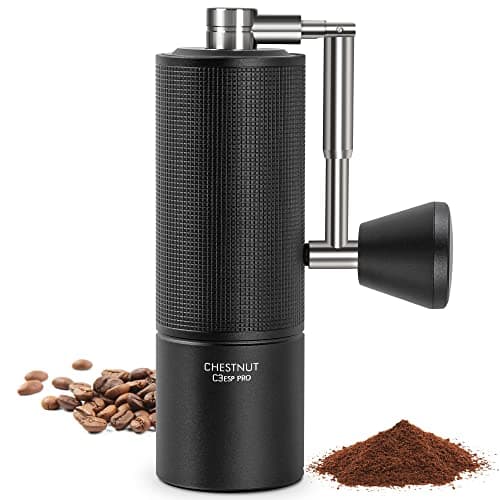 | One filter brew a day, on the tightest sensible budget | The grinder reviewed | |
| 2 | 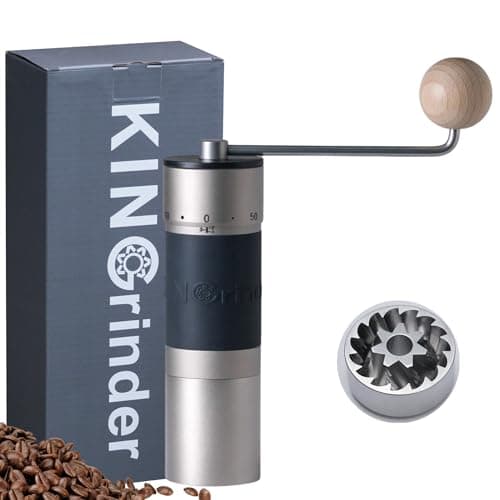 | One hand grinder that has to do espresso as well as filter | The step up for espresso | |
| 3 | 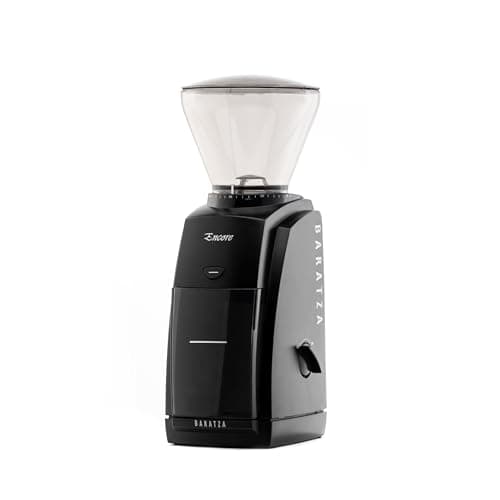 | A kitchen counter where nobody wants to crank anything | The electric alternative at a similar budget |
1. The grinder reviewed
Timemore Chestnut C3
Manual tier · The budget hand grinder that made stainless conical burrs cheap.
Filter-grade burr grinding at a price that used to buy a blade mill.
The C3 runs 38 mm S2C stainless conical burrs hardened to 55-58 HRC. That is the whole argument for it: a real conical burr set, cutting coffee to a consistent size, at a price where the alternative is a blade grinder smashing it into dust and boulders.
Adjustment is stepped, with roughly 36 settings at about 0.0233 mm - 23.3 microns - per click. For filter brewing that is plenty of resolution: the gap between a good V60 and a good French press is many clicks wide, not one.
The build is the part that surprises people at the price. It is an aluminum body on a double-bearing axis with no plastic internals. Double bearings matter more than they sound: they keep the shaft centered under load, and a shaft that wobbles grinds unevenly no matter how good the burrs are.
Capacity is 25 g and it weighs about 530 g. A 25 g load is almost exactly one AeroPress or one V60 dose, so a single brew fits in one go with nothing rattling around.
It is also small and light enough to travel with, which is a real secondary use - see best hand grinders for travel.
Specification
- Burrs
- 38 mm S2C stainless conical, 55-58 HRC
- Settings
- Roughly 36, about 0.0233 mm per click
- Capacity
- 25 g
- Weight
- About 530 g
- Build
- Aluminum body, double-bearing axis, no plastic internals
What it does well
- Filter-grade grind quality at a genuinely low price
- Metal internals and double bearings, not a toy
- Small and light enough to travel with
Where it gives ground
- 38 mm burrs make an espresso dose slow work
- Espresso resolution is marginal
- 25 g capacity limits you to one brew at a time
Skip it if
Skip it if an espresso machine is in the plan. Its resolution and its burr size both run out exactly where espresso starts.
2. The step up for espresso
Kingrinder K6
Manual tier · A 48 mm hand grinder with external adjustment and a hex shaft you can drive with a drill.
48 mm burrs, external adjustment and 16 microns per click - espresso resolution, for not much more.
If espresso is anywhere in the picture, this is the grinder to buy instead, and the reason is two numbers rather than brand preference.
The burrs are 48 mm heptagonal stainless conical - a full 10 mm larger than the C3's. Burr diameter sets how much coffee each rotation removes, so the same dose takes fewer turns and markedly less effort. On an espresso dose, which is the finest and therefore hardest grind, that difference is the one you feel.
Adjustment is external at 60 clicks per rotation and about 16 microns per click. Sixteen microns is genuine espresso resolution: one click visibly changes shot flow. At the C3's 23 microns the same adjustment is a coarser jump than the window you are trying to land in.
External adjustment also means switching between espresso and filter is two numbers on a ring rather than dismantling anything, which makes a single-grinder household workable.
Its quarter-inch hex shaft takes a cordless drill, which removes the main objection to hand grinding when you are making more than one drink.
Specification
- Burrs
- 48 mm heptagonal stainless conical
- Adjustment
- External, 60 clicks per rotation
- Resolution
- 16 microns per click
- Capacity
- 30-35 g
- Weight
- 630 g
- Shaft
- Quarter-inch hex drive
What it does well
- Big burrs and external adjustment for a fraction of the premium options
- The hex shaft turns it into an electric grinder with any cordless drill
- 16 microns per click is genuine espresso resolution
Where it gives ground
- Fit and finish is a step below the premium Taiwanese and German grinders
- Aluminum body picks up marks
- Support and spare parts are thinner than Comandante or 1Zpresso
Skip it if
Skip it if you only ever brew filter and fit and finish matter to you. You are paying for espresso resolution you will not use - see Kingrinder K6 review.
3. The electric alternative at a similar budget
Baratza Encore
Entry tier · The standard entry burr grinder for filter brewing.
40 mm conical burrs, 40 settings and 250-1200 microns, with a motor doing the work.
This is the honest cross-shop the C3 usually loses and sometimes wins. For filter brewing the Encore is the reference electric answer, and the comparison comes down to effort against portability.
Its 40 mm conical burrs are made in Europe and run at roughly 450 to 550 rpm. The deliberately low speed keeps heat and static down, which in practice means grounds landing in the brewer rather than clinging to the chute.
Forty stepped settings cover 250 to 1200 microns, which is a wider usable filter range than the C3 and reaches finer at the bottom - though still not far enough for espresso, which is the ESP model's job.
What you actually buy is the absence of work: a 20 g dose is a button press instead of 40 to 60 seconds of cranking. For two coffees every morning for years, that is the whole decision.
Against it: the body is plastic, the motor is loud, it occupies permanent counter space and it cannot travel. Baratza does sell parts individually, so it gets repaired rather than replaced.
Specification
- Burrs
- 40 mm conical, made in Europe
- Settings
- 40 stepped
- Grind range
- 250-1200 microns
- Burr speed
- Roughly 450-550 rpm to limit heat and static
What it does well
- The reference answer for pour-over, drip and French press
- Fully serviceable, with parts sold individually for years
- Low burr speed keeps static and heat down
Where it gives ground
- Bottom of its range is too coarse for espresso - that is the ESP model job
- Stepped settings only
- Plastic body and a loud motor
Skip it if
Skip it if you need a grinder that packs in a bag, or if counter space is the constraint. See hand vs electric coffee grinders.
How it compares in its class
Scroll the table sideways to see every column.
Who should buy it
- Filter-only brewers on a tight budget, who are getting a genuine conical burr grind rather than a blade mill's debris.
- Anyone replacing a blade grinder, where this is the single largest improvement available to their coffee for the money.
- Travelers and campers, because 530 g and 25 g capacity is a one-brew kit that fits in a bag.
- Second-grinder buyers, who have an electric grinder set for espresso and want something cheap that lives at the filter setting.
Who should not
- Anyone pulling espresso, for both reasons at once: 23-micron steps are too coarse to dial with, and 38 mm burrs make a fine dose slow work.
- Households making several drinks a morning, where 25 g per load and hand cranking compound into a real chore.
- People with grip or wrist problems, for whom hand grinding is the step that quietly ends the habit.
- Anyone grinding oily dark roasts daily, since surface oil gums the burr chamber and a hand grinder is the most tedious thing to clean.