The short answer
Buy steel if you are choosing a grinder for espresso or want one that survives a stone in the hopper; buy whatever the machine came with if it is a bean-to-cup, where ceramic is standard for sound engineering reasons. The reliable differences are these: ceramic is harder, runs cooler and will not rust, but it is brittle and chips if a hard object gets in; steel is tougher, sharper when new, survives debris, and can rust if left wet. Steel also tends to produce a tighter particle distribution at fine espresso settings, with little difference at coarse ones. Ignore the lifespan figures you will find online - retailer sources contradict each other outright, some claiming ceramic lasts two to three times longer and others claiming the reverse, and all of them sell grinders.
What the material genuinely changes
Burr material is a smaller variable than burr shape or burr size, and smaller again than adjustment resolution. But it is not nothing, and four differences are consistent across sources.
- Hardness and edge retention. Ceramic is harder and holds its edge once it has worn in, though it can start marginally duller. Steel is sharper when new.
- Brittleness. This is the real trade-off. Ceramic chips if a stone, a staple or a piece of packaging gets into the grinder. Hardened steel is much more likely to survive the same object.
- Heat and corrosion. Ceramic runs cooler and cannot rust. Steel can corrode if it is left wet, which is why you do not wash steel burrs and put them away damp.
- Particle distribution at espresso settings. Steel tends to produce a tighter, more uniform grind at fine settings. At coarse filter settings the difference is small.
Scroll the table sideways to see every column.
Quick picks
The answer first. Tap any row to jump to the full reasoning for that pick.
| # | Product | Best for | Award | Price |
|---|---|---|---|---|
| 1 | 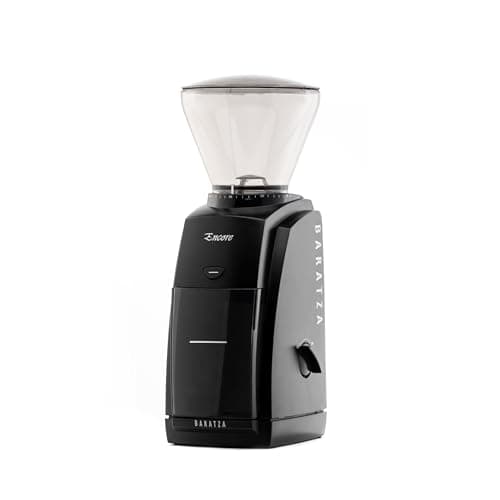 | Filter coffee, and a grinder you can get parts for | Steel, and the reference answer for filter | |
| 2 | 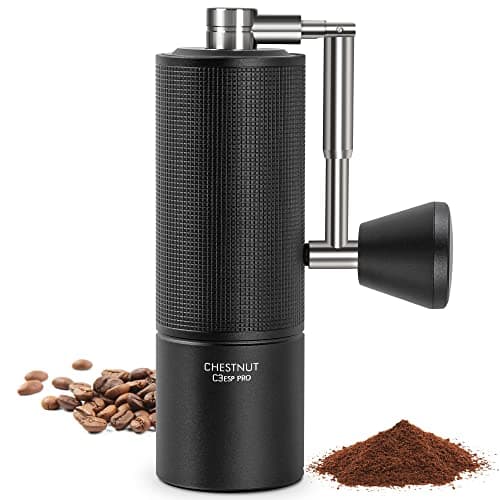 | A first real grinder, or grinding where there is no power | Steel, at the cheapest end | |
| 3 | 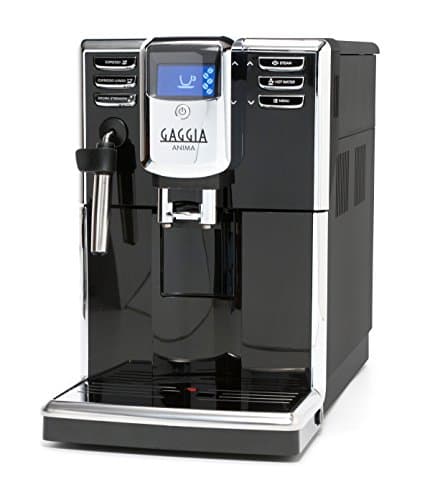 | Answering 'which machines have a ceramic grinder' | Ceramic, in the format that uses it | |
| 4 | 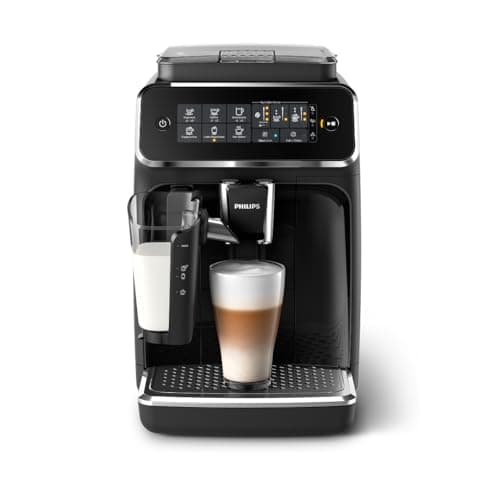 | Milk drinks at a button, with ceramic burrs | Ceramic, with published settings |
1. Steel, and the reference answer for filter
Baratza Encore
Entry tier · The standard entry burr grinder for filter brewing.
40 mm conical steel burrs at a deliberately slow 450-550 rpm.
The Encore is the steel-burr grinder most filter brewers end up with, and it is a useful reference point for what steel buys you.
Its 40 mm conical burrs are made in Europe and run at roughly 450 to 550 rpm. That burr speed is deliberately moderate to limit heat and static, which matters because heat is one of the things people wrongly attribute to the material rather than to the speed.
Baratza publishes a range of 250 to 1200 microns across 40 stepped settings, which covers French press through pour-over.
Steel's real advantage here is toughness rather than sharpness. If a small stone or a piece of packaging makes it into the hopper - which happens - hardened steel is far more likely to survive it than ceramic.
Its honest limit is espresso: the bottom of its range does not reach it, which is what the separate ESP model exists for. It is also plastic-bodied with a loud motor and stepped settings only.
Specification
- Burrs
- 40 mm conical, made in Europe
- Settings
- 40 stepped
- Grind range
- 250-1200 microns
- Burr speed
- Roughly 450-550 rpm to limit heat and static
What it does well
- The reference answer for pour-over, drip and French press
- Fully serviceable, with parts sold individually for years
- Low burr speed keeps static and heat down
Where it gives ground
- Bottom of its range is too coarse for espresso - that is the ESP model job
- Stepped settings only
- Plastic body and a loud motor
Skip it if
Skip it if espresso is part of your week - the standard Encore cannot grind fine enough at any setting.
2. Steel, at the cheapest end
Timemore Chestnut C3
Manual tier · The budget hand grinder that made stainless conical burrs cheap.
38 mm stainless conical burrs at a published 55-58 HRC hardness.
The C3 is the grinder that made stainless conical burrs cheap, and it is the clearest example of steel at the budget end.
Timemore publishes the burr material and the hardness: 38 mm S2C stainless conical, 55 to 58 HRC. A published hardness figure is rare at this price and it is the kind of number worth more than any marketing claim about longevity.
It gives roughly 36 settings at about 0.0233 mm per click, in a 25 g capacity, at about 530 g, with an aluminum body, a double-bearing axis and no plastic internals.
Being hand-powered it also sidesteps the heat question entirely - there is no motor to put energy into the beans.
25 g is one or two doses, and grinding by hand every morning is a commitment. For several drinks a day an electric grinder is the right tool - hand versus electric is that decision.
Specification
- Burrs
- 38 mm S2C stainless conical, 55-58 HRC
- Settings
- Roughly 36, about 0.0233 mm per click
- Capacity
- 25 g
- Weight
- About 530 g
- Build
- Aluminum body, double-bearing axis, no plastic internals
What it does well
- Filter-grade grind quality at a genuinely low price
- Metal internals and double bearings, not a toy
- Small and light enough to travel with
Where it gives ground
- 38 mm burrs make an espresso dose slow work
- Espresso resolution is marginal
- 25 g capacity limits you to one brew at a time
Skip it if
Skip it if you make several drinks each morning, or if you want a grinder that runs while you do something else.
3. Ceramic, in the format that uses it
Gaggia Anima
Upper-mid tier · A minimal push-button bean-to-cup machine with a ceramic burr grinder.
A ceramic burr grinder built into a bean-to-cup machine - which is where ceramic usually lives.
This is the direct answer to the question people actually search: which automatic machines use a ceramic grinder. The Anima is a minimal push-button bean-to-cup machine with a ceramic burr grinder and an Ulka 15 bar vibration pump.
Ceramic shows up in super-automatics for coherent engineering reasons. It runs cooler, it does not rust in a machine that is permanently damp inside, and it holds an edge once worn in - all useful in a sealed unit nobody is going to open to replace burrs.
The same brittleness that makes ceramic a liability in a hopper you tip beans into matters less in a machine with an enclosed path and a smaller opening.
Ceramic and Ulka parts are also the common Italian parts bin, which makes service predictable.
Its limits are the format's rather than the material's: fewer drink presets than the larger super-automatics, and no control over the shot at all - dose, pressure and yield are the machine's decisions. The super-automatic roundup covers the class.
Specification
- Grinder
- Ceramic burr
- Pump
- Ulka 15 bar vibration pump
- Format
- Super-automatic, bean to cup
What it does well
- The simplest interface in the category - push a button, get a drink
- Ceramic burrs and an Ulka pump are the same parts used across Italian machines
- Compact for a bean-to-cup machine
Where it gives ground
- Fewer drink presets than the Philips or De Longhi
- Same fundamental limit as every super-automatic: no control over the shot
- Starts higher than the entry price of a good manual machine plus grinder
Skip it if
Skip it if you want to dial in espresso. No super-automatic lets you, whatever its burrs are made of.
4. Ceramic, with published settings
Philips 3200 LatteGo
Upper-mid tier · A bean-to-cup machine whose milk system is two parts and rinses under a tap.
A ceramic conical burr with 12 settings, in the easiest milk system to clean.
The other common answer to the ceramic question, and the one with a published settings count: a ceramic conical burr grinder with 12 settings.
Twelve settings is modest but real. It is more adjustment than some of the class offers, and in a super-automatic grind is the only extraction variable you are given.
Its LatteGo milk system is two parts with no tubes and rinses under a tap, which is the practical reason this machine gets recommended over tube-and-carafe designs.
Ceramic here does the same job it does in the Anima: cooler running, no rust risk inside a damp machine, and an edge that holds without maintenance anyone is going to perform.
Like every bean-to-cup machine it fixes dose, pressure and yield, and the ceiling cannot be raised. The milk system is the reason to choose it, not the grinder.
Specification
- Grinder
- Ceramic conical burr, 12 settings
- Milk system
- LatteGo - two-part, no tubes
- Format
- Super-automatic, bean to cup
What it does well
- The two-part milk carafe is the easiest to clean in the category - no tubes to harbor milk
- Ceramic burrs do not transfer heat the way steel does and wear slowly
- Cleaner, lighter shot than the heavier-bodied machines in the class
Where it gives ground
- 12 settings, and as with all super-automatics you cannot set dose or yield
- Lighter body will disappoint anyone who came from a pressurized basket
- Milk drinks are built by the machine, so latte art is not on the table
Skip it if
Skip it if you drink espresso straight - you are paying for a milk system you will not use.
Why this page refuses to give you a lifespan number
Because the available numbers are irreconcilable. Searching this question returns confident figures that disagree in both directions: ceramic rated at 1,500 lb of coffee against steel at 500 to 1,000 lb in one place, ceramic at only 300 to 500 lb in another, and 750 to 800 lb against 500 to 600 lb somewhere else. Sources also split on which material lasts longer at all.
Every one of those figures comes from a retailer or a blog selling grinders, none cites a test method, and burr life depends heavily on roast level and bean density anyway - dark oily beans and dense light roasts wear burrs differently.
So the honest position is that burr lifespan in home use is unmeasured, and a number presented without a method is decoration. What you can act on is the published hardness of a specific burr set, such as the 55 to 58 HRC Timemore prints for the C3, and whether the burrs are replaceable at all.
What to actually choose on
If you are buying a separate grinder, the material should be roughly your fourth consideration. Adjustment resolution comes first, because it decides whether you can dial in at all; then burr size; then burr shape; then material.
Conical versus flat burrs covers shape, which changes the cup more than material does, and how to choose a coffee grinder puts the variables in order.
If you are buying a bean-to-cup machine, burr material is not really a choice you are making - ceramic is the norm and it is a defensible one for a sealed, permanently damp machine nobody will service. Choose that class on the milk system and the grind-setting count instead.