The short answer
Start at 18 g in and aim for about 36 g of liquid out in 25 to 30 seconds, and change only the grind until you get there - grind finer if the shot runs faster than that, coarser if it runs slower. Three Bambino-specific things change how you read that: the basket is an 18 g dose, so dose is given rather than chosen; there is no pressure gauge, so your scale and a timer are the only instruments you have; and low-pressure pre-infusion is built in and not adjustable, so time your shot from the moment liquid first reaches the cup rather than from the button press, or you will chase a number that includes several seconds of pre-infusion. Also check which basket is in the machine - dialing in on a dual-wall pressurized basket teaches you nothing, because it makes crema mechanically regardless of grind.
What the Bambino removes, and why that helps
Dialling in is the process of removing variables until only one is moving. The Bambino is unusually good to learn on because it has already removed several for you.
- Dose is fixed. The basket is built around an 18 g dose, so you are not choosing a dose and then also chasing a grind.
- Pressure is fixed. It pre-infuses at low pressure and then extracts at 9 bar. You cannot adjust it, so it cannot be the problem.
- Temperature is fixed. ThermoJet heats in transit and is ready in about three seconds. There is no boiler to surf and no PID to set.
- On the Plus, milk is automatic. One less skill competing for attention in the first week.
What is left is the grind, and that is the correct place for all of your attention. On a machine with a gauge, a PID and a variable dose, beginners change three things at once and learn nothing.
The pre-infusion trap
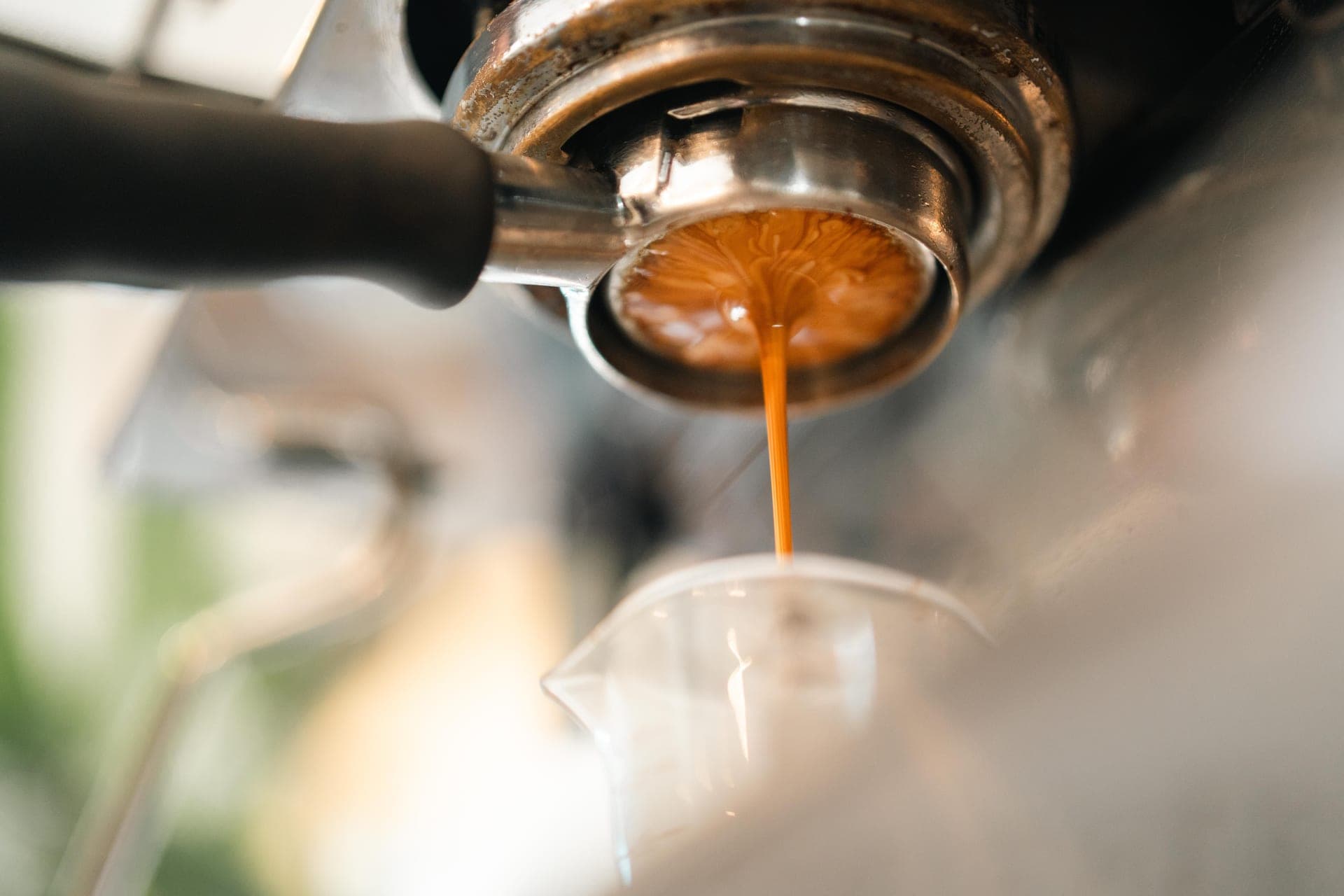
This is the single most common reason Bambino owners think their shots are wrong. The machine starts with a low-pressure pre-infusion phase before it reaches full 9 bar extraction, and during that phase little or nothing comes out of the spouts.
If you start your timer when you press the button, you are timing pre-infusion plus extraction, and a shot that is perfectly fine reads as far too long. People then grind coarser to 'fix' the time and make the shot genuinely worse.
Time from first drip instead - the moment liquid reaches the cup - and judge 25 to 30 seconds from there. If you prefer to time from the button press, that is fine too, as long as you pick one method and stay with it, because consistency of measurement is the whole point.
Scroll the table sideways to see every column.
Quick picks
The answer first. Tap any row to jump to the full reasoning for that pick.
| # | Product | Best for | Award | Price |
|---|---|---|---|---|
| 1 | 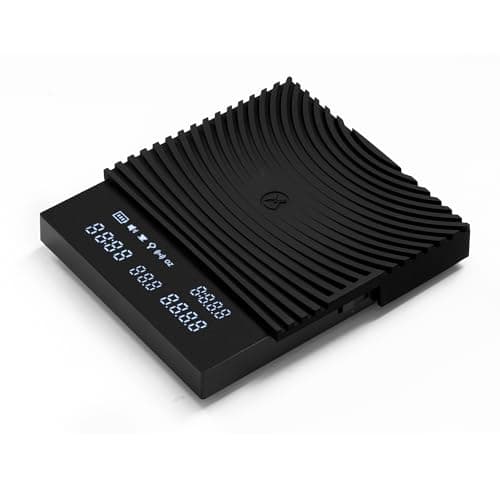 | Every Bambino owner, before any other accessory | The one thing you cannot do this without | |
| 2 | 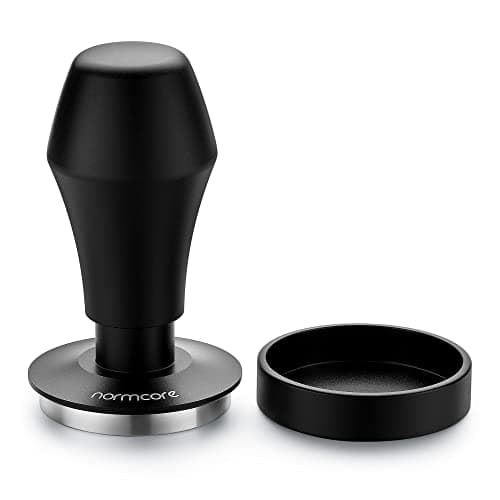 | Making tamping stop being a thing you wonder about | Removes one variable in week one | |
| 3 | 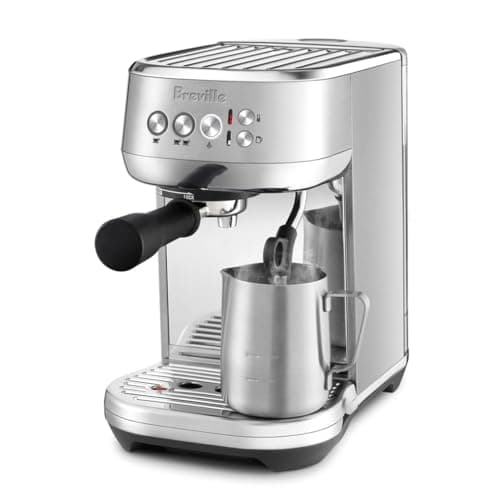 | Learning espresso with the milk step removed | The machine this page is about | |
| 4 | 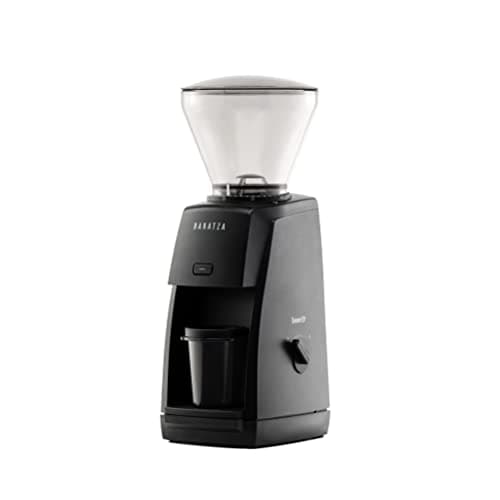 | Anyone trying to dial in with a coarse-stepped or blade grinder | The actual bottleneck |
1. The one thing you cannot do this without
Timemore Black Mirror Basic 3.0
Entry tier · The current Black Mirror: adds a live brew-ratio readout and three brewing modes.
The Bambino gives you no gauge and no readout, so the scale is your only instrument.
On a machine with a pressure gauge you have a second source of feedback. The Bambino has none, which makes a scale not merely useful but the only instrument you have.
You need 0.1 g resolution for two measurements: the dose going into the basket, and the liquid coming out into the cup. Those two numbers plus a timer are the whole of dialing in.
The live brew-ratio readout is worth more here than on a gauge machine, because it does the one calculation you would otherwise be doing while also watching a clock and a cup.
Espresso mode times the shot from the drip tray without a button press, which matters on a Bambino because your hands are busy and the machine will not time it for you in any useful way.
It is a 2 kg scale, so it is not a kitchen-batch tool, and Timemore publishes no spec sheet comparing it against its previous model - Basic 2 against Basic 3 is that comparison honestly.
Specification
- Resolution
- 0.1 g
- Capacity
- 2 kg
- Readouts
- Weight, timer, flow rate and brew ratio
- Modes
- Three brewing modes (regular, pour-over, espresso)
- Battery
- Rechargeable, USB-C
- Minimum detection
- Retailers publish 0.2 g
- Splash rating
- Retailers publish IPX3
What it does well
- The live brew-ratio readout removes the one calculation people get wrong
- Espresso mode times the shot off the drip tray without a button press
- Retailers publish a lower minimum detection and an IPX3 splash rating
Where it gives ground
- Costs a little more than the Basic 2 for the same resolution and capacity
- Three modes is three things to be in the wrong one of
- Timemore does not publish a manufacturer spec sheet comparing it with the Basic 2
Skip it if
Skip it only if you already own a 0.1 g scale small enough to sit under the Bambino's spouts.
2. Removes one variable in week one
Normcore V4 Tamper 53.3 mm
Mid tier · The calibrated V4 tamper in the 53.3 mm size made for Breville's 54 mm baskets.
53.3 mm for the Bambino's 54 mm baskets, spring-loaded so pressure repeats.
While dialing in you want exactly one variable moving, and that variable should be the grind. A spring-loaded tamper fixes tamping pressure so it cannot be the explanation for a shot that behaved differently.
Sizing first: 53.3 mm is the size Breville's nominal 54 mm baskets take. A 58 mm tamper does not fit a Bambino.
It clicks when it reaches its set pressure and ships with interchangeable springs, so you choose a pressure once and then ignore it - which is the actual benefit during calibration.
The Bambino's basket is an 18 g dose, so you are tamping the same amount of coffee every time. Fixed dose plus fixed tamp leaves grind as the single lever, which is exactly the position you want to be in.
Tamping pressure matters much less than distribution. If shots channel after you are dialled in, a needle tool does more for less money - the WDT roundup covers that.
Specification
- Size
- 53.3 mm
- Fits
- Breville/Sage 54 mm baskets: Bambino, Bambino Plus, Barista Express, Barista Pro, Barista Touch, Infuser, Duo-Temp Pro
- Springs
- 15 lb, 25 lb and 30 lb included
- Base
- 304 stainless, flat
- Leveling
- Plate rests on the basket rim as you press
What it does well
- Sized for Breville's tapered 54 mm baskets rather than a nominal 54 mm
- Interchangeable springs let you choose the tamping pressure
- The leveling plate keeps every tamp square to the basket
Where it gives ground
- Heavier and bulkier than a plain tamper
- The spring click takes a few days to get used to
- Fits 54 mm Breville baskets only - it will not transfer to a 58 mm machine
Skip it if
Skip it if your machine is 58 mm - this is the wrong size, and the wrong size is worse than the tamper in the box.
3. The machine this page is about
Breville Bambino Plus
Entry tier · The Bambino with automatic milk texturing added.
ThermoJet in three seconds, 54 mm at 18 g, pre-infusion then 9 bar, milk done for you.
The Bambino Plus has identical espresso hardware to the standard Bambino - a 54 mm stainless portafilter at an 18 g dose, ThermoJet heating ready in about three seconds, a 15 bar pump extracting at 9 bar - and adds automatic milk texturing in a 16 fl oz jug.
For dialing in, the automatic milk is a genuine advantage rather than a luxury. It takes the hardest manual skill off the table while you concentrate on grind and yield, and you can learn to steam by hand later on the same machine.
ThermoJet matters to this process too: being ready in seconds means you can pull a diagnostic shot without committing to a warm-up, which makes iterating cheap.
Low-pressure pre-infusion is automatic and not adjustable, which is the single most important thing to know before you start timing shots - see the section below.
It is a sealed appliance with no owner repair path, and 54 mm is Breville's size rather than the commercial 58 mm standard, so the accessory ceiling is lower than it looks.
Specification
- Portafilter
- 54 mm stainless, 18 g dose
- Heating
- ThermoJet, ready in 3 seconds
- Pump
- 15 bar Italian pump, 9 bar extraction
- Milk
- Automatic texturing, 16 fl oz / 480 ml jug
- Footprint
- 11.9 x 7.4 x 14.3 in
What it does well
- Automatic milk texturing gets a usable microfoam without practice
- Same three-second heat-up as the standard Bambino
- Fits a narrow counter with a grinder beside it
Where it gives ground
- You are paying for the milk automation, not better espresso
- Still no grinder
- Auto-steam removes the control an enthusiast eventually wants
Skip it if
Skip it if you want to learn manual milk texturing from day one, or if you want the 58 mm accessory ecosystem.
4. The actual bottleneck
Baratza Encore ESP
Entry tier · The Encore re-geared for espresso: the same 40 mm burrs on a dual-resolution collar.
If you cannot dial in a Bambino, the grinder is almost always why.
This is the honest center of the page. A Bambino is a capable machine held back almost entirely by whatever grinds for it, and most dialing-in failures are a grinder that cannot make small enough changes.
The Encore ESP is the Encore re-geared for espresso: the same 40 mm burr platform on a dual-resolution collar, set up so the fine end of the range has usable steps.
That is the specification that matters. The distance between a sour shot and a sweet one is a fraction of a turn, and a grinder with coarse steps jumps straight over it - which is experienced as 'the machine will not dial in'.
It doses into a portafilter holder, so the workflow is reasonable without buying a dosing cup.
It is a hopper grinder with some retention, so switching beans means purging, and it is not a single-dose tool. It also costs about half what the machine does, which is the right ratio and still a surprise to people.
Specification
- Burrs
- 40 mm M2 steel conical (Etzinger)
- Settings
- 40 stepped, dual resolution
- Espresso range
- Steps 1-20, 20 microns per click
- Filter range
- Steps 21-40, 90 microns per click
- Burr speed
- 550 rpm
What it does well
- 20 microns per click in the espresso range is real dialing resolution
- Redesigned burr housing makes cleaning and shimming easy
- Shims included in the box
Where it gives ground
- Still a stepped grinder - you cannot land between clicks
- Retention is normal-for-the-class, not low
- Same plastic body and noise as the Encore
Skip it if
Skip it if you already own a grinder with fine espresso adjustment. Then the grinder is not your problem.
The buttons are timers, not volumetrics
The one-cup and two-cup buttons are programmable, and it is worth being clear about what they store: a duration, not a measured volume of liquid. The machine does not weigh what comes out.
The practical consequence is that a programmed button is only correct for the grind setting and bean it was programmed on. Change the grind, open a new bag, or let the beans age a week, and the same duration delivers a different yield.
So the honest workflow is: dial in with the manual button and a scale, and only program the button once a bag is behaving. Reprogram when you change beans. Treating the button as a volumetric is a slow way to drift out of calibration without noticing.
When it is the grinder rather than you
There is a specific symptom worth naming: you can make the shot much too fast and much too slow, but nothing in between. One click is a 15-second shot and the next is a 40-second shot.
That is not technique and no amount of practice fixes it. It means the grinder's steps are coarser than the window espresso occupies, which is the defining limitation of filter grinders and bundled all-in-one grinders used for espresso.
At that point the Bambino is not the thing to change. How to choose a coffee grinder covers adjustment resolution, and the general dialing-in method applies to any machine once your grinder can actually find the setting.