The short answer
Buy the Chemex Classic 10-Cup. It is borosilicate glass, a wood collar and a leather tie, and Chemex states the glass is non-porous and will not absorb odors or residues - so the water goes kettle, paper, glass and nowhere else. For stovetop coffee with no aluminum either, the Cuisinox Roma is 18/10 stainless with no coating anywhere. Pair either with the Cosori gooseneck kettle, which states that its interior, lid and spout are 304 stainless and that no plastic contacts the water. The part no brewer gets around: a moka pot always has a gasket, and an electric drip machine always has a reservoir.
The question is the water path, not the appliance
Almost every brewer sold contains some plastic somewhere - a switch, a handle, a lid clip, a housing. Judging a machine on whether any plastic exists on it rules out nearly everything and tells you very little. The useful question is narrower: on the route the hot water takes, from where it is heated to where it lands in the cup, what does it touch?
That reframing is what makes this page possible. It puts a glass carafe and a steel cone at the top, it lets a silicone heat ring on the outside of a dripper pass, and it rules out an electric drip machine not because of its buttons but because the reservoir the water sits in and the tube it is pumped through are the two things hardest to make out of anything else.
What we could verify, and what we could not
- Materials come from each maker's own copy. Chemex states borosilicate glass; Cuisinox states 18/10 stainless and no coating anywhere; Cosori states a 304 stainless interior, lid and spout; Hario states AS resin and polypropylene for the plastic V60 and stainless plus a silicone ring for the metal one. Those are the makers' words, not our inference.
- No brewer here is certified anything. There is no plastic-free standard to certify against, so every claim on this page is a material statement, not a seal.
- We make no health claim in either direction. This page sorts brewers by what they are made of because readers ask for that. It does not tell you what plastic in contact with hot water does, because that is not a question we can answer from a product listing.
Quick picks
The answer first. Tap any row to jump to the full reasoning for that pick.
Prices shown are checked daily against the retailer, as of November 9, 2026. We never write a price into the text of a page.
| # | Product | Best for | Award | Price |
|---|---|---|---|---|
| 1 | 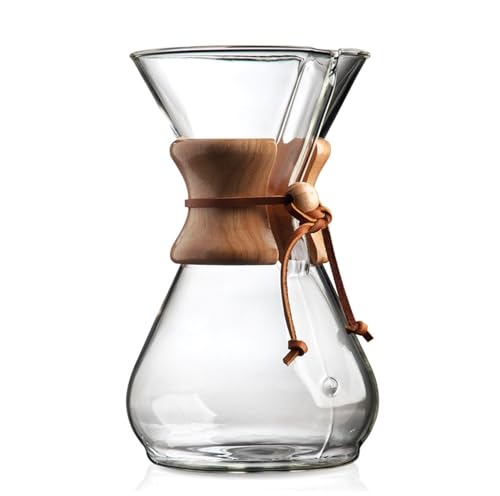 | Anyone who wants the whole brewer to be glass | Top pick | |
| 2 | 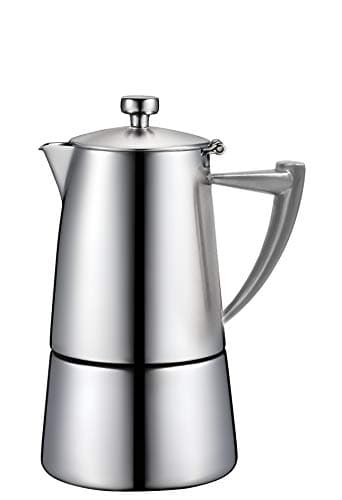 | Stovetop coffee with no aluminum and no plastic in the water path | Best all-metal brewer | |
| 3 | 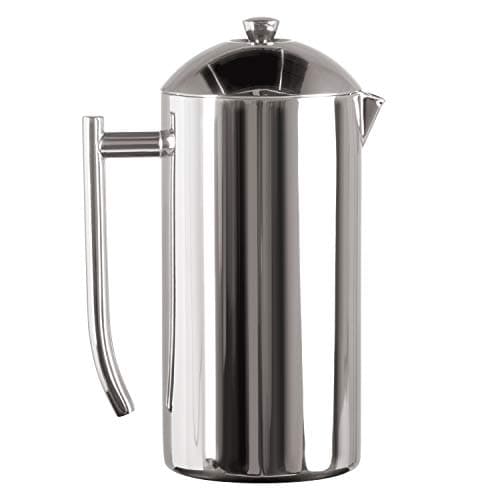 | Immersion coffee in a brewer that is metal end to end | Best stainless press | |
| 4 | 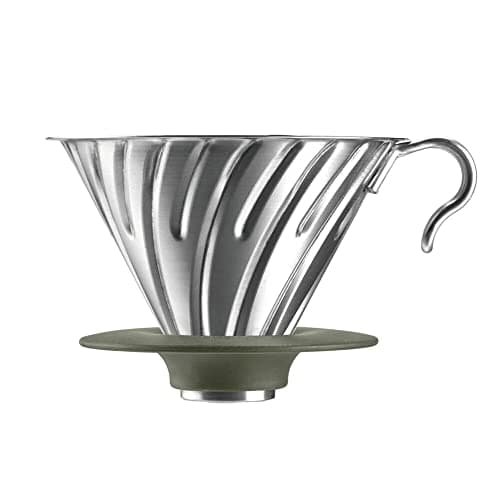 | Keeping a V60 brew with no plastic cone | Best plastic-free cone | |
| 5 | 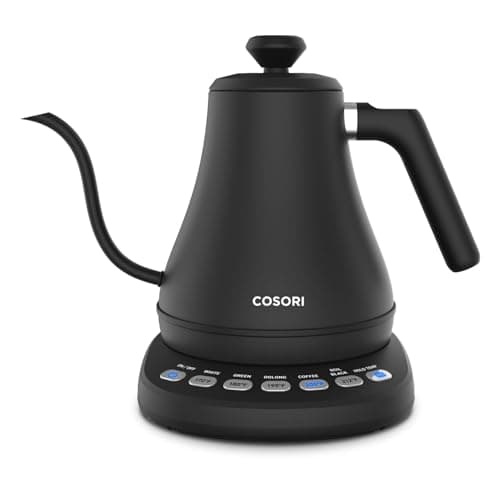 | Heating the water without undoing the point of the brewer | Best kettle to pair with these | |
| 6 | 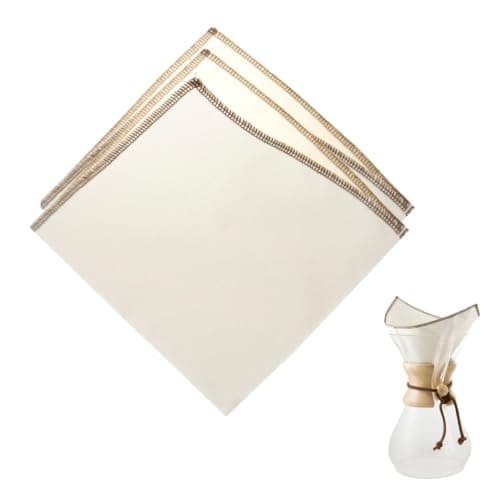 | Removing the one consumable the Chemex still needs | Best way to drop the paper | |
| 7 | 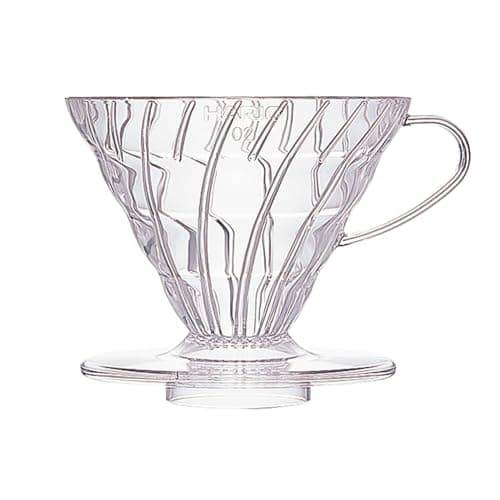 | Everyone who is not reading this particular page | Skip this one, for this purpose only |
1. Top pick
Chemex Classic 10-Cup
Manual tier · The 10-cup Chemex: one borosilicate glass carafe, a wood collar and a leather tie.
Borosilicate glass, a wood collar and a leather tie. There is nothing else on it.
The Chemex is the cleanest answer to this question because there is almost nothing to it. One piece of borosilicate glass, a wooden collar so you can hold it, and a leather tie. No tank, no valve, no basket, no lid.
Chemex states that its coffeemakers are made of non-porous borosilicate glass that will not absorb odors or chemical residues. That is the whole claim, and for this page it is the only claim that matters: the water goes from the kettle, through paper, into glass.
The 10-cup is the size to buy if plastic is the reason you are here, because it is the only fully glass brewer on this page that makes enough coffee for more than two people. Chemex measures its cups at 5 oz, so ten of them is 50 oz.
It also sidesteps the second-order problem. A machine has a reservoir, a heating element and tubing, all of which have to be made of something and all of which scale up over time. A carafe has none of those, so there is no part that degrades and nothing to descale.
The filters are the catch, and they are sold separately. Chemex bonded paper is much thicker than a standard cone filter and is not interchangeable with one, so the filter is a running cost you are committing to.
Specification
- Capacity
- 10 cups at Chemex's own 5 oz per cup, so 50 oz
- Material
- Non-porous borosilicate glass, stated not to absorb odors or residues
- Collar
- Wood with a leather tie
- Filters
- Chemex Bonded FP-1 / FC-100 / FS-100 / FSU-100, not included
- Model
- CM-10A
- Power
- None - it is a carafe
What it does well
- Brews 50 oz with no plastic and no electricity anywhere in the water path
- Chemex states brewed coffee can be covered and refrigerated for reheating
- Nothing on it can fail, so there is no part to replace and no scale to descale
Where it gives ground
- Filters are sold separately and the thick bonded paper is not interchangeable with cone filters
- 50 oz of pour-over is a real arm workout and takes sustained attention
- Glass, with no handle beyond the collar - it is the breakable option
Skip it if
Skip it if you want coffee without standing over it. This is a five-minute manual pour, and 50 oz of it is a genuine arm workout.
2. Best all-metal brewer
Cuisinox Roma
Entry tier · A heavy-gauge 18/10 stainless moka pot with a 25-year warranty.
18/10 stainless steel, and Cuisinox states there is no coating anywhere on it.
Most moka pots are aluminum. The Roma is not, and Cuisinox is unusually direct about it: the pot is satin-finish 18/10 stainless steel, and the listing states in capitals that no Cuisinox espresso maker has any coating anywhere.
That matters because a coating is the thing most likely to be worn away by a scouring pad and the thing nobody can see the condition of. A bare stainless body has nothing to lose.
It is a genuine two-material brewer. The body, boiler, funnel and filter plate are steel; the gasket that seals the two halves is not, and never is on any moka pot. That is the honest limit of this pick and it is the reason the page sorts by what the water touches rather than by a plastic-free badge.
The induction base makes it compatible with every stovetop surface, which is more than the classic aluminum Moka Express manages without an adapter plate. Cuisinox also includes a spare gasket in the box, which is the one part that eventually perishes.
It is a 4-cup pot by Cuisinox's own reckoning, which is roughly 6 oz of finished coffee. That is two small cups, not a morning for a household.
Specification
- Material
- Heavy-gauge 18/10 stainless steel, mirror or satin finish
- Sizes
- 4, 6 and 10 cup (Cuisinox counts 2 oz cups)
- Cooktops
- Induction, gas, electric, ceramic and halogen
- Included
- Extra gasket
- Warranty
- 25 years
What it does well
- Heavy-gauge 18/10 stainless steel
- A 25-year warranty
- An extra gasket in the box
Where it gives ground
- Cuisinox counts 2 oz cups, so a '4 cup' pot is a small brew
- The maker's page does not list dishwasher use
Skip it if
Skip it if you want a long filter coffee. A moka pot makes a short, strong, concentrated brew - the Moka Express review explains what it is and is not.
3. Best stainless press
Frieling Stainless Steel French Press
Mid tier · A mirror-finished 18/10 stainless press built for commercial-grade durability.
An all-stainless press with a dual-screen steel filter and no glass to break.
A glass French press has a plastic or plastic-trimmed lid and plunger assembly on almost every model sold. The Frieling does not: Frieling describes it as an all-stainless-steel coffee maker, with a dual-screen zero-sediment filter that is itself steel mesh rather than a nylon weave.
The double wall is the second reason it belongs here. Frieling states it retains heat up to four times longer than a glass press, which means the brew is still hot at the end of the steep rather than cooling while it waits.
Immersion is also the most forgiving method on this page. There is no pour technique to learn and no filter to buy: coarse grounds, water just off the boil, four minutes, press. Frieling publishes that method on the listing, including roughly two tablespoons of coffee per cup.
At 23 oz it sits between the moka pot and the Chemex in capacity - two large mugs, or three small ones. It is also shatterproof and rustproof, which is why it turns up in hotels and why it survives being packed.
Steel hides what is happening inside. With a glass press you can see the bloom and the crust; with this you are brewing blind and relying on the timer.
Specification
- Material
- 18/10 stainless steel, mirror finish
- Construction
- Double insulated walls
- Sizes
- Multiple, including a 36 oz for serving groups
What it does well
- Genuinely commercial build - welds and finish are a step above domestic presses
- Double-walled, so a full press stays hot for a long time
- Effectively unbreakable compared with a glass carafe
Where it gives ground
- Single mesh screen, so more sediment than the Espro
- Expensive relative to a glass press
- You cannot see the brew
Skip it if
Skip it if you like a clean, light-bodied cup. A metal filter leaves the oils and the finest particles in the coffee, which is the point of a press and not to everyone's taste.
4. Best plastic-free cone
Hario V60 Metal Dripper 02
Mid tier · The V60 cast in double-mesh stainless steel, so the dripper is the filter.
A stainless V60 cone with a removable silicone ring, from Hario's outdoor line.
The V60 is the most-used pour-over cone in the world and the versions most people own are plastic. This is the same geometry in stainless steel: the conical shape, the spiral ribs and the single large hole, with no resin anywhere in the cone.
Hario lists it as a stainless steel dripper with a silicone ring holder, and the ring is removable. Silicone is not plastic in the sense this page cares about, and in any case the ring sits on the outside as a heat guard rather than in the path of the water.
It is the cheapest way onto this page by a wide margin, because it is a cone rather than a brewer. Set it on any mug or server you already own and the brewer is complete.
It comes from Hario's outdoor line, which is why it is built the way it is. At around 5 oz it packs flat, survives a bag and has nothing on it that can crack - the same reasons it works at home.
A metal cone loses heat faster than ceramic during the pour, so it rewards a rinse with hot water first. That is one extra step, every time.
Specification
- Material
- Heat-resistant stainless steel, double-walled mesh
- Dimensions
- W145 x D120 x H90 mm
- Capacity
- 1 to 4 cups, 300-500 ml
- Base
- Removable silicone
- Paper
- None needed
What it does well
- Same 60-degree cone, spiral ribs and unrestricted flow as any other V60
- No paper at all, and nothing to run out of
- Thin metal warms through quickly rather than stealing heat like cold ceramic
Where it gives ground
- Mesh passes oils and fines, so it loses the clarity a V60 is usually bought for
- The mesh clogs with oils and needs proper cleaning, not just a rinse
- Sheds heat faster than ceramic once brewing is underway
Skip it if
Skip it if you want the brewer to hold the coffee too. This is a cone and nothing else - you still need a mug or a server under it.
5. Best kettle to pair with these
COSORI Electric Gooseneck Kettle
Budget tier · A stainless gooseneck kettle with five temperature presets and a keep-warm hold.
Cosori states no plastic contacts the water: the interior, lid and spout are 304 stainless.
A plastic-free brewer fed from a plastic kettle has solved half the problem, and the kettle is the part that actually boils. This is the one on the page that addresses it directly.
Cosori states that the kettle's interior, lid and spout are made with food-grade 304 stainless steel and puts "no plastic contact with water" in the product name. That is a specific claim about the wetted parts rather than a general reassurance about the housing.
The temperature control earns its place independently. Five one-touch presets and a stated accuracy within 5 degrees Fahrenheit of the target mean you can actually hit a brewing temperature instead of pouring boiling water and hoping, which matters more on a metal cone that sheds heat.
The gooseneck is the practical half. A counter-balanced handle and a narrow spout let you place the water where you want it, which is the difference between wetting the whole bed and drilling a hole through the middle of it.
A 1-hour hold function keeps the water at temperature for a second brew. At 0.8 L it holds enough for two Chemex brews or one of the bigger ones, and no more.
Specification
- Capacity
- 0.8 L
- Presets
- 170 / 180 / 195 / 205 / 212 F
- Hold
- Up to 60 minutes
- Power
- 1200 W; boils full in 3-5 minutes
- Contact surfaces
- Food-grade stainless kettle, lid and spout
What it does well
- Every water-contact surface is stainless, not plastic
- Presets cover the temperatures coffee and tea actually use
- A fraction of the Stagg outlay for most of the function
Where it gives ground
- Presets rather than a free temperature dial
- Spout control is good, not Stagg-good
- No brew timer
Skip it if
Skip it if you only brew on the stovetop. A moka pot heats its own water and a kettle adds nothing - the gooseneck kettle question covers who genuinely needs one.
6. Best way to drop the paper
CoffeeSock Reusable Cotton Filter
Budget tier · A cloth filter in certified organic cotton, sitting between paper and metal.
Organic cotton filters that fit a 6-13 cup Chemex and last about a year per pair.
If the reason you are on this page is waste rather than material, the filter is the part that is thrown away every single day and the only part of a Chemex setup that is.
CoffeeSock makes reusable filters from 100 percent organic cotton, and sells the Chemex-shaped version in a two-pack that it states should last about a year. They are American made and come unbleached.
Cloth sits between paper and metal in what it lets through. It holds back the fine particles that a steel filter passes, so the cup stays clean, while letting through more of the oils that bonded paper strips out. The result is fuller than a paper Chemex and clearer than a press.
It is the cheapest pick here and the only one that reduces rather than adds. Nothing new sits on the counter.
Cloth needs looking after. It is rinsed after every brew, kept wet or frozen between uses rather than dried stiff, and boiled occasionally. A paper filter is thrown in the bin and forgotten, and that convenience is real.
Specification
- Material
- 100% GOTS-certified organic cotton, non-toxic dyes
- Chemex size
- Half-moon, 6-13 cup: 9" W x 6.25" H
- Life
- 6-12 months with rinsing and hang drying
- Also made for
- Cone drippers and other brewers
What it does well
- Cleaner and brighter than a metal filter while still passing some oils
- The closest reusable option to paper clarity
- Cheap, compostable at end of life, and made from a certified organic fiber
Where it gives ground
- Needs rinsing after every brew and hang drying, or it sours
- 6-12 months, so it is a consumable rather than a lifetime purchase
- Stains permanently, which bothers some people
Skip it if
Skip it if you will not maintain it. A neglected cloth filter goes rancid and will make every cup taste of it - see reusable coffee filters for the full comparison with metal.
7. Skip this one, for this purpose only
Hario V60 Plastic Dripper 02
Budget tier · The same 60-degree cone geometry in plastic.
An excellent cone, and Hario states plainly that the body is AS resin and polypropylene.
This is here because it is the brewer most people already own, and because the honest version of this page has to name what it is rather than quietly leave it out.
Hario publishes the materials on the listing: the body is AS resin and polypropylene. It is also stated to be dishwasher safe and boiling water safe, which is to say it is designed and rated for exactly what it does.
We are not calling it unsafe, because nothing we can verify says it is, and a site that implied otherwise would be inventing a claim to sell a more expensive cone. It is on this page for one reason: it is plastic, and this page is for readers who do not want plastic.
On every other measure it is the best-value brewer on the site. It costs a fraction of the ceramic and metal versions, it weighs almost nothing, it does not crack, and it holds heat better during the pour than the metal cone does.
If plastic is a preference rather than a rule for you, buy this one and spend the difference on better coffee. That is the genuinely better decision, and it is the one this page is not about.
Specification
- Geometry
- 60-degree cone, single large hole
- Ribs
- Inner spiral ribs
- Capacity
- 1-4 cups
- Material
- Plastic
What it does well
- Same brewing geometry as the ceramic for a fraction of the outlay
- Does not need preheating the way ceramic does
- Effectively unbreakable, so it travels
Where it gives ground
- Feels cheap next to ceramic or glass
- Plastic will stain over time
- No thermal mass, though that matters less than people claim
Skip it if
Skip it only if plastic-free is the actual requirement. Otherwise it is the cone to buy - see plastic vs ceramic vs metal V60.
What the water actually touches, brewer by brewer
Scroll the table sideways to see every column.
The three parts nobody can make plastic-free
A moka pot needs a gasket between the boiler and the collector, and it is rubber or silicone on every moka pot ever made, including the stainless ones. It is a wear part, it is cheap, and Cuisinox ships a spare in the box. A brewer that claims otherwise is either leaving it out or is not sealed.
An automatic drip machine needs a reservoir and a path from it to the shower head. Some makers use a stainless tank - BUNN's permanently heated tank is steel, and we say so on the BUNN guide - but the tubing and the basket are another matter, and no mainstream drip machine publishes a plastic-free water path. That is why there is no electric drip machine on this page.
And a paper filter is not plastic, but it is a consumable. If the reason you are here is waste rather than material, the filter is the thing to change first and the only part of a Chemex setup that is thrown away daily.
If you want one thing, buy this
A Chemex and the Cosori kettle. That is a complete plastic-free brewing setup for two to four people, with a stated stainless water path on the heating side and glass on the brewing side, and it will outlast any electric machine in the same money. Add CoffeeSock later if the daily filter bothers you.