The short answer
Buy the Moka Express if you want strong, concentrated stovetop coffee from a pot with almost nothing to break and gaskets that cost pennies - and buy it in the size you will actually brew, because a moka pot cannot make less than its capacity. Do not buy it expecting espresso: at 1 to 2 bar it produces little or no crema. Buy the Brikka if a foam layer matters, or the Moka Induction if your cooktop is induction.
Why it is not an espresso maker
This is the single most common disappointment with the pot, and it is a matter of pressure rather than technique.
Espresso is defined by extraction at around 9 bar. That pressure emulsifies the coffee's oils into the water, and that emulsion is crema. A moka pot works by steam pressure in a sealed boiler pushing water up through the basket, and it reaches roughly 1 to 2 bar before the safety valve becomes the limit.
One to two bar is enough to force water through fine coffee quickly and produce something strong and concentrated. It is nowhere near enough to emulsify oils. So the cup is heavy, intense and low in clarity - but there is no crema, and no grind adjustment or technique will create one. The Brikka's valve is a mechanical workaround, not a refutation.
Size is the actual buying decision
A moka pot is the rare brewer with no flexibility in batch size. The boiler is filled to below the safety valve and the basket is filled level, every time - underfill either and the pressure curve is wrong, overfill and it is unsafe.
That means a 6 cup pot makes 6 cup-sizes of coffee or nothing useful. Buying the big one "in case guests come" is the standard mistake: it is the pot you then cannot use on a normal morning. Bialetti's 1-to-12-cup range exists precisely because the right answer is different for every household, and a moka "cup" is a small Italian serving rather than a mug.
Quick picks
The answer first. Tap any row to jump to the full reasoning for that pick.
Prices shown are checked daily against the retailer, as of October 17, 2026. We never write a price into the text of a page.
| # | Product | Best for | Award | Price |
|---|---|---|---|---|
| 1 | 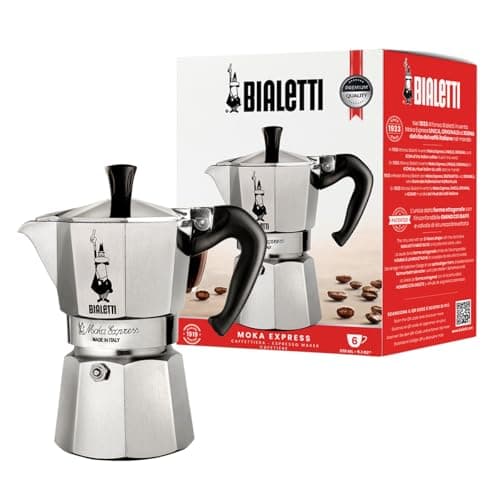 | Strong, concentrated stovetop coffee, every day, for decades | The pot reviewed | |
| 2 | 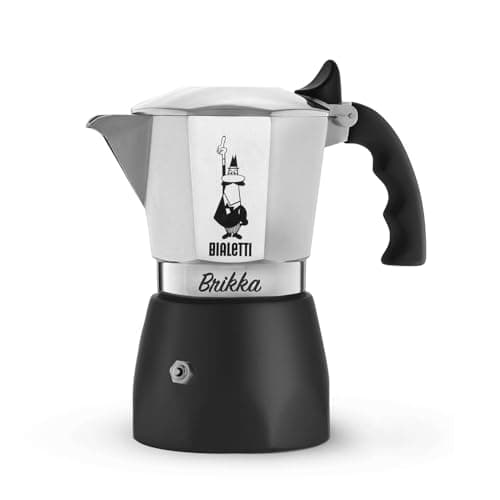 | A richer, heavier cup with something like a crema on top | If you want a crema layer | |
| 3 | 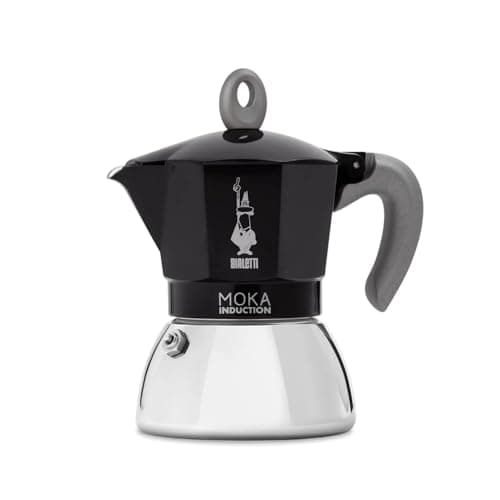 | An induction kitchen, with no adapter plate | If your cooktop is induction |
1. The pot reviewed
Bialetti Moka Express
Budget tier · The octagonal aluminum stovetop pot that defines the category.
The widest size range in the category, almost nothing to break, and running costs near zero.
The Moka Express is cast aluminum in the familiar octagonal shape, and the shape is functional rather than decorative - the facets spread heat around the boiler instead of concentrating it under one spot.
Its real advantage over every rival is size range. Bialetti sells it from 1 cup to 12 cup, which no other pot in the category matches. That matters because a moka pot cannot make a smaller brew than its size: the basket and boiler have to be filled properly or it will not build pressure correctly. Choosing the right size is the whole purchase decision.
There is no paper, no capsule and no electronics. The only consumable is the rubber gasket, which is stocked everywhere and costs very little, and the only maintenance is replacing it when it hardens. That is why these are routinely still working after thirty years.
What it produces is coffee brewed at roughly 1 to 2 bar - concentrated, heavy-bodied and strong, closer to a very strong filter coffee than to espresso.
Two limits to know before buying. Aluminum will not work on an induction cooktop without a separate adapter plate. And it produces little or no crema, because 1 to 2 bar cannot emulsify oils the way 9 bar does.
Specification
- Material
- Cast aluminum (a stainless line is also sold)
- Sizes
- 1 to 12 cup
- Cooktops
- Gas and electric; needs an adapter plate for induction
What it does well
- Sizes from 1 to 12 cup - by far the widest range in the category
- No paper, no capsules, no electronics, and almost nothing to break
- Parts and gaskets are stocked everywhere and cost very little
Where it gives ground
- Aluminum will not work on an induction cooktop without a separate adapter
- You must fill the basket and boiler properly, so a big pot cannot make a small brew
- Produces little or no crema - it is not espresso
Skip it if
Skip it if you want espresso with crema, or if your cooktop is induction and you do not want an adapter - the two picks below solve one of those each.
2. If you want a crema layer
Bialetti Brikka
Budget tier · A moka pot with a weighted pressure valve that builds a crema-like layer.
A weighted pressure valve that builds a foam layer no other stovetop pot manages.
The Brikka is the answer to the Moka Express's biggest disappointment. It adds a weighted valve on the column, which holds back the brew until a higher pressure has built and then releases it suddenly.
That sudden release is what produces the foam layer. It is the closest any stovetop pot gets to a crema, and the cup underneath it is noticeably richer and heavier than the standard pot's.
It is cast aluminum like the original, in 2 cup (about 100 ml) and 4 cup (about 170 ml) sizes, and it runs on gas and electric with a stainless-boiler Induction variant also sold.
The running cost is identical to any moka pot - a gasket occasionally and nothing else.
The trade-offs are real. Only two sizes exist, so it does not scale to a household. The valve is fussy: underfill it or use the wrong grind and it will not build pressure, and you get a weak brew with no foam. And the foam layer is not crema in the espresso sense, whatever it looks like.
Specification
- Material
- Cast aluminum
- Sizes
- 2 cup (about 100 ml) and 4 cup (about 170 ml)
- Mechanism
- Weighted pressure valve
- Cooktops
- Gas and electric; a stainless-boiler Induction variant exists
What it does well
- The pressure valve gets closer to a crema than any other stovetop pot
- Richer, heavier cup than a standard Moka Express
- Same low running cost as any moka pot
Where it gives ground
- Only two sizes, so it does not scale for a household
- The valve is fussy - underfill it or use the wrong grind and it will not build pressure
- Still not espresso, whatever the crema layer suggests
Skip it if
Skip it if you brew for more than two people, or if you want something forgiving. The Moka Express tolerates mistakes that stop the Brikka working - see Bialetti Moka Express vs Brikka.
3. If your cooktop is induction
Bialetti Moka Induction
Budget tier · The Moka Express reworked with a stainless steel boiler so it runs on induction.
The same brewing, with a stainless boiler that an induction hob can actually heat.
Induction cooktops work by inducing a current in ferrous metal. Aluminum is not ferrous, which is why the standard Moka Express simply does not heat on one - this is a material fact rather than a design flaw.
This version replaces the boiler with stainless steel while keeping the aluminum upper, so the half that sits on the hob responds to induction and the half that does not stays light. It also runs on glass-ceramic, gas and electric, so it is the one pot that works on any cooktop.
Brewing is unchanged. Same pressure, same concentration, same cup - this is a material swap for compatibility, not a different brewer.
The stainless boiler is also more durable than cast aluminum, and it avoids the question some people raise about brewing acidic coffee in bare aluminum.
It costs more than the aluminum original for the same coffee, there are fewer sizes in the line, and it is heavier. If your cooktop is gas or electric, there is no reason to pay the difference.
Specification
- Material
- Stainless steel boiler with aluminum upper
- Cooktops
- Induction, glass-ceramic, gas and electric
What it does well
- Works on an induction cooktop with no adapter plate
- Stainless boiler is more durable than cast aluminum
- Brews the same way as the standard Moka Express
Where it gives ground
- Costs more than the aluminum original for the same coffee
- Fewer size options than the Moka Express line
- Heavier than the aluminum version
Skip it if
Skip it if you have gas or electric. You are paying for induction compatibility you will never use - buy the standard Moka Express.
The three pots compared
Scroll the table sideways to see every column.
What it does better than anything at the price
- Running cost. The only consumable is a rubber gasket. No paper filters, no capsules, nothing proprietary.
- Durability. There are no electronics, no pump and no seals under high pressure. Pots routinely outlive the people who bought them.
- Repairability. Gaskets and filter plates are stocked in supermarkets and hardware shops, not just specialty retailers.
- Independence. It needs a heat source and nothing else, which makes it the default for travel, camping and power cuts.
Who should buy it
- Anyone who wants strong concentrated coffee and is not chasing crema or latte art.
- People who hate consumables, since a gasket every year or two is the entire running cost.
- Households on gas or electric cooktops, where the cheap aluminum original is the whole answer.
- Travelers and campers, because it works on any heat source and does not care about electricity.
Who should not
- Anyone who wants espresso, including milk drinks that depend on crema - see moka pot vs espresso machine.
- Induction-only kitchens, unless you buy the stainless version or an adapter plate.
- Households with varying demand, since the pot brews one batch size and only that size.
- People who want a clean, bright cup, which is the opposite of what this pot produces - see pour-over vs moka pot.