The short answer
At $1,000 the right move is a separate machine and a separate grinder, not an all-in-one. Spend roughly $400 on the machine, $200 on an espresso-capable grinder, about $60 on a 0.1 g scale and $35 on a tamper, and keep the rest for beans and a needle tool. A Breville Bambino Plus with a Baratza Encore ESP is the setup that makes this budget work for milk drinks; if you drink espresso straight, invert the split and put the money into a single-dose 64 mm grinder with a cheaper machine. The grinder is the component that decides what the cup can be, which is why it gets a larger share than most people expect.
Why the grinder gets more than you expect
Espresso is the most grind-sensitive way to make coffee. Water is forced through a compressed bed of very fine coffee in about 30 seconds, and the size and evenness of those particles decide whether the water extracts evenly or carves channels through the bed.
A machine that holds temperature beautifully cannot fix an uneven grind. A good grinder, on the other hand, makes a modest machine produce shots that are genuinely good. That asymmetry is why the split below is weighted the way it is - and it is the single most common mistake in this budget bracket.
The specification that matters is adjustment resolution, not burr size. A grinder needs small, usable steps at the fine end, because the distance between a sour shot and a sweet one is a fraction of a turn. How to choose a grinder goes through this properly.
How to split $1,000
Scroll the table sideways to see every column.
The two live options are the milk split and the espresso split. For milk drinks, more to the machine so steaming is automatic. For straight espresso, more to the grinder so the shot can show what the bean is.
Quick picks
The answer first. Tap any row to jump to the full reasoning for that pick.
| # | Product | Best for | Award | Price |
|---|---|---|---|---|
| 1 | 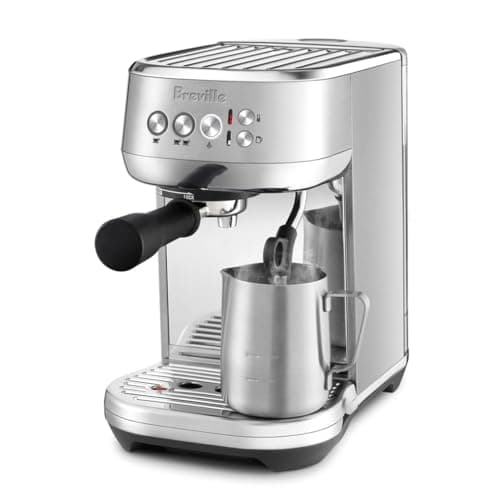 | Milk drinks, and a budget where the grinder still has to be good | Best machine for this budget | |
| 2 | 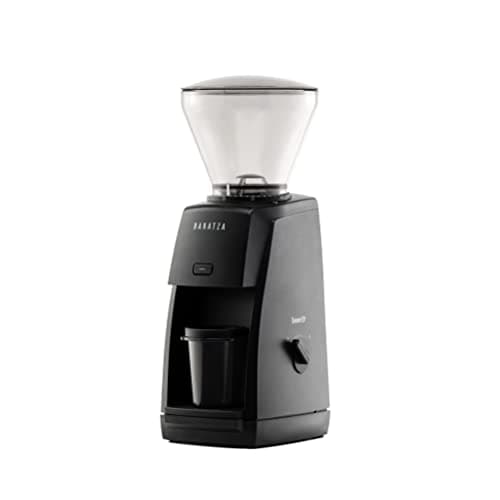 | A first espresso grinder that will not need replacing in a year | Best grinder for this budget | |
| 3 | 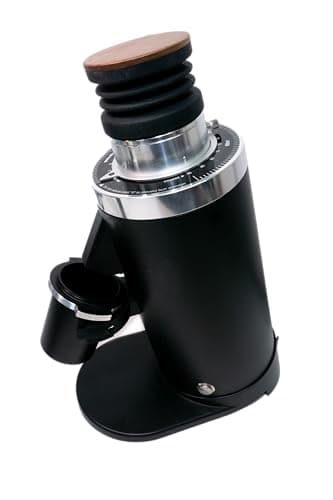 | Straight espresso, light roasts, and one bag at a time | The upgrade split, if espresso is the whole point | |
| 4 | 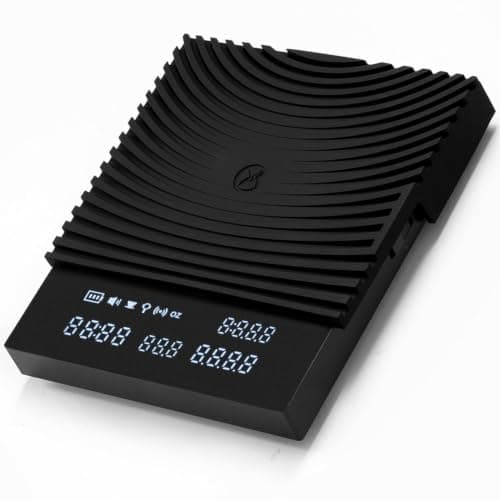 | Every espresso setup, at any budget | The scale, which is not optional | |
| 5 | 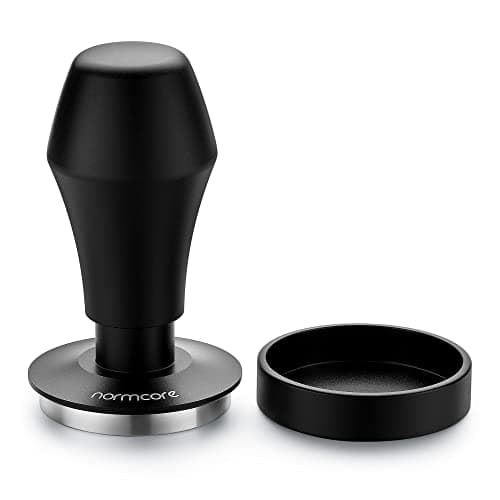 | Consistent tamping while you are still learning everything else | The last few dollars, well spent | |
| 6 | 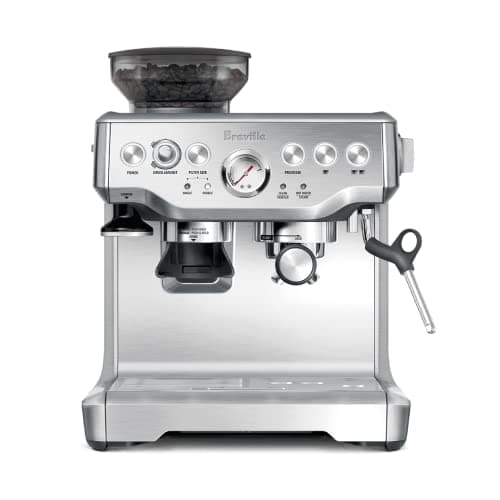 | A single appliance on a small counter, accepting the grinder it comes with | Skip this at this budget |
1. Best machine for this budget
Breville Bambino Plus
Entry tier · The Bambino with automatic milk texturing added.
Automatic milk, three-second heat-up, and it leaves the most money for the grinder.
The Bambino Plus is the machine that makes this budget work, and the reason is arithmetic rather than enthusiasm. It is the cheapest machine here that steams milk properly, which leaves the largest share of $1,000 for the grinder.
Heat-on-demand means it is ready in a few seconds from cold, so it suits a weekday morning in a way a brass-group machine does not. There is no 20-minute warm-up to plan around.
Its automatic milk texturing is the feature that earns its place over the plain Bambino. You set a temperature and a foam level and it steams to them, which removes the steepest part of the learning curve at exactly the moment you are also learning to dial in a grinder.
It is a 54 mm machine, so baskets, tampers and portafilters come from Breville's sizing rather than the commercial 58 mm standard. That is a genuine limitation on where the setup can go later.
It is not a temperature-stability instrument and it has no PID display. Within this budget that is the correct compromise: the money saved goes into the grinder, which changes the cup more.
Specification
- Portafilter
- 54 mm stainless, 18 g dose
- Heating
- ThermoJet, ready in 3 seconds
- Pump
- 15 bar Italian pump, 9 bar extraction
- Milk
- Automatic texturing, 16 fl oz / 480 ml jug
- Footprint
- 11.9 x 7.4 x 14.3 in
What it does well
- Automatic milk texturing gets a usable microfoam without practice
- Same three-second heat-up as the standard Bambino
- Fits a narrow counter with a grinder beside it
Where it gives ground
- You are paying for the milk automation, not better espresso
- Still no grinder
- Auto-steam removes the control an enthusiast eventually wants
Skip it if
Skip it if you want the 58 mm accessory ecosystem from the start, or if you only drink espresso straight and would rather put the milk budget into the grinder.
2. Best grinder for this budget
Baratza Encore ESP
Entry tier · The Encore re-geared for espresso: the same 40 mm burrs on a dual-resolution collar.
Real espresso adjustment resolution at a price that leaves the machine intact.
The Encore ESP is the Encore reworked for espresso: the burrs and the adjustment range are set up so that the fine end of the dial has usable steps rather than a cliff.
That is the specification that matters at this budget. An espresso grinder has to make small changes to grind size, because the difference between a sour shot and a sweet one is a fraction of a turn. A grinder with sixteen coarse steps cannot find it, which is why bundled grinders frustrate people.
It doses into a portafilter holder, so the workflow is reasonable without a dosing cup, and Baratza's long record on spare parts and service means the grinder is repairable rather than disposable.
It costs about a fifth of the budget, which is the whole point. Spending less here is the most common way a $1,000 espresso setup ends up making bad espresso.
It is not a single-dose grinder and it retains some coffee, so switching beans means purging. It is also noticeably slower than a 64 mm flat burr grinder - see the Encore versus the Encore ESP for why the ESP is the espresso one.
Specification
- Burrs
- 40 mm M2 steel conical (Etzinger)
- Settings
- 40 stepped, dual resolution
- Espresso range
- Steps 1-20, 20 microns per click
- Filter range
- Steps 21-40, 90 microns per click
- Burr speed
- 550 rpm
What it does well
- 20 microns per click in the espresso range is real dialing resolution
- Redesigned burr housing makes cleaning and shimming easy
- Shims included in the box
Where it gives ground
- Still a stepped grinder - you cannot land between clicks
- Retention is normal-for-the-class, not low
- Same plastic body and noise as the Encore
Skip it if
Skip it if you want single dosing or very low retention, which means stepping up to a DF64-class grinder and a cheaper machine.
3. The upgrade split, if espresso is the whole point
DF64 Gen 2
Upper-mid tier · The 64 mm flat-burr single-dose grinder that made the format mainstream at home.
A single-dose 64 mm grinder, paired with a cheaper machine.
This is the other sensible way to divide $1,000: put most of it into the grinder and accept a simpler machine. The DF64 Gen 2 is a 64 mm single-dose grinder, which is a genuine step up in what the cup can show.
A 64 mm burr set produces a narrower particle distribution than a 40 mm one, and single dosing means almost nothing is retained between bags. Together those are what make light roasts and single origins worth buying.
Pair it with the plain Bambino rather than the Plus and the total still fits. You lose automatic milk texturing and learn to steam by hand, which is a real but learnable cost.
This split is the right one if you drink espresso straight. The money goes where it affects the shot, and the milk features you are giving up are ones you would not use.
It is a bigger commitment to workflow: single dosing means weighing beans for every shot, and a 64 mm grinder is physically large on a counter. For milk drinkers the other split is the better one.
Specification
- Burrs
- 64 mm flat stainless; aftermarket sets available
- Adjustment
- Stepless
- Retention
- Under 0.1 g
- Motor
- 250 W, 1400 rpm at 110/120 V
- Hopper
- 50 g
- Size
- 13 cm W x 22.5 cm D x 30 cm H, 6.8 kg
What it does well
- 64 mm flats are the burr size the espresso world benchmarks against
- Burrs are swappable, so the grinder can be re-tuned rather than replaced
- Ionizer probes in the chute keep static manageable
Where it gives ground
- Heavy and tall for a home counter
- Stepless adjustment with no detents demands note-keeping
- Version numbering across sellers is genuinely confusing
Skip it if
Skip it if milk drinks are most of what you make. Hand steaming while also learning to dial in is a lot to take on at once.
4. The scale, which is not optional
Timemore Black Mirror Basic Plus
Mid tier · A rechargeable coffee scale with auto-timing and a flow-rate readout.
0.1 g resolution with a timer, small enough to live on the drip tray.
A scale is the cheapest item in this setup and the one that makes the rest of it measurable. Espresso is a ratio of dose in to liquid out, and without a scale you are not controlling either number.
0.1 g resolution is what espresso needs - a gram of dose error is a visible change in the shot - and a built-in timer means you can watch the shot against a clock without reaching for a phone.
It is small enough to sit on a drip tray, which is the practical requirement people discover after buying a kitchen scale that will not fit under the group.
This is the purchase that makes everything else repeatable. Dialing in a grinder without weighing the output is guesswork, and a good grinder cannot help you if you cannot tell what you changed.
It is not a connected scale and there is no app or flow-rate display. At this budget that is the right call: those are refinements, and the grinder is not.
Specification
- Capacity
- 2000 g
- Resolution
- 0.1 g; minimum detectable 0.5 g
- Timer
- Automatic timing
- Battery
- 1600 mAh, up to 10 hours, USB-C
- Size
- 152 x 130 x 26 mm, about 380 g
What it does well
- Auto-timing and flow rate at a fraction of an Acaia
- USB-C rechargeable rather than a drawer full of coin cells
- Small enough for a drip tray, big enough for a dripper
Where it gives ground
- Not waterproof
- Response is quick but not espresso-instant
- The mirrored top shows every fingerprint
Skip it if
Skip it only if you already own a 0.1 g scale that fits under your group head. Otherwise this is the least negotiable item here.
5. The last few dollars, well spent
Normcore V4 Tamper 53.3 mm
Mid tier · The calibrated V4 tamper in the 53.3 mm size made for Breville's 54 mm baskets.
A spring-loaded tamper in the 53.3 mm size Breville baskets take.
A spring-loaded tamper applies the same pressure every time and clicks when it gets there, which removes one variable at the stage where you have too many.
Sizing is the thing to get right, not the brand. Breville's home range uses 53.3 mm, not 58 mm, so this is the size that fits a Bambino - the full sizing table is in are espresso tampers universal.
It ships with interchangeable springs, so the pressure can be set and then stopped being thought about.
At this point in the budget the remaining money is better spent here and on a needle tool than on anything else. Both are cheap and both change shot consistency.
Tamping pressure matters far less than distribution does. If shots are channeling, a WDT tool will do more than any tamper, and it costs less.
Specification
- Size
- 53.3 mm
- Fits
- Breville/Sage 54 mm baskets: Bambino, Bambino Plus, Barista Express, Barista Pro, Barista Touch, Infuser, Duo-Temp Pro
- Springs
- 15 lb, 25 lb and 30 lb included
- Base
- 304 stainless, flat
- Leveling
- Plate rests on the basket rim as you press
What it does well
- Sized for Breville's tapered 54 mm baskets rather than a nominal 54 mm
- Interchangeable springs let you choose the tamping pressure
- The leveling plate keeps every tamp square to the basket
Where it gives ground
- Heavier and bulkier than a plain tamper
- The spring click takes a few days to get used to
- Fits 54 mm Breville baskets only - it will not transfer to a 58 mm machine
Skip it if
Skip it if your machine takes 58 mm baskets - buy the 58.5 mm version instead, not this one.
6. Skip this at this budget
Breville Barista Express
Mid tier · The all-in-one: espresso machine with a conical burr grinder built into the case.
An all-in-one is the one purchase that spends the grinder budget on the wrong grinder.
The Barista Express is a good machine and a reasonable thing to own. It is on this list as the choice to avoid at this specific budget, and the reason is the grinder inside it.
An all-in-one bundles a machine with a built-in grinder whose adjustment range is necessarily coarse, because the whole unit has to hit a price. That grinder is the limiting factor on every shot it makes, and it cannot be replaced without replacing the machine.
At $1,000 you have enough to buy a separate machine and a separate grinder, each better at its job than the combined unit is at either. That is the entire argument of this page.
It also uses 54 mm baskets, so it does not open the commercial accessory path either.
Where it genuinely wins is counter space and simplicity - one plug, one footprint, one thing to clean. If that is the binding constraint, the Barista Express review is the honest case for it.
Specification
- Portafilter
- 54 mm stainless
- Grinder
- Integrated conical burr, 16 settings
- Heating
- Thermocoil, 200 F, PID controlled
- Footprint
- 15.9 x 13.1 x 12.4 in
What it does well
- One box, one price, one plug - nothing else to buy
- PID temperature control at this level is not a given
- Enormous owner base, so parts and answers are easy to find
Where it gives ground
- 16 grind settings is coarse resolution for espresso dialing
- The built-in grinder is the weakest component and cannot be upgraded
- Wide footprint for a single-boiler machine
Skip it if
Skip it at $1,000. Buy it if counter space or simplicity genuinely outrank shot quality for you - that is a legitimate choice, just a different one.
Two combinations that fit
Step 1
The milk-drinks setup
Breville Bambino Plus, Baratza Encore ESP, a 0.1 g scale and a 53.3 mm spring-loaded tamper. Automatic milk texturing removes the hardest skill while you learn to dial in, and the total leaves room for beans and a needle tool.
Step 2
The straight-espresso setup
The plain Breville Bambino with a DF64 Gen 2, the same scale and a tamper. You steam by hand and gain a 64 mm single-dose grinder, which is what makes light roasts and single origins worth buying.
What a thousand dollars does not buy
It is worth being clear about the ceiling. $1,000 does not buy a dual boiler, an E61 group, a heat exchanger or a 64 mm grinder alongside a serious machine. Those start meaningfully higher - the layouts are compared here.
What it does buy is a setup with no single weak link, which is a better place to be than an expensive machine fed by a cheap grinder. If the budget is lower, the under-$500 machines are the starting point; if you already own a machine, upgrading from a Breville is the more useful page.
The order to buy in
- 1The grinder. It sets the ceiling, and it is the hardest thing to upgrade around later.
- 2The machine. Enough for reliable steam and a stable shot.
- 3The scale. Without it, nothing you change is measurable.
- 4A needle tool. The cheapest meaningful improvement to a shot.
- 5The tamper. In the size your baskets actually take.
- 6Beans, bought fresh and often. The one running cost that changes every cup.