The short answer
Buy the Baratza Encore if you brew filter coffee daily and want to push a button: it is the reference electric grinder for pour-over, drip and French press, and its 250 to 1200 micron range covers all of them. Buy the KINGrinder K6 if espresso is part of your week or you want the best burrs for the money - 48 mm burrs with 16 microns per click is genuine espresso resolution, for less than the Encore, in exchange for grinding by hand. The Encore cannot grind fine enough for espresso at any setting; the K6 can, and that is the real dividing line. If you want both espresso and a motor, the Encore ESP is the answer and it costs more than either.
The real split is range, not quality
These two get cross-shopped because they land at similar money, and that makes it tempting to ask which is better. They are not better or worse than each other - they cover different parts of the grind range.
The Encore is a filter grinder. Baratza is explicit that the bottom of its range does not reach espresso, which is why the ESP model exists as a separate product. The K6 reaches espresso comfortably and brews filter as well.
So if espresso is anywhere in your week, the comparison is already decided, and the only remaining question is whether you would rather crank the K6 or pay more for the Encore ESP.
Scroll the table sideways to see every column.
Quick picks
The answer first. Tap any row to jump to the full reasoning for that pick.
| # | Product | Best for | Award | Price |
|---|---|---|---|---|
| 1 | 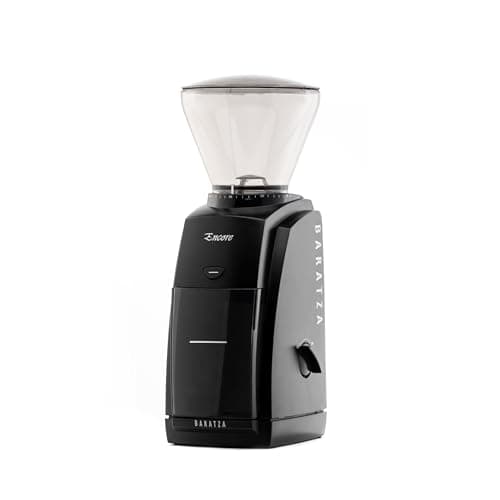 | Daily filter coffee, more than one cup, and no interest in grinding by hand | Top pick for filter coffee | |
| 2 | 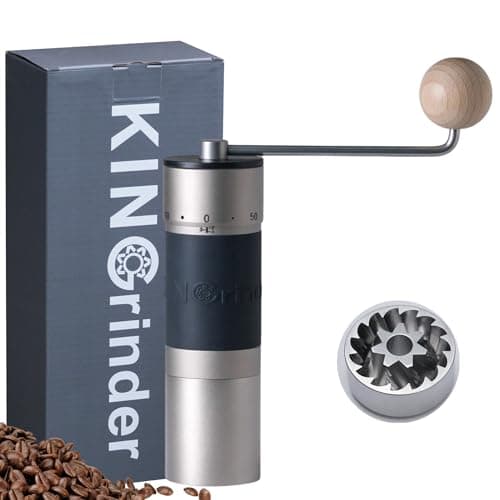 | Espresso on a budget, travel, and anyone who does not mind cranking | Best value, and the only one here that reaches espresso | |
| 3 | 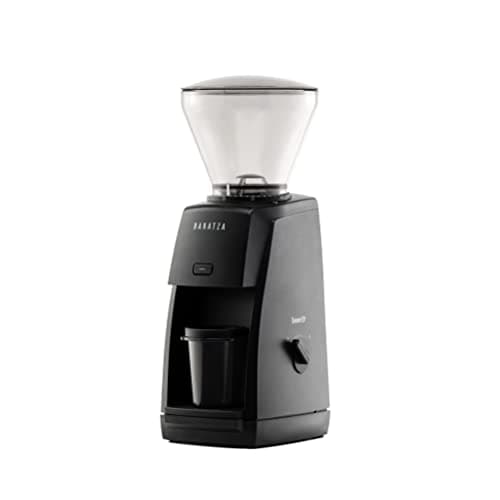 | Espresso without hand grinding, accepting a higher price | If you want electric and espresso |
1. Top pick for filter coffee
Baratza Encore
Entry tier · The standard entry burr grinder for filter brewing.
Push a button and it grinds. The reference answer for pour-over, drip and French press.
The Encore is the grinder most filter brewers end up recommending, and the reason is boring: it is electric, it is consistent across its filter range, and it has been serviceable for years.
Its 40 mm conical burrs run at roughly 450 to 550 rpm, which is deliberately slow. Low burr speed keeps heat and static down, and static is the practical annoyance that makes grounds cling to everything on cheaper electric grinders.
Baratza publishes its range as 250 to 1200 microns across 40 stepped settings. That covers French press at the coarse end through to drip and pour-over, which is the whole span most households need.
The part that actually matters day to day is that it is effortless. A hand grinder asks for 40 to 90 seconds of cranking per dose; this asks for a button, which is why electric grinders get used every morning and hand grinders sometimes do not.
Its honest limit is espresso. The bottom of its range is too coarse for a shot - that is what the separate Encore ESP exists for. It is also a plastic body with a loud motor, and the settings are stepped rather than stepless.
Specification
- Burrs
- 40 mm conical, made in Europe
- Settings
- 40 stepped
- Grind range
- 250-1200 microns
- Burr speed
- Roughly 450-550 rpm to limit heat and static
What it does well
- The reference answer for pour-over, drip and French press
- Fully serviceable, with parts sold individually for years
- Low burr speed keeps static and heat down
Where it gives ground
- Bottom of its range is too coarse for espresso - that is the ESP model job
- Stepped settings only
- Plastic body and a loud motor
Skip it if
Skip it if espresso is part of your week, or if you want a grinder that travels. It does neither.
2. Best value, and the only one here that reaches espresso
Kingrinder K6
Manual tier · A 48 mm hand grinder with external adjustment and a hex shaft you can drive with a drill.
48 mm burrs and 16 microns per click, for well under the Encore.
The K6 is the better specification on paper and it costs less. It has 48 mm heptagonal stainless conical burrs - larger than the Encore's 40 mm - with external adjustment at 60 clicks per rotation, about 16 microns per click.
Sixteen microns is genuine espresso resolution. That is the single thing the Encore cannot do at any setting, and it is why a hand grinder at this money outperforms an electric one on range: there is no motor to pay for, so the budget goes into burrs and adjustment.
Its hex shaft is the detail that undercuts the main objection to hand grinding. A quarter-inch hex drive takes any cordless drill, which turns it into an electric grinder when you are making several drinks.
At 630 g with a 30 to 35 g capacity, it also travels, which no electric grinder here does. One dose of espresso or one pour-over fits in a single load.
The costs are real. Fit and finish sit a step below the premium Taiwanese and German hand grinders, the aluminum body marks, and spare parts and support are thinner than 1Zpresso or Comandante offer - see the K6 review and the 1Zpresso comparison.
Specification
- Burrs
- 48 mm heptagonal stainless conical
- Adjustment
- External, 60 clicks per rotation
- Resolution
- 16 microns per click
- Capacity
- 30-35 g
- Weight
- 630 g
- Shaft
- Quarter-inch hex drive
What it does well
- Big burrs and external adjustment for a fraction of the premium options
- The hex shaft turns it into an electric grinder with any cordless drill
- 16 microns per click is genuine espresso resolution
Where it gives ground
- Fit and finish is a step below the premium Taiwanese and German grinders
- Aluminum body picks up marks
- Support and spare parts are thinner than Comandante or 1Zpresso
Skip it if
Skip it if you brew several cups of filter every morning. Cranking 60 g of coarse coffee by hand gets old quickly.
3. If you want electric and espresso
Baratza Encore ESP
Entry tier · The Encore re-geared for espresso: the same 40 mm burrs on a dual-resolution collar.
The Encore re-geared so the fine end of the dial is usable for shots.
This is the resolution to the trade the other two force. The Encore ESP is the same 40 mm burr platform on a dual-resolution collar, set up so that the espresso end of the range has usable steps.
It is the honest answer for anyone who read the K6's specification, wanted espresso, and does not want to crank. You pay more than either grinder above for the combination.
It keeps everything the standard Encore is good at - the serviceability, the slow burrs, the filter range - and adds the fine adjustment the base model lacks.
It doses into a portafilter holder, which makes the espresso workflow reasonable without buying a dosing cup.
It is still a 40 mm conical grinder with some retention, so it is not a single-dose tool and switching beans means purging. For what single dosing buys, see single dose versus hopper grinders.
Specification
- Burrs
- 40 mm M2 steel conical (Etzinger)
- Settings
- 40 stepped, dual resolution
- Espresso range
- Steps 1-20, 20 microns per click
- Filter range
- Steps 21-40, 90 microns per click
- Burr speed
- 550 rpm
What it does well
- 20 microns per click in the espresso range is real dialing resolution
- Redesigned burr housing makes cleaning and shimming easy
- Shims included in the box
Where it gives ground
- Still a stepped grinder - you cannot land between clicks
- Retention is normal-for-the-class, not low
- Same plastic body and noise as the Encore
Skip it if
Skip it if you only brew filter - the standard Encore does that job for less - or if the budget genuinely stops at the K6.
Why the hand grinder has better burrs for less
This looks like an anomaly and it is not. An electric grinder has to pay for a motor, a housing, a switch, a hopper and the safety engineering around all of it. A hand grinder spends the same money on burrs, bearings and an adjustment mechanism.
That is why 48 mm burrs with 16-micron adjustment arrive at a price where electric grinders are still offering 40 mm burrs and stepped settings. You are buying grinding hardware instead of convenience hardware.
The reverse is also true, and it is the thing to be honest about: convenience is not a trivial purchase. The grinder you use every day beats the grinder with the better specification sitting in a cupboard.
How long cranking actually takes
For a single espresso dose of 18 g, a 48 mm hand grinder is a short job - fine grinds cut quickly and the dose is small. For a 30 g pour-over at a coarser setting it is longer, and for 60 g of French press it is a genuine arm workout.
This is the whole reason the K6's hex shaft matters. With a cordless drill it stops being a hand grinder for the batches where hand grinding is tedious, which is a more useful feature than its price suggests.
Where each one sits long term
The Encore's long-term case is serviceability. Baratza has sold individual parts for years, so the grinder is repairable rather than disposable, and that is a real part of its value.
The K6's long-term case is weaker on exactly that point. Support and spare parts are thinner than the premium hand grinders offer, which is part of what the lower price reflects. If you want a hand grinder to keep for a decade, the 1Zpresso range is the better-supported path at a higher price.
If you are still weighing the format itself rather than these two models, hand versus electric grinders is the broader version of this question.