The short answer
For one person, the AeroPress is the default: one mug, forgiving of grind, and clean in ten seconds. If you want to pour, the V60 01 is the size that sits on a mug. If you want no technique at all, the Clever steeps and releases. A moka pot in a small size covers strong coffee, and a big carafe brewer - a Chemex, a drip machine - is the thing to avoid buying for one.
Why brewing for one is its own problem
Most coffee equipment is designed around a carafe. Drip machines brew badly below half capacity because the shower head and the bed depth were designed for a full basket. A 30 oz Chemex with 15 g in it is a shallow bed in a thick filter.
The second problem is waste. A pot made at 7 a.m. is finished at 7:20 and stale by 8, and a hotplate actively degrades it - coffee left on one is noticeably worse inside twenty minutes.
Single-serve brewing sidesteps both. You brew the amount you drink, the bed depth is what the device was designed for, and nothing sits waiting.
How we picked
- Sized for one mug, not scaled down from a pot.
- Fast to clean, because a brewer that takes five minutes to wash gets used twice.
- No proprietary consumables beyond ordinary filters.
- Forgiving, since a solo brewer is usually paired with a modest grinder - see best grinders for AeroPress.
Quick picks
The answer first. Tap any row to jump to the full reasoning for that pick.
| # | Product | Best for | Award | Price |
|---|---|---|---|---|
| 1 | 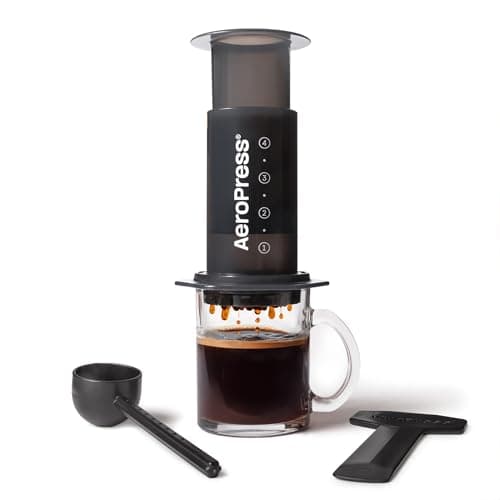 | One good cup with no ceremony | Top pick | |
| 2 | 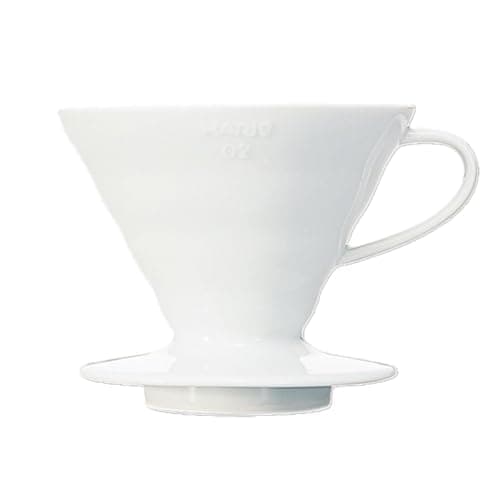 | A single cup you pour yourself | Best pour-over for one | |
| 3 | 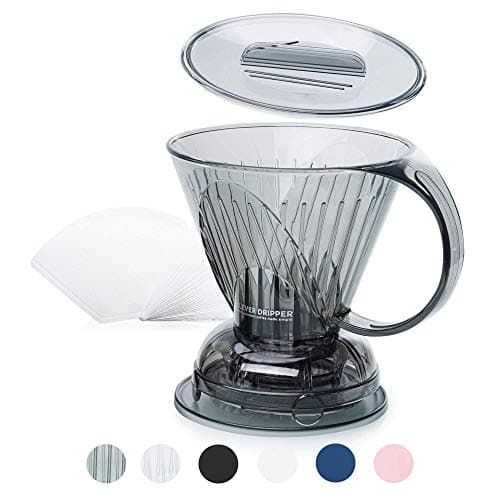 | A clean cup with zero technique | Best hands-off | |
| 4 | 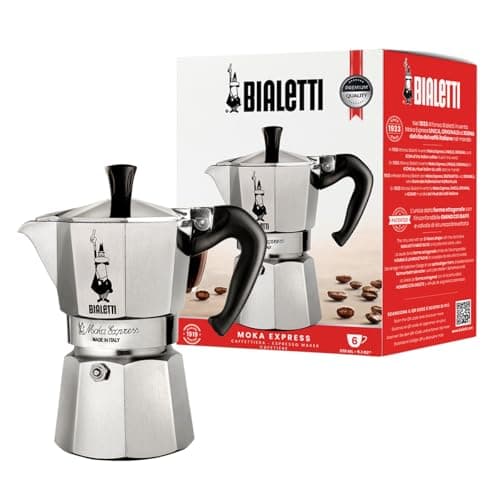 | An espresso-adjacent drink without a machine | Best strong small coffee | |
| 5 | 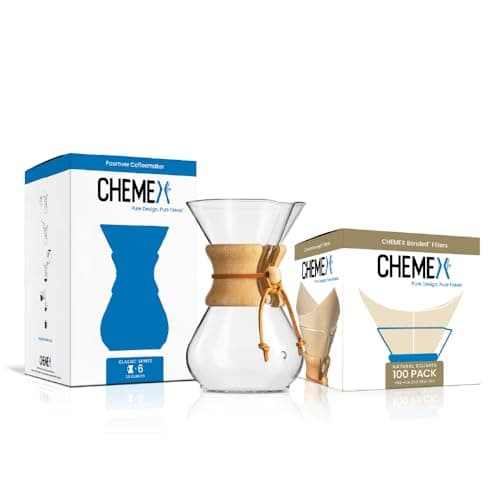 | Brewing for guests, not for yourself | Skip this for one |
1. Top pick
AeroPress Original
Manual tier · A hand-pressed immersion brewer using a paper or metal filter.
10 oz, one to three cups, and about ten seconds to clean.
The AeroPress brews 10 oz - one to three cups by its own reckoning, which in real terms is one generous mug - by immersion, then presses it through a paper or metal filter.
Immersion plus a short press is the most forgiving brewing method in this list. It tolerates an uneven grind in a way pour-over does not, which matters when the grinder is a budget hand grinder.
Cleanup is the reason people keep using it: eject the puck, rinse the plunger, done. Nothing soaks, nothing stains and nothing needs a brush.
At about 6.5 oz it travels, and it is nearly indestructible, so it doubles as the brewer you take to a hotel.
It is not espresso despite the marketing around it, plunging takes real hand pressure, and it makes one or two cups at a time - which is the point here.
Specification
- Capacity
- 10 oz, 1-3 cups
- Weight
- About 6.5 oz
- Filters
- Paper or metal mesh
What it does well
- Almost impossible to brew a bad cup with
- Forgiving of grinder inconsistency in a way pour-over is not
- Cleans up in about ten seconds
Where it gives ground
- Not espresso, whatever the marketing around it says
- One or two cups at a time
- Plunging takes real hand pressure
Skip it if
Skip it if you want to brew and serve from the same vessel. This is a mug-at-a-time device.
2. Best pour-over for one
Hario V60 Ceramic Dripper 01
Manual tier · The one-to-two-cup size of the 60-degree cone dripper.
The 1-2 cup V60, sized to sit on a mug rather than a carafe.
The 01 is Hario's small cone: 1 to 2 cups, W119 x D100 x H82 mm, model VDC-01-W, in Arita-yaki ceramic.
At a 12 to 15 g dose the smaller cone builds a deeper bed than the 02 would, which slows drawdown slightly and helps a single cup taste like a full one.
It sits directly on a mug. For solo brewing that removes the carafe entirely, which is one fewer thing to wash.
The geometry is the standard V60: 60-degree cone, spiral ribs, one large hole, so every published recipe applies.
Its 01 papers are stocked less widely than 02s, and ceramic wants a preheat - see V60 01 vs 02.
Specification
- Model
- VDC-01-W
- Capacity
- 1-2 cups
- Size
- W119 x D100 x H82 mm
- Material
- Arita-yaki ceramic, made in Japan
- Filters
- V60 01 papers - not interchangeable with 02
What it does well
- Sized for the single cup most people actually brew
- Ceramic holds heat through a short brew once preheated
- Same 60-degree cone and spiral ribs as the larger sizes
Where it gives ground
- Caps out around two cups, so it cannot serve a table
- Needs its own 01 filters, which are less widely stocked than 02
- Ceramic is heavier and more breakable than plastic
Skip it if
Skip it if your pour is inconsistent and you would rather not practice. Immersion is the easier road.
3. Best hands-off
Clever Coffee Dripper Large
Budget tier · A cone dripper with a valve in the base, so it steeps like an immersion brewer and then drains.
Steep it, set it on a mug, and the valve does the rest.
The Clever brews up to 18 oz in BPA-free Eastman Tritan, holding the brew behind a drip stop until the dripper is placed on a cup.
It is immersion brewing with a paper filter, which is the combination that gives a French press's ease with a pour-over's clarity.
There is no pour technique at all: add coffee, add water, wait, release. The only variables are dose, grind and time.
Its 18 oz capacity is larger than most single-serve devices, so a big mug is comfortably covered.
It ships with 100 filters, and the plastic body is the obvious compromise against glass or ceramic.
Specification
- Capacity
- Brews up to 18 oz
- Material
- BPA-free Eastman Tritan
- Valve
- Drip stop holds the brew until the dripper is set on a cup
- Included
- 100 paper filters
- Cleaning
- Plastic and silicone parts are removable
What it does well
- Immersion brewing removes pour technique from the result
- A paper filter still gives a clean cup, unlike a French press
- Cheap, light and almost impossible to break
Where it gives ground
- Plastic body in a category where glass and ceramic exist
- Brews one batch at a time and needs a cup wide enough to sit on
- Steeping takes longer than a pour-over
Skip it if
Skip it if you want a brewer you enjoy using. It is designed to be uninteresting, which is its virtue.
4. Best strong small coffee
Bialetti Moka Express
Budget tier · The octagonal aluminum stovetop pot that defines the category.
A 1-cup moka pot makes exactly one strong serving and nothing else.
Bialetti sells the Moka Express from 1 cup to 12, which is by far the widest size range in the category. For solo brewing, the smallest sizes are the point.
A moka pot must be filled properly - boiler to the valve, basket level and full - so a large pot cannot make a small brew. Buying the right size is not optional, it is the whole decision.
It needs no paper, no capsules and no electricity, and gaskets and parts are stocked everywhere for very little money.
The cast aluminum body will not work on induction without an adapter plate; a stainless line is sold for that.
It produces little or no crema and it is not espresso - see moka pot vs espresso machine.
Specification
- Material
- Cast aluminum (a stainless line is also sold)
- Sizes
- 1 to 12 cup
- Cooktops
- Gas and electric; needs an adapter plate for induction
What it does well
- Sizes from 1 to 12 cup - by far the widest range in the category
- No paper, no capsules, no electronics, and almost nothing to break
- Parts and gaskets are stocked everywhere and cost very little
Where it gives ground
- Aluminum will not work on an induction hob without a separate adapter
- You must fill the basket and boiler properly, so a big pot cannot make a small brew
- Produces little or no crema - it is not espresso
Skip it if
Skip it if you drink long black coffee. A moka brew is small and strong by design.
5. Skip this for one
Chemex Classic 6-Cup
Manual tier · A single-piece borosilicate brewer that uses very thick bonded filters.
A 30 oz brewer with thick proprietary filters - wonderful, and wrong for a single mug.
The Chemex Classic 6-Cup holds 30 oz and stands 8.5 in tall. That is three to four mugs, which is exactly what you do not want when you are one person.
Its bonded filters are thick and proprietary - FP-1, FC-100, FS-100, FSU-100 - and they are a permanent running cost whether you brew 30 oz or 10.
A small dose in a large Chemex brews badly: the bed is too shallow for the filter's thickness, and drawdown stalls or races depending on grind.
It brews and serves in one vessel, which is a genuine advantage when there are guests, and none at all at 7 a.m. alone.
None of this makes it a bad brewer. It makes it a brewer bought for the wrong reason if you drink alone - see the Chemex review.
Specification
- Capacity
- 30 oz
- Size
- 8.5 in H x 5.125 in diameter
- Material
- Borosilicate glass, wood collar and leather tie
- Filters
- Chemex Bonded (FP-1, FC-100, FS-100, FSU-100)
What it does well
- The thick bonded filter produces the cleanest cup of any common brewer
- Brews and serves in one vessel, which matters when guests are involved
- It looks like an object, not an appliance
Where it gives ground
- The proprietary filters are a permanent running cost
- Slow, and unforgiving if you grind too fine
- Glass, with a wood collar that should not be soaked
Skip it if
Skip it for solo brewing. Buy it when you regularly make coffee for three or more.
What each one is actually like to live with
Scroll the table sideways to see every column.
What one person actually brews, in grams
A mug is roughly 300 to 350 ml of finished coffee. At the ratios most recipes use, that is somewhere between 18 and 22 g of coffee - which is why a 25 g hand grinder is the right size for solo brewing and a 450 g hopper is not.
It also explains why scaling a four-cup recipe down rarely works. Halving the dose does not halve the bed depth or the drawdown time, so a recipe written for 30 g in a large brewer behaves differently at 15 g in the same device. Brewers sized for one cup avoid that problem by having been designed around it.
The exception is the moka pot, where the dose is not yours to choose at all: the basket is filled level and the boiler is filled to the valve, so the pot's size decides the brew. That is why buying the right size matters more here than anywhere else - see how to use a moka pot.
Brewing two cups on a one-cup brewer
Occasionally there is a second person. The AeroPress handles it by brewing a concentrate and diluting - its own instructions describe up to three cups from one press - and the Clever's 18 oz capacity covers two small mugs in one steep.
A V60 01 does not stretch: at more than about two cups the bed is too deep for the cone and drawdown stalls. If two cups is a weekly event, that is an argument for the 02 size rather than for a second brewer.
What about pod machines?
A capsule machine is the other honest answer to brewing for one, and it wins on speed and loses on cost per cup and on choice of coffee. If that trade appeals, the best Nespresso machines covers the range.
Everything on this page brews whole-bean coffee you buy anywhere, which over a year is both cheaper and better - provided you own a grinder.