The short answer
Buy the Stanley Stay-Hot French Press. It is 48 oz of two-layer 18/8 stainless with no glass to break, Stanley states it holds coffee hot for up to 4 hours, and it draws no power at all - so one 7am brew covers the morning without touching your amps. If your rig has an induction hob, the Bialetti Moka Induction is the one Bialetti built for induction cooktops and it is the most compact brewer here. For one cup at a time, the AeroPress Go packs inside its own mug. Avoid any brewer above about 1000 watts: Breville's Grind Control publishes 1100 W, which is a third of a 30-amp hookup drawn while the air conditioner is also running.
Amperage is the constraint, and it is arithmetic
A 30-amp RV hookup at 120 volts gives you roughly 3,600 watts for everything at once - air conditioner, fridge, water heater, converter, lights. A 1,100 watt coffee maker is not a large appliance in a house and it is close to a third of that budget in a rig, drawn continuously for the length of a brew cycle.
This is why the top of this page is manual. A brewer that uses the stovetop moves the load onto propane or onto the one circuit that is sized for cooking, and a brewer that needs no heat at all moves it off the electrical system entirely. The question to ask about any electric brewer is simply what it draws, and the honest answer is that most makers do not publish it - Breville does, which is why its figure is the one quoted here.
The four things that actually rule gear out
- Watts, checked against what else runs. Anything above about 1,000 W is a scheduling problem rather than an appliance. Most drip machines with a built-in grinder are in that band.
- Glass. A carafe in a cabinet that accelerates and brakes is a question of when, not if. Every pick here except the moka pot's own body is stainless or shatter-resistant.
- Water used per brew, including cleanup. You are carrying your fresh water and dumping your gray. A brewer whose cleanup is one push and a rinse costs you a few ounces; a carafe and basket costs a sink full.
- Whether it holds the coffee. Brewing twice is brewing twice. Vacuum insulation turns one morning brew into a day of coffee, which is why two of the picks here are insulation rather than brewing.
Quick picks
The answer first. Tap any row to jump to the full reasoning for that pick.
Prices shown are checked daily against the retailer, as of November 9, 2026. We never write a price into the text of a page.
| # | Product | Best for | Award | Price |
|---|---|---|---|---|
| 1 | 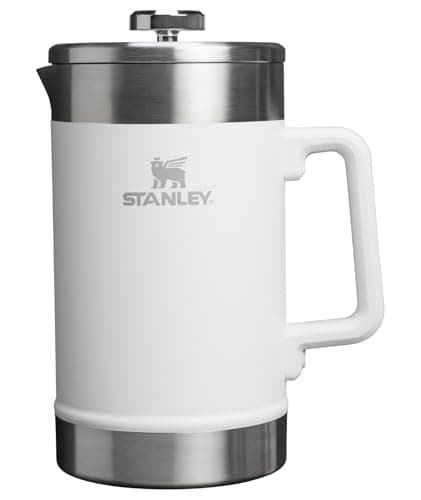 | Brewing once in the morning and drinking it until lunch | Top pick | |
| 2 | 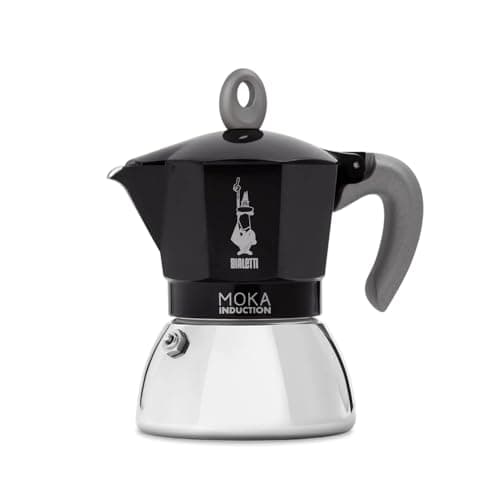 | A rig with an induction hob and no amps to spare for an appliance | Best stovetop option | |
| 3 | 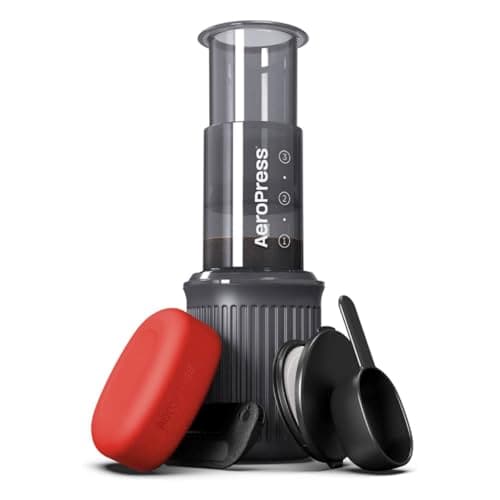 | One person, or two people who drink at different times | Best single cup | |
| 4 | 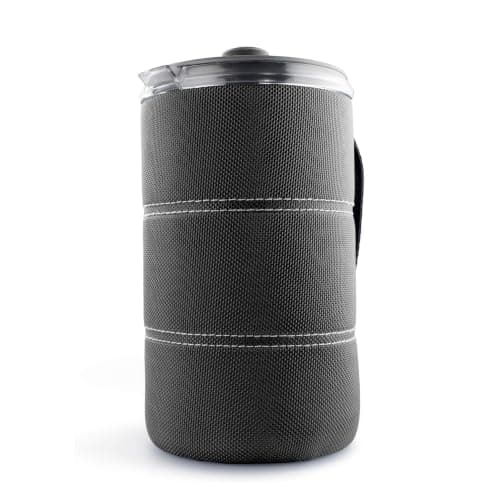 | A rig that doubles as a campsite | Best shatterproof press | |
| 5 | 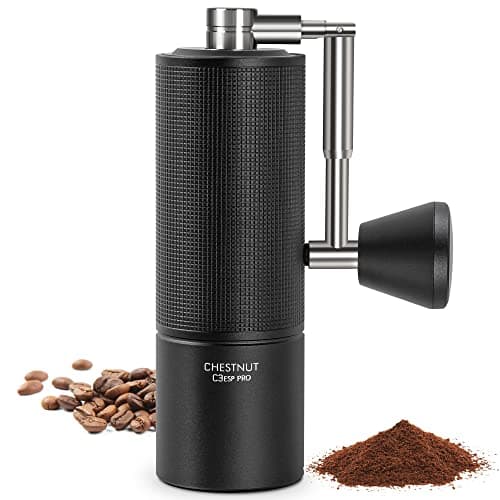 | Fresh coffee without spending a single amp on it | Best grinder for the situation | |
| 6 | 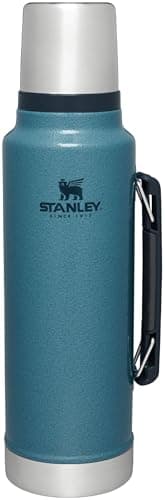 | Brewing at the campsite and drinking it on the road | Best way to make it last | |
| 7 | 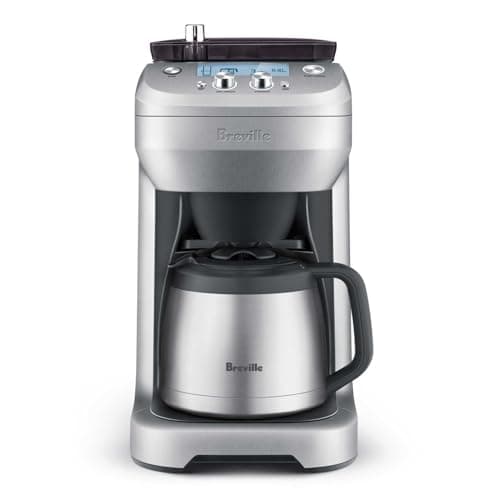 | A house, where it is genuinely good | Skip this one |
1. Top pick
Stanley Stay-Hot French Press 48 oz
Budget tier · A 48 oz vacuum-insulated stainless press built for camp and for pouring hot hours later.
48 oz of unbreakable stainless that keeps the brew hot for four hours and draws nothing.
This is the pick because it removes the electrical problem and the breakage problem in one object, and then solves a third one nobody expects: you only brew once.
Stanley states double vacuum insulation holding coffee hot for up to 4 hours and cold drinks cold for up to 9. In an RV that means a single 48 oz brew at 7am covers the whole morning without reheating anything or running the generator to do it.
It is two layers of 18/8 stainless steel with a steel mesh plunger. There is no glass, no carafe to crack and no element to fail, which is the difference between gear that survives a season of driving and gear that is swept up at a rest stop.
48 oz is a genuinely useful capacity for two people with mugs rather than cups, and the whole thing is 9.5 in tall and about 2.5 lb - it stows in a cabinet on its side without a thought.
Stanley publishes its own method on the listing: a medium-coarse grind, the right ratio, even pressure on the plunge. It needs water boiled somewhere, which on a stovetop is a kettle or a pan, and every part of it is dishwasher safe for the weeks you have hookups.
Specification
- Capacity
- 48 oz
- Construction
- Double-wall vacuum-insulated stainless steel
- Filter
- Stainless steel mesh
- Heat
- The listing states up to 4 hours hot and 9 hours cold
- Stovetop
- No - vacuum insulated, so heat water separately
What it does well
- 48 oz serves a group from one brew
- Vacuum insulated, so coffee stays hot at a cold campsite
- Built to be thrown in a truck rather than looked after
Where it gives ground
- Heavy and bulky next to purpose-built backpacking brewers
- Not for the flame - you still need a way to heat water
- Coffee left in it keeps extracting, so decant what you will not drink soon
Skip it if
Skip it if you want a clean, light cup. A metal filter leaves the oils and fines in the coffee by design - see the best French presses.
2. Best stovetop option
Bialetti Moka Induction
Budget tier · The Moka Express reworked with a stainless steel boiler so it runs on induction.
The one Bialetti built for induction, so it works on an RV induction cooktop.
Many newer RVs and conversions run an induction cooktop, and the classic aluminum Moka Express does not work on one without an adapter plate. This is the version Bialetti made for that.
Bialetti describes it as the first Moka suitable for use on induction cooktops: the upper body is the same aluminum as the Moka Express, combined with a stainless steel boiler. The listing states it suits all types of hob, which is what makes it the safe buy when you do not know what your next kitchen is.
It uses the cooktop you already have rather than a circuit you do not, which is the whole argument. A gas or induction burner is the one heat source every rig has, and it is not on the same load budget as the air conditioner.
It is also the most compact brewer here by a wide margin - a 2-cup pot is 5 in tall and under half a pound. It goes in a drawer, not a cabinet, and there is nothing on it to damage.
The 2-cup size means 3.4 oz of finished coffee, which is two small strong cups and not a morning's drinking. Bialetti is also explicit that it must be rinsed with water only, never washed with detergent or put in a dishwasher.
Specification
- Material
- Stainless steel boiler with aluminum upper
- Cooktops
- Induction, glass-ceramic, gas and electric
What it does well
- Works on an induction cooktop with no adapter plate
- Stainless boiler is more durable than cast aluminum
- Brews the same way as the standard Moka Express
Where it gives ground
- Costs more than the aluminum original for the same coffee
- Fewer size options than the Moka Express line
- Heavier than the aluminum version
Skip it if
Skip it if you want a mug of long coffee. A moka pot makes a short concentrated brew - the Moka Express review sets out exactly what it is.
3. Best single cup
AeroPress Go
Manual tier · The travel AeroPress: smaller, and it packs inside its own mug.
Brewer, mug and lid packed inside each other, two minutes, no power.
The AeroPress Go is the format that wastes nothing: no leftover carafe, no heated plate, no cycle to wait for. One cup, two minutes, whenever somebody wants it.
The kit is the brewer plus a lightweight microwaveable mug with a silicone lid, and the brewer repacks into the mug afterwards. In a rig where every item has to have a home, the whole coffee setup is one mug-sized object.
It needs no electricity at all - just ground coffee and hot water from the stovetop. AeroPress states a brew time under two minutes and full control over time, temperature and grind, so it is not a travel compromise so much as a travel-shaped version of a good brewer.
Cleanup is the quietly decisive feature when you are carrying your own water and dumping your own gray tank. One push ejects the puck into a bin, and the rinse is a few ounces of water rather than a sink full.
It brews one cup per cycle, so two people means two cycles. At about 0.7 lb and under 6 in tall it is also the lightest thing on this page.
Specification
- Capacity
- 8 oz, one cup
- Weight
- About 5.6 oz
- Size
- 4.5 in H x 3.6 in W
What it does well
- The whole kit nests into the mug it comes with
- Lightest way to make genuinely good coffee away from home
- Brews the same way as the Original
Where it gives ground
- One cup only
- Shorter chamber limits some published recipes
- The bundled mug is the point; at home it is dead weight
Skip it if
Skip it if you want the coffee to still be hot an hour later. It brews into a cup, not a vacuum vessel - pair it with a thermos if that matters.
4. Best shatterproof press
GSI Outdoors JavaPress
Budget tier · A 30 oz shatter-resistant French press wrapped in an insulating nylon sleeve.
A 30 oz press with an insulated lid and a nylon sleeve, built for being thrown in a box.
GSI makes outdoor cookware, and this is a French press designed from the start for a vehicle rather than a kitchen that happens to survive one.
It is BPA-free and shatter-resistant, which is the specification that matters when the cupboard it lives in is accelerating and braking. There is no glass component to protect.
It holds a full 30 fluid ounces and has a double-walled insulated lid, so the brew holds temperature through the steep rather than cooling in the four minutes it is standing there. That is a real difference from a single-wall plastic press.
It ships with a water-resistant nylon sleeve with a handle, which does two jobs: it keeps your hand off the hot body and adds insulation. It also means the press can be carried outside to a table without a mitt.
It is lighter and cheaper than the Stanley and holds temperature for far less time - the insulated lid slows heat loss but this is not a vacuum vessel. It is the pick if the coffee is drunk promptly and the budget matters.
Specification
- Capacity
- 30 fl oz
- Body
- Shatter-resistant plastic in a ballistic nylon cozy
- Insulation
- Double-walled lid and a water-resistant nylon sleeve with handle
- Plunger
- Silicone-ringed
What it does well
- Purpose-built for packing - light, and nothing in it can shatter
- The silicone plunger ring seals better than most camp presses
- 30 oz serves a tent of two comfortably
Where it gives ground
- Plastic body will stain and hold odors over time
- Cannot go over a flame - you boil water separately
- Bulkier than an AeroPress Go for solo trips
Skip it if
Skip it if the brew needs to stay hot for hours. An insulated lid is not vacuum insulation, and the Stanley is the right answer for that.
5. Best grinder for the situation
Timemore Chestnut C3
Manual tier · The budget hand grinder that made stainless conical burrs cheap.
Hand-powered, folds flat, no outlet and no inverter.
An electric grinder is a surprisingly awkward thing to run off a battery bank: it is a short, very high draw, and it is the one appliance that is genuinely hard to justify on an inverter. A hand grinder sidesteps it completely.
The handle folds against the body, which is the reason this one travels rather than just being portable in principle. Folded it is about 3 in across and 530 g, and it goes in a drawer with the cutlery.
Timemore states stainless steel conical burrs, stepless adjustment from fine to coarse and a 25 g capacity - one or two cups, which matches the brewers on this page. The body is all-metal aluminum alloy with no plastic part inside, so there is nothing in it to crack in a cupboard.
Grinding at the point of brewing is worth more on the road than at home, because the alternative is a bag of pre-ground coffee that has been open in a hot vehicle for a week. Whole beans in a sealed bag survive that; ground coffee does not.
It is twenty seconds of real cranking per cup, and it cannot grind for a group. A sealed bag of whole beans plus this is still the most compact fresh-coffee setup available.
Specification
- Burrs
- 38 mm S2C stainless conical, 55-58 HRC
- Settings
- Roughly 36, about 0.0233 mm per click
- Capacity
- 25 g
- Weight
- About 530 g
- Build
- Aluminum body, double-bearing axis, no plastic internals
What it does well
- Filter-grade grind quality at a genuinely low price
- Metal internals and double bearings, not a toy
- Small and light enough to travel with
Where it gives ground
- 38 mm burrs make an espresso dose slow work
- Espresso resolution is marginal
- 25 g capacity limits you to one brew at a time
Skip it if
Skip it if you will not do it every morning - see hand vs electric coffee grinders for the honest comparison.
6. Best way to make it last
Stanley Classic Legendary Bottle 1.5 qt
Entry tier · A 1.5 qt vacuum-insulated steel bottle Stanley rates at 40 hours hot and 36 hours cold.
A 1.5 qt vacuum bottle whose lid doubles as an eight-ounce cup.
The real pattern of RV coffee is that it gets made while parked and drunk while moving, and almost nothing on a moving vehicle is a good place to brew.
Stanley states this holds drinks hot or cold for up to 24 hours in industrial-grade 18/8 stainless. One morning brew decanted into it covers a full driving day without the stove coming on again.
The lid doubles as an eight-ounce cup, which removes a separate mug from the inventory - and in a vehicle, one object doing two jobs is the whole design philosophy. The wide mouth makes pouring from a press into it straightforward.
It is leak-resistant and has a collapsible handle, so it travels in a footwell or a door pocket rather than needing to be wedged upright somewhere. 1.5 qt is 48 oz, which matches the Stanley press exactly - brew the press, pour it straight across.
It is a vessel, not a brewer: it makes no coffee on its own. It is also large, and at this capacity it is the heaviest full item on the page.
Specification
- Capacity
- 1.5 qt
- Retention
- Hot 40 hours, cold 36 hours (Stanley)
- Construction
- Recycled 18/8 stainless steel, double-wall vacuum insulation
- Lid
- Insulated lid doubles as a cup; leakproof and packable
- Size
- 4.7 x 3.9 x 14.1 in, 2 lb
What it does well
- Holds a full brewer's worth rather than a single cup
- The longest retention rating of anything on the site
- Dishwasher safe, and built to be dropped, thrown in a truck and kept for years
Where it gives ground
- Heavy and large for one person's commute
- You pour into the lid-cup - it is not a sipping mug
- Far more than needed if the coffee is gone by mid-morning
Skip it if
Skip it if you drink one cup in the morning and nothing after. A 16 oz vacuum mug is the better size then - see the best coffee thermoses.
7. Skip this one
Breville Grind Control
Mid tier · A drip brewer with a burr grinder built into the case.
1100 watts, a glass-free thermal carafe, and still the wrong machine for a 30-amp hookup.
This is a good machine and it is here to carry a specific number, because the number is the whole reason RV coffee is a different question from kitchen coffee.
Breville publishes its power draw plainly: 1100 watts at 110 to 120 volts. On a 30-amp hookup that is a little over a third of everything you have, and it is drawn for the length of a brew cycle - during which the air conditioner, the fridge and a water heater are all also asking.
The failure mode is not a damaged machine, it is a tripped breaker in the middle of making coffee, which is worse than having no coffee maker. Brewing becomes something you schedule around the rest of the rig rather than something you just do.
The second problem is physical. A grind-and-brew machine is tall, top-heavy and has a hopper, a burr set and a brew basket that all have to be secured before driving. Everything else on this page can be put in a cupboard and forgotten.
In a kitchen it is a sound machine and we say so on the grind-and-brew page. The lesson to take to an RV is the wattage figure: check it, and check it against what else runs at the same time.
Specification
- Grinder
- Built-in stainless steel burr, 8 grind settings
- Strength
- 8 settings
- Brew range
- 5-60 oz
- Carafe
- 60 oz insulated stainless
- Hopper
- Half a pound, removable with a locking system
What it does well
- Whole beans to brewed coffee with one button
- Brews a single cup or a full carafe from the same hopper
- Removable hopper means you can swap beans without emptying it
Where it gives ground
- Grinding and brewing in one box means cleaning two machines in one
- 8 grind settings is coarse control
- A separate grinder and brewer beats it on both counts for a similar total
Skip it if
Skip any 1000 W-plus brewer on limited hookup power. The same logic rules out most drip machines with a built-in grinder.
How the picks compare on the road
Scroll the table sideways to see every column.
Camping and RVing are not the same problem
We have a separate page for coffee makers for camping, and the overlap is smaller than it looks. Camping optimizes for weight and pack volume with no power at all and often no flat surface. An RV has a cabinet, a stovetop, a sink and some amount of power, and it optimizes for things that survive being driven and do not blow a breaker.
That is why capacity is higher here than on the camping page - 48 oz rather than one cup - and why a 2.5 lb stainless press is the top pick rather than a disqualification. Weight you never carry on your back is not a cost.
Water, which affects the coffee and the kettle
Campground water varies enormously in hardness, and a rig fills from whatever tap it is parked next to. That matters twice: very hard water mutes the coffee, and it scales anything with a heating element far faster than a fixed address would.
The manual brewers on this page are immune to the second problem, because there is nothing in them to scale. If you run an electric kettle, descale it on a schedule rather than when you notice - coffee makers for hard water covers what scale does and what removes it.