The short answer
Lay a home coffee bar out in the order you use it: beans, grinder, scale, machine, milk, waste. Buy in a different order - grinder first, then the machine, then the scale, and the decorative storage last - because grind decides the cup and a coffee bar you cannot measure is not repeatable. The two things that decide whether a bar gets used on a weekday are the machine's warm-up time and whether the scale lives on the drip tray rather than in a drawer. Three practical rules: leave a clear working lane at least as wide as your portafilter between grinder and machine, keep the grinder off a shared wall because it is the loudest thing on the counter, and allow for water and waste before you allow for looks.
A coffee bar is a workflow, not a shelf
Most home coffee bars fail the same way: they are arranged for a photograph and then every drink requires three turns, a reach over a hot machine and a trip to a drawer. After a fortnight the owner goes back to the kettle.
The fix is to lay the counter out in the sequence a drink actually happens. Every step should be reachable without moving your feet, and nothing you use daily should be stored anywhere but the counter.
Scroll the table sideways to see every column.
Quick picks
The answer first. Tap any row to jump to the full reasoning for that pick.
| # | Product | Best for | Award | Price |
|---|---|---|---|---|
| 1 | 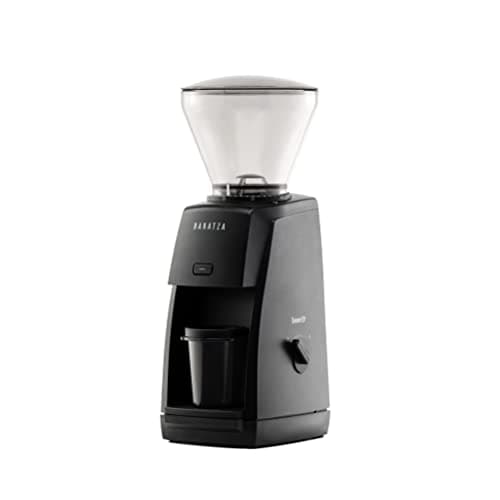 | Any coffee bar that will make espresso as well as filter | Station 1: the grinder, and it goes first | |
| 2 | 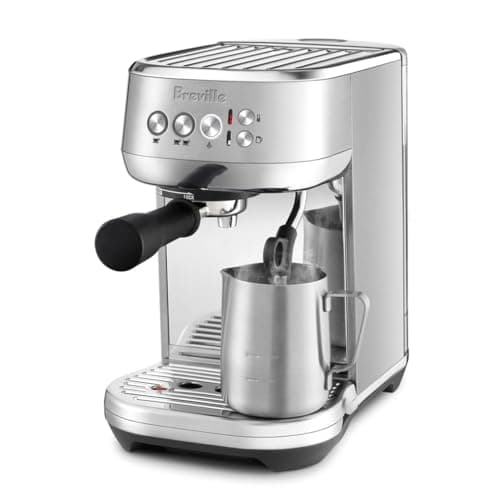 | A coffee bar on a normal kitchen counter rather than a dedicated cabinet | Station 2: the machine, sized to the counter | |
| 3 | 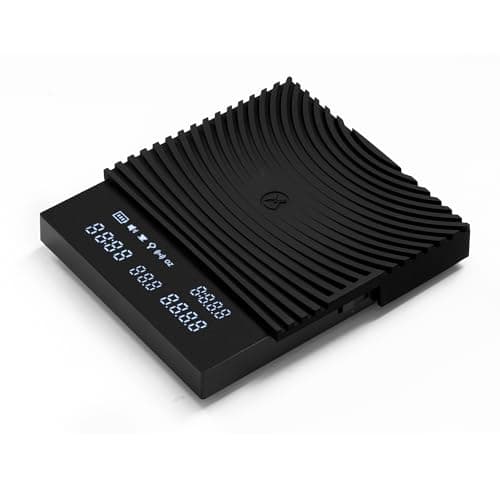 | Every coffee bar, and it should be there from day one | Station 3: the scale, which is the piece bought too late | |
| 4 | 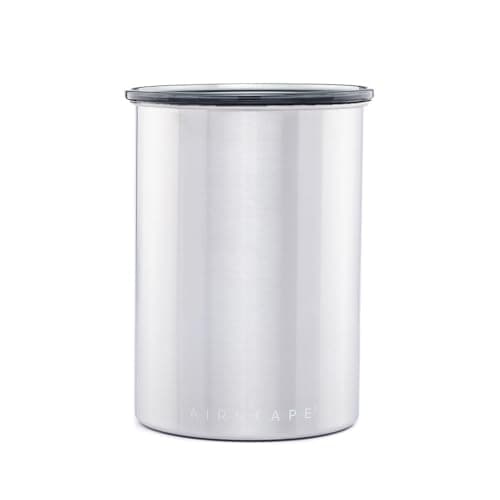 | Keeping an open bag drinkable for the two weeks you will take to finish it | Station 4: storage that actually removes air | |
| 5 | 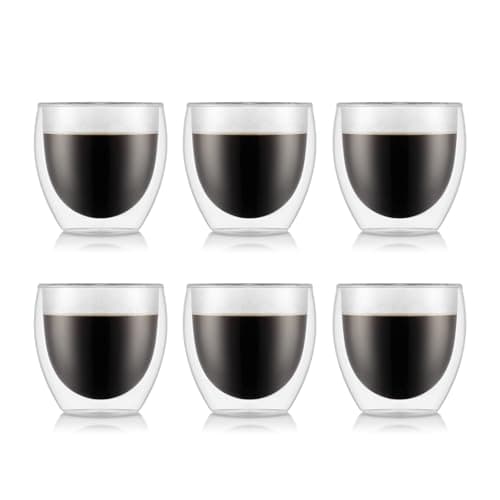 | Espresso, and anyone who wants to see what they pulled | Station 5: the cups, which change the drink more than they should | |
| 6 | 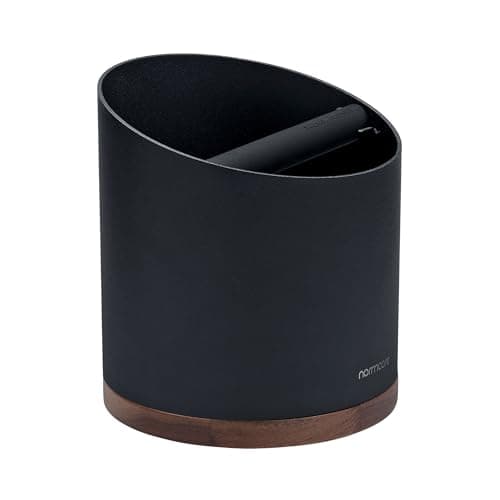 | An established espresso bar with counter space to spare | Skip this until the bar is otherwise finished |
1. Station 1: the grinder, and it goes first
Baratza Encore ESP
Entry tier · The Encore re-geared for espresso: the same 40 mm burrs on a dual-resolution collar.
Buy the grinder before the machine, and give it the best spot on the counter.
The grinder is the first thing to buy and the first thing to place, and both of those surprise people building a counter around a machine they already chose.
It goes first in the buying order because grind is what decides the cup: a modest machine fed by a good grinder makes better coffee than an expensive machine fed by a bad one. The Encore ESP is the Encore re-geared for espresso, with the same 40 mm burr platform on a dual-resolution collar so the fine end of the range has usable steps.
It goes first in the layout because it is the thing you use for every drink regardless of method, and because it needs headroom above it to fill the hopper and clearance in front to swing a portafilter in.
It doses into a portafilter holder, which means the workflow is hands-free without a separate dosing cup - a real consideration on a crowded counter.
It is also the loudest thing on the bar, so keep it off a shared wall and put something soft underneath. It is hopper-fed with some retention, so switching beans means purging - see single dose versus hopper grinders.
Specification
- Burrs
- 40 mm M2 steel conical (Etzinger)
- Settings
- 40 stepped, dual resolution
- Espresso range
- Steps 1-20, 20 microns per click
- Filter range
- Steps 21-40, 90 microns per click
- Burr speed
- 550 rpm
What it does well
- 20 microns per click in the espresso range is real dialing resolution
- Redesigned burr housing makes cleaning and shimming easy
- Shims included in the box
Where it gives ground
- Still a stepped grinder - you cannot land between clicks
- Retention is normal-for-the-class, not low
- Same plastic body and noise as the Encore
Skip it if
Skip it if you only brew filter - the standard Encore does that for less. Skip it if you want single dosing.
2. Station 2: the machine, sized to the counter
Breville Bambino Plus
Entry tier · The Bambino with automatic milk texturing added.
Ready in three seconds and textures milk for you, in a footprint that leaves room to work.
The machine is the second decision, not the first, and on a coffee bar its footprint matters as much as its features because every inch it takes is working space you lose.
The Bambino Plus is 11.9 x 7.4 x 14.3 in and runs a 54 mm stainless portafilter at an 18 g dose, with ThermoJet heating ready in about three seconds and a 15 bar pump extracting at 9 bar.
The three-second start is what makes a coffee bar get used on a weekday. A machine that needs twenty minutes of warm-up becomes a weekend machine no matter how good it is.
Automatic milk texturing in a 16 fl oz jug also removes the step most likely to make a morning drink take ten minutes instead of three.
It is a sealed appliance with no owner repair path and it uses Breville's 54 mm size rather than the commercial 58 mm standard, so the accessory ceiling is lower than it looks. If you want a machine to keep and modify, espresso machines that last is the other direction.
Specification
- Portafilter
- 54 mm stainless, 18 g dose
- Heating
- ThermoJet, ready in 3 seconds
- Pump
- 15 bar Italian pump, 9 bar extraction
- Milk
- Automatic texturing, 16 fl oz / 480 ml jug
- Footprint
- 11.9 x 7.4 x 14.3 in
What it does well
- Automatic milk texturing gets a usable microfoam without practice
- Same three-second heat-up as the standard Bambino
- Fits a narrow counter with a grinder beside it
Where it gives ground
- You are paying for the milk automation, not better espresso
- Still no grinder
- Auto-steam removes the control an enthusiast eventually wants
Skip it if
Skip it if your bar is built around filter coffee - then a drip machine and a kettle are the better two pieces.
3. Station 3: the scale, which is the piece bought too late
Timemore Black Mirror Basic 3.0
Entry tier · The current Black Mirror: adds a live brew-ratio readout and three brewing modes.
Flat enough to live on the drip tray permanently, with a live brew-ratio readout.
This is the item people add six months in and then wonder how they managed without, which is why it is a station rather than an accessory.
A coffee bar is meant to make the same drink repeatably. Without a scale you are not measuring the dose going in or the liquid coming out, so a drink that tastes wrong gives you nothing to act on.
It reads weight at 0.1 g, a timer, flow rate and a live brew ratio, and has three brewing modes including an espresso mode that times from the drip tray without a button press.
The practical layout point is thickness: it is thin enough to live under the group permanently rather than being fetched from a drawer, and a scale in a drawer is a scale you stop using.
It is a 2 kg capacity scale, so it is not a kitchen-batch tool, and Timemore publishes no spec sheet comparing it with its own previous model - Basic 2 against Basic 3 covers that.
Specification
- Resolution
- 0.1 g
- Capacity
- 2 kg
- Readouts
- Weight, timer, flow rate and brew ratio
- Modes
- Three brewing modes (regular, pour-over, espresso)
- Battery
- Rechargeable, USB-C
- Minimum detection
- Retailers publish 0.2 g
- Splash rating
- Retailers publish IPX3
What it does well
- The live brew-ratio readout removes the one calculation people get wrong
- Espresso mode times the shot off the drip tray without a button press
- Retailers publish a lower minimum detection and an IPX3 splash rating
Where it gives ground
- Costs a little more than the Basic 2 for the same resolution and capacity
- Three modes is three things to be in the wrong one of
- Timemore does not publish a manufacturer spec sheet comparing it with the Basic 2
Skip it if
Skip it only if you already own a 0.1 g scale thin enough to stay on the tray.
4. Station 4: storage that actually removes air
Airscape Classic Stainless Canister
Budget tier · A steel canister with an inner plunger lid that pushes air out as it is pressed down.
A plunger lid that pushes the air out, rather than a lid that merely seals.
Storage is where coffee bars go wrong decoratively. A row of matching glass jars looks like a coffee bar and is a bad way to keep coffee, because clear glass admits light and a sealed jar still holds the air that was in it when you closed it.
The Airscape's inner plunger lid is the mechanism that matters: pressing it down forces air out of the canister and locks in place, so the beans sit in less oxygen rather than in a sealed portion of it. The outer lid is a separate clear top.
It is restaurant-grade 18/8 stainless steel with a non-slip stackable base, and the 64 oz size holds about a pound of beans.
Steel also solves the light problem that glass creates, which is the second half of why beans go flat on an attractive counter.
The honest caveat is that no canister makes stale coffee fresh or beats simply buying smaller bags more often. Decanting a 2.2 lb bag into a canister is better than leaving it open, and worse than buying 12 oz at a time - best coffee canisters compares the mechanisms.
Specification
- Material
- Restaurant-grade 18/8 stainless steel
- Inner lid
- Patented plunger lid forces air out and locks in place
- Outer lid
- BPA-free clear top lid
- Sizes
- Sold in several sizes; the 64 oz holds about 1 lb of beans
- Base
- Non-slip, stackable
What it does well
- The plunger removes headspace air rather than sealing it above the beans
- No electronics, no pump and nothing to fail
- Steel body with a clear top lid so you can see the level
Where it gives ground
- Pressing the lid down grinds against the beans at the top
- Two lids to lose rather than one
- Sizes are confusing to shop for online
Skip it if
Skip it if you buy 10 to 12 oz bags and finish them in two weeks. The bag's own valve is adequate at that pace.
5. Station 5: the cups, which change the drink more than they should
Bodum Pavina Double Wall Espresso Glasses
Entry tier · Mouth-blown double-walled borosilicate espresso glasses at 2.5 oz.
Double-walled 2.5 oz glasses that keep a small drink hot and show you the shot.
Cups are the part of a coffee bar that looks like decoration and is not. A 2.5 oz espresso lands in a thick cold mug and is lukewarm before you taste it - thermal mass and volume work against a small drink.
These are mouth-blown heat-resistant borosilicate, glass-in-glass with a vacuum insulating layer, at 2.5 oz. The double wall keeps a double shot hot without preheating the cup, which is the practical benefit.
Being glass they also let you see the shot - color, crema, whether it is blonding - which is genuinely useful feedback while you are still learning a machine.
There is a silicone vent at the base to equalise air pressure, which is the detail that stops double-walled glass cracking on hot liquid.
They are fragile, they are expensive for glassware, and 2.5 oz is espresso-only - a flat white needs a different cup. For travel rather than the counter, a vacuum mug is the other answer - see the Carter Everywhere.
Specification
- Capacity
- 2.5 oz
- Material
- Mouth-blown heat-resistant borosilicate glass
- Construction
- Glass-in-glass with a vacuum insulating layer
- Detail
- Silicone vent at the base equalizes air pressure
What it does well
- Genuinely well made - mouth-blown, with a proper vacuum layer
- Almost no heat reaches your hand and no condensation forms
- The silicone base vent stops the layers stressing with temperature
Where it gives ground
- 2.5 oz is tight for a long double shot
- Mouth-blown glass is fragile and priced accordingly
- Not suited to being warmed on a machine's cup rest for long periods
Skip it if
Skip them if you drink milk drinks almost exclusively - buy 6 oz cups instead, and preheat them.
6. Skip this until the bar is otherwise finished
Normcore Heavy-Duty Knock Box
Mid tier · A weighted counter-top knock box with a removable, rubber-coated knock bar.
A good knock box, and the most postponable thing on this page.
This is a well-made knock box and it is on the list as the purchase to make last, because it is the one item here whose job something you already own does adequately.
It is 1.8 L - about 40 to 45 double-shot pucks - in carbon steel with a natural walnut base, a removable rubber-coated knock bar and anti-slip rubber pads.
What it buys is tidiness and a little less noise than knocking a puck into a bin. What it costs is counter space, which on most home bars is the scarcest resource there is.
For most people a lined bin under the counter does the same job for nothing, and the puck goes in the compost either way. Spending this money on beans or on the scale produces a better cup.
If your bar is on an island or a dedicated cabinet with room to spare, it is a genuine quality-of-life item and the walnut base looks the part - knock box versus knock box drawer covers the two formats.
Specification
- Capacity
- 1.8 L - about 40-45 double-shot pucks
- Body
- Carbon steel with a natural walnut base
- Knock bar
- Rubber-coated, removable for cleaning
- Base
- Textured anti-slip rubber pads
What it does well
- Heavy enough to stay put when you knock hard, which cheap boxes do not
- The removable bar is the part that gets filthy - being able to take it out matters
- 40-45 pucks means emptying it weekly rather than daily
Where it gives ground
- Takes real counter space next to a machine that already takes some
- A drawer or a lined bin does the same job for nothing
- Walnut base needs keeping dry
Skip it if
Skip it while anything else on this page is still missing. Buy it once the bar works and you want it tidier.
The buying order is not the layout order
This is the single most useful thing on the page. The order things sit in is not the order you should buy them in, and conflating the two is how people end up with a handsome counter that makes mediocre coffee.
- 1The grinder. It sets the ceiling on every drink and it is the hardest thing to upgrade around later.
- 2The machine. Enough for reliable steam and a stable shot, sized to the space you actually have.
- 3The scale. Without it nothing is repeatable, and repeatability is the whole point of a bar rather than a cupboard.
- 4A needle tool and a tamper. Cheap, and they remove two variables.
- 5Storage. Once you know how fast you get through beans.
- 6Waste and decoration. Last. A lined bin works until it does not.
If you are setting a total budget rather than buying piece by piece, the best espresso setup under $1,000 splits one figure across machine, grinder and scale, and the best coffee setup under $200 does the same at the filter end. This page is about where the pieces go once you have them.
Water, power and waste: the three boring constraints
These decide more coffee bar layouts than aesthetics do, and they are the ones people discover after the furniture arrives.
- Water. You will refill a tank several times a week and you want filtered water, so a bar across the room from a tap becomes a chore. Filtered water is also the cheapest thing you can do for the machine's lifespan, because scale from heated minerals is what ends most home machines.
- Power. An espresso machine and a grinder on the same circuit as a kettle and a toaster is how breakers trip. Check what else is on the run before committing to a wall.
- Waste. Pucks, rinse water and milk residue all happen at the counter. A bar with no answer for drainage means a drip tray carried across a kitchen twice a day.
What a coffee bar does not need
Said plainly, because this category attracts spending. A knock box, matching glass canisters, a dedicated cart, a scale with an app and a tamping station are all optional, and none of them improves the coffee.
Clear glass jars are actively worse than opaque storage, because light degrades coffee. A cart is furniture rather than equipment. And the money any of them costs buys better beans, which change every cup - how to choose a grinder and fresh coffee outrank all of it.