The short answer
Buy a quiet grinder, not a quiet machine. Espresso machine noise is a vibration pump running for the 25 to 30 seconds of a shot, and no manufacturer publishes a decibel figure for one; the grinder is the loud component, and it is the one with published numbers - retailers list roughly 64 to 65 dB for Eureka's silenced Mignon models against about 73 dB for the uninsulated Notte. The quietest practical setup for an apartment is a machine with no built-in grinder and a short pump cycle - a Breville Bambino, ready in about three seconds - paired with a silenced grinder like the Eureka Mignon Specialita, or a hand grinder such as the Timemore C3 if you want no motor noise at all. Avoid a bean-to-cup super-automatic: it runs the grinder inside the housing as part of every drink, so you cannot move the loud step away from the early-morning one.
What actually makes noise in an espresso setup
Worth separating, because the usual framing of this question is wrong. There are three sources and they are not equal.
- The grinder. By a wide margin the loudest thing, and the only component here with published decibel figures. It is also the one you can choose freely, because it is a separate purchase on any machine without a grinder built in.
- The pump. A vibration pump is audible but it runs for roughly 25 to 30 seconds, once per shot. This is the noise people worry about and the one that matters least.
- The steam wand. Brief and sharp, and only if you make milk drinks. Purging is a second or two.
So the lever is the grinder, and the machine's contribution is mostly a question of how long its pump runs and whether it has a grinder inside it.
Scroll the table sideways to see every column.
Quick picks
The answer first. Tap any row to jump to the full reasoning for that pick.
| # | Product | Best for | Award | Price |
|---|---|---|---|---|
| 1 | 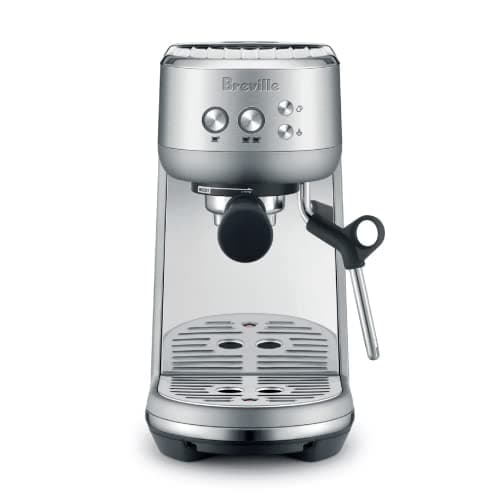 | Early starts in an apartment, one or two drinks at a time | Top pick for the machine half | |
| 2 | 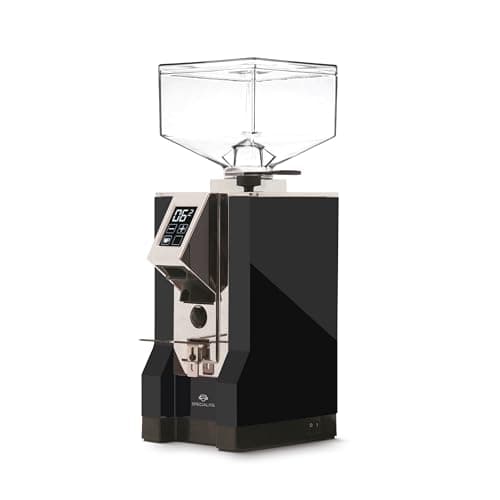 | Anyone grinding before anyone else is awake | The pick that actually solves the problem | |
| 3 | 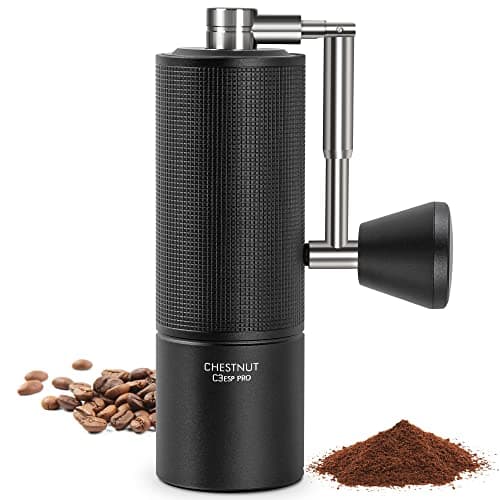 | A single early drink, a thin wall, or a hotel room | Quietest at any price | |
| 4 | 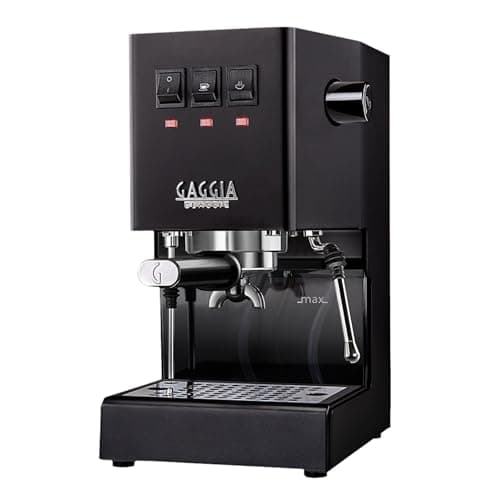 | Someone who wants quiet without a sealed appliance | Best quiet machine you can also repair | |
| 5 | 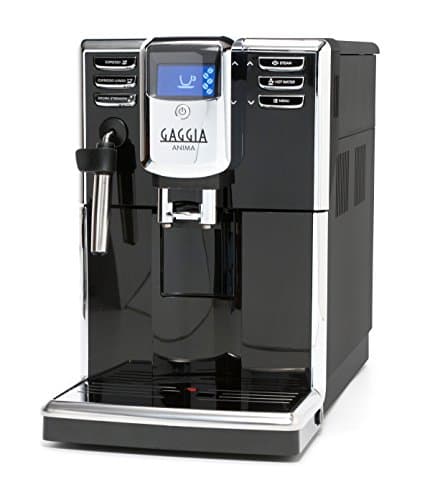 | Convenience, in a house where noise is not the constraint | Skip this for a quiet kitchen |
1. Top pick for the machine half
Breville Bambino
Entry tier · A compact 54 mm espresso machine with a manual steam wand and no grinder.
No boiler to heat and a three-second start, so the noisy part runs for seconds.
The Bambino is the quietest-in-practice machine here, and the reason is run time rather than any noise rating. Its ThermoJet heats water in transit and is ready in about three seconds, so there is no pump cycling while a boiler fills and no long warm-up.
Espresso machine noise is almost entirely the vibration pump, and a vibration pump is only loud while it runs. On a shot that is roughly 25 to 30 seconds, once.
It has no built-in grinder, which matters more than it sounds: on this page that is a feature. A machine with a grinder inside runs the loudest component in the setup as part of every drink.
It does low-pressure pre-infusion then 9 bar in a 11.9 x 6.1 x 13.5 in footprint, so you are not trading away extraction behavior for the quiet.
Nobody publishes a decibel figure for it, and this site will not invent one. The argument here is about how long the pump runs and what else is in the box, which are both knowable.
Specification
- Portafilter
- 54 mm, 18 g dose
- Heating
- ThermoJet, ready in 3 seconds
- Extraction
- Low-pressure pre-infusion, then 9 bar
- Footprint
- 11.9 x 6.1 x 13.5 in
- Grinder
- None - buy separately
What it does well
- Three-second heat-up means it is genuinely usable on a weekday
- The narrowest footprint of any machine here
- Real steam wand you control yourself
Where it gives ground
- No grinder, so the real budget is machine plus grinder
- Manual milk texturing has a learning curve
- Small tank means frequent refills if you pull several drinks
Skip it if
Skip it if you want milk textured for you - that is the Bambino Plus - or if you want a repairable machine.
2. The pick that actually solves the problem
Eureka Mignon Specialita
Upper-mid tier · An Italian 55 mm flat-burr espresso grinder with stepless micrometric adjustment.
The grinder is the loud part, and this is the one with insulation designed in.
If you buy one thing on this page for noise, buy this rather than a machine. Eureka's Silent Technology is motor and case insulation with rubber mounts and gaskets, and it is the only product here with published noise figures to point at.
Retailers publish roughly 64 to 65 dB for the silenced Eureka Mignon models against about 73 dB for the uninsulated Notte. Decibels are logarithmic, so that gap is larger in practice than the numbers suggest.
It is a 55 mm flat-burr grinder with stepless micrometric adjustment and output up to about 1.8 g per second, so an 18 g dose is roughly a ten-second job. Shorter grind time is less noise regardless of the rating.
The sound insulation is structural rather than a marketing claim - it is why this grinder is the standing recommendation for shared walls and early mornings. Which Eureka Mignon to buy covers the cheaper models that share its burrs.
It is hopper-fed by design, it is expensive next to the machine you might pair it with, and it is espresso-focused, so its coarse end is not its strength.
Specification
- Burrs
- 55 mm flat hardened steel, made in Italy
- Adjustment
- Stepless micrometric on the lower burr
- Output
- Up to 1.8 g per second
- Dosing
- Digital timed, adjustable in tenths of a second
What it does well
- Genuinely quiet - the sound insulation is not marketing
- Micrometric adjustment holds its setting through a strip-down clean
- Fast enough that an 18 g dose is a ten-second job
Where it gives ground
- Hopper-fed by design; single dosing it is a workaround
- No weight-based dosing
- Espresso-focused - the coarse end is not its strength
Skip it if
Skip it if the budget cannot carry a machine and this grinder. A cheaper grinder and a longer grind is the compromise.
3. Quietest at any price
Timemore Chestnut C3
Manual tier · The budget hand grinder that made stainless conical burrs cheap.
A hand grinder makes no motor noise at all, which no electric can match.
The genuinely silent answer is to remove the motor. A hand grinder has no motor noise whatsoever - just the sound of beans being cut, which is a fraction of any electric grinder and does not travel through a floor.
The C3 is the budget hand grinder worth owning: 38 mm S2C stainless conical burrs at 55 to 58 HRC, roughly 36 settings at about 0.0233 mm per click, 25 g capacity, aluminum body with a double-bearing axis and no plastic internals.
For one drink before anyone else is up, this is the correct tool and it costs a fraction of a silenced electric grinder.
It is also the honest answer for anyone whose noise problem is a shared bedroom wall rather than a general preference - no insulation gets an electric motor down to this.
The cost is effort and capacity. 25 g is one or two doses, and grinding by hand every morning is a commitment some people quietly abandon - see hand versus electric grinders.
Specification
- Burrs
- 38 mm S2C stainless conical, 55-58 HRC
- Settings
- Roughly 36, about 0.0233 mm per click
- Capacity
- 25 g
- Weight
- About 530 g
- Build
- Aluminum body, double-bearing axis, no plastic internals
What it does well
- Filter-grade grind quality at a genuinely low price
- Metal internals and double bearings, not a toy
- Small and light enough to travel with
Where it gives ground
- 38 mm burrs make an espresso dose slow work
- Espresso resolution is marginal
- 25 g capacity limits you to one brew at a time
Skip it if
Skip it if you make several drinks each morning. Cranking three doses before work gets old fast.
4. Best quiet machine you can also repair
Gaggia Classic Evo Pro
Mid tier · A 58 mm single-boiler machine with commercial parts and a large modification community.
A manual 58 mm machine with no grinder inside and a short pump cycle.
If the Bambino's sealed construction bothers you, this is the quiet-enough machine that is also repairable. It is a manual single-boiler machine, so the only noise is the pump during the shot.
Its published electrics are 1425 W total, 1375 W to a 140 ml boiler, with a 2.1 L tank, a 3-way solenoid and a two-hole steam wand. Nothing in that list grinds, froths automatically or cycles on its own.
A small boiler also means short heating runs rather than a large reservoir repeatedly coming back to temperature.
Like the Bambino it has no built-in grinder, which is the thing that keeps total setup noise down.
It takes longer to warm up than a ThermoJet machine and it expects a temperature routine, so it is the quieter-and-slower choice rather than the quieter-and-easier one. It is also the durability pick on espresso machines that last.
Specification
- Portafilter
- 58 mm
- Power
- 1425 W total; 1375 W to the boiler
- Boiler
- 140 ml max capacity, 105 ml operating
- Water tank
- 2.1 L / 72 fl oz
- Steam
- Two-hole professional wand
- Valve
- 3-way solenoid
What it does well
- 58 mm from the start - every basket, tamper and portafilter fits
- The 3-way solenoid gives a dry puck, which cheap machines do not
- Serviceable and heavily documented; parts are everywhere
Where it gives ground
- No PID as shipped; brew temperature drifts with the thermostat
- Long recovery between brewing and steaming
- The modification path is a hobby, not a feature
Skip it if
Skip it if you want to be making coffee within seconds of walking into the kitchen.
5. Skip this for a quiet kitchen
Gaggia Anima
Upper-mid tier · A minimal push-button bean-to-cup machine with a ceramic burr grinder.
A bean-to-cup machine runs the grinder as part of every drink, inside the housing.
The Anima is a capable minimal bean-to-cup machine and it is on this list as the format to avoid if noise is the deciding factor.
A super-automatic grinds, doses, tamps and brews in one cycle, which means the grinder - the loudest component in any coffee setup - runs as part of every single drink, every time, with no option to do it at a different moment.
Its ceramic burr grinder and Ulka 15 bar vibration pump are both fine components. The problem is that they are sequenced together inside one housing and triggered by one button.
The practical consequence is that you cannot separate the loud step from the early-morning step. With a separate grinder you can grind the night before or in a different room; with a bean-to-cup you cannot.
If convenience outranks noise, that is a legitimate choice and this is a reasonable machine for it - the super-automatic roundup is the page for that decision.
Specification
- Grinder
- Ceramic burr
- Pump
- Ulka 15 bar vibration pump
- Format
- Super-automatic, bean to cup
What it does well
- The simplest interface in the category - push a button, get a drink
- Ceramic burrs and an Ulka pump are the same parts used across Italian machines
- Compact for a bean-to-cup machine
Where it gives ground
- Fewer drink presets than the Philips or De Longhi
- Same fundamental limit as every super-automatic: no control over the shot
- Starts higher than the entry price of a good manual machine plus grinder
Skip it if
Skip it if the point of the purchase is a quiet kitchen. Buy it if one-button convenience matters more.
Why this page quotes no decibel figure for any machine
Because none exists. No manufacturer in home espresso publishes a decibel rating for a machine, and this site does not substitute a measurement from a review site for one.
The retailer-published grinder figures are quoted as retailer figures, and only for grinders. Everything else on this page is an argument from things that are knowable: whether a grinder is inside the housing, how long the pump runs, and how long the machine takes to be ready.
That is less satisfying than a table of numbers and it is the honest version. For the grinder side with real published figures, the quiet grinder roundup is the page with the comparisons.
Four things that cut noise without buying anything
- 1Grind the night before. Ground coffee degrades over a day, but a slightly stale dose at 6 a.m. beats waking the house. This is the single most effective change available.
- 2Put something soft under the grinder. A silicone mat or folded towel stops the counter acting as a soundboard. Structure-borne noise through a worktop travels further than airborne noise.
- 3Close the kitchen door and move the grinder off a shared wall. Obvious, and more effective than any purchase on this page.
- 4Keep the dose small and the burrs sharp. Grind time is noise time, and dull burrs take longer.