The short answer
There is no best brewing method, there are five variables, and each method is a different setting of them: how much pressure the water is under, how long it touches the coffee, what it passes through on the way out, how fine the grind is, and whether you or a machine controls the temperature. Pour-over gives clarity and demands attention. French press gives body and forgives everything. AeroPress splits the difference in one cup. Moka pot gives concentration without electricity. Drip gives a full pot unattended. Cold brew trades twelve hours for low acidity. Espresso gives the most concentrated drink and asks the most back.
The five variables that separate every method
Every method on this page uses the same three ingredients - coffee, water and heat - so the differences between them are entirely differences of process. There are five that matter, and once you can name them the methods stop being a list to memorize.
- 1Pressure. Gravity methods sit at atmospheric pressure. A moka pot reaches roughly 1 to 2 bar. Espresso runs at about 9 bar. Pressure is what forces water through a fine, tightly packed bed quickly, and it is the only thing that emulsifies oils into crema.
- 2Contact time. Espresso is 25 to 30 seconds. Pour-over is around three minutes. French press is about four. Cold brew is 12 to 24 hours. The longer the contact, the coarser the grind has to be to avoid over-extracting.
- 3Filter material. Paper traps oils and fine particles and gives a clean, transparent cup. Metal passes both and gives body and sediment. This is the single biggest driver of how a cup feels in the mouth.
- 4Grind size. Fine for espresso, medium for drip and pour-over, coarse for French press and cold brew. Grind is the lever you adjust when a brew tastes wrong - see the grind size chart.
- 5Who controls temperature. A manual method is only as hot as the water you pour. An automatic machine decides for you, which is fine when it reaches 195 to 205 F and a problem when it does not.
Quick picks
The answer first. Tap any row to jump to the full reasoning for that pick.
Prices shown are checked daily against the retailer, as of October 25, 2026. We never write a price into the text of a page.
| # | Product | Best for | Award | Price |
|---|---|---|---|---|
| 1 | 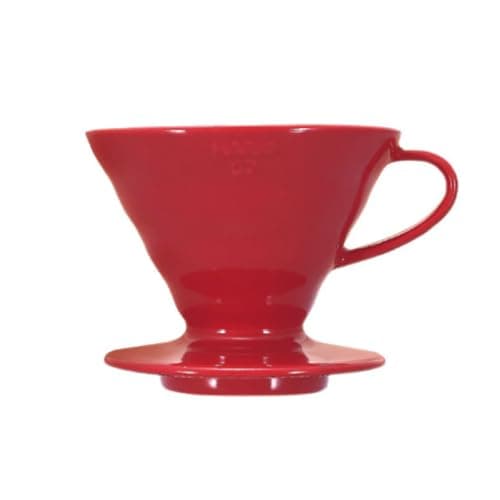 | One or two cups, and tasting what a coffee actually is | Pour-over | |
| 2 | 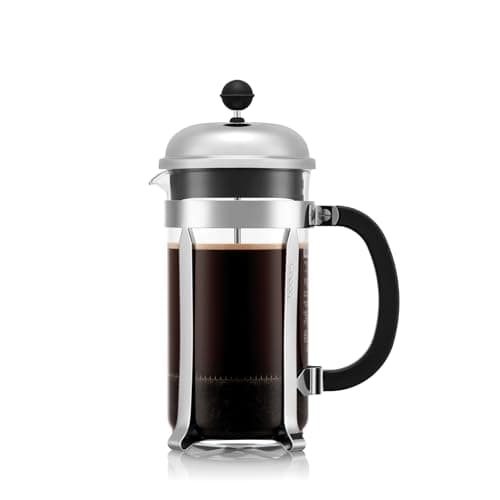 | Body over clarity, with almost nothing to learn | French press (immersion) | |
| 3 | 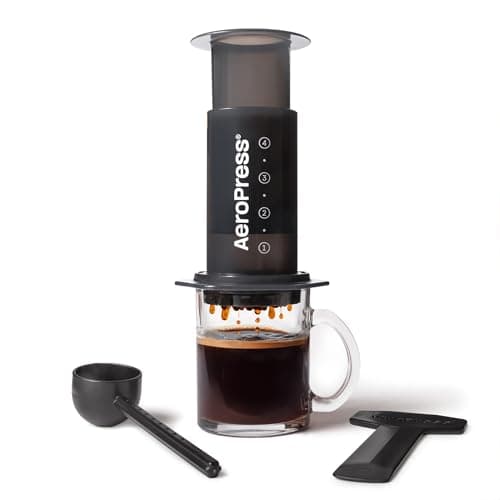 | One cup, quickly, with minimal cleanup | AeroPress (immersion plus pressure) | |
| 4 | 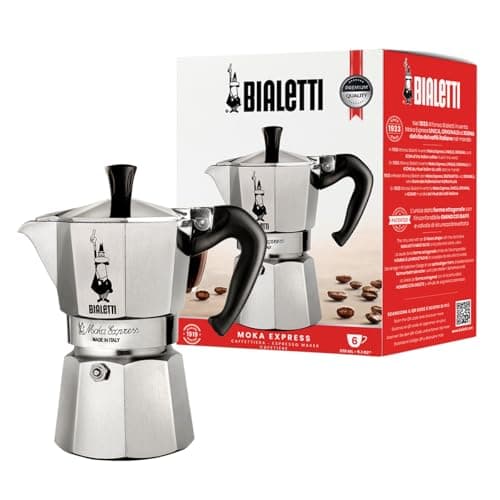 | A small, intense cup with no electricity and nothing to replace | Moka pot (stovetop pressure) | |
| 5 | 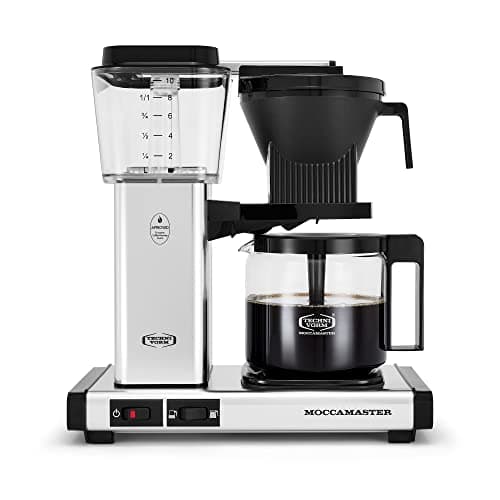 | A full pot, every morning, with no attention at all | Automatic drip | |
| 6 | 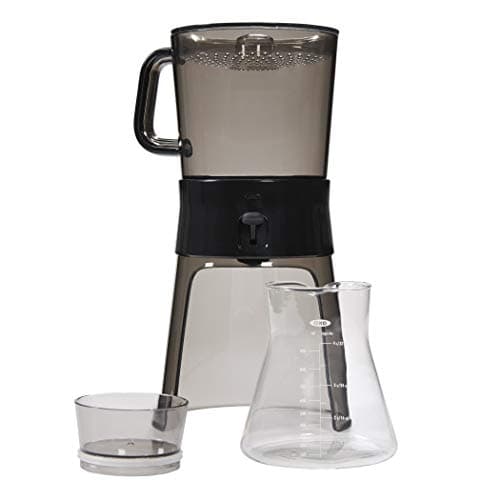 | Iced coffee, made ahead, in batches | Cold brew | |
| 7 | 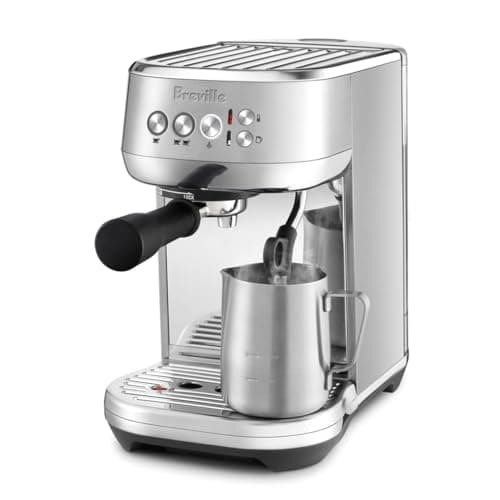 | Milk drinks, and small intense shots | Espresso |
1. Pour-over
Hario V60 Ceramic Dripper 02
Manual tier · The 60-degree cone dripper that defines modern pour-over.
Gravity through paper, with the flow rate entirely in your hands.
Pour-over is water falling through a bed of coffee under nothing but gravity, into a paper filter. No pressure, short contact, and the cleanest cup of any method here - paper traps both the oils and the finest particles, which is what makes a good pour-over taste transparent rather than heavy.
The V60's design decisions all serve that: a 60-degree cone, inner spiral ribs, and a single large hole at the bottom. The large hole is the important one, because it means the dripper is not controlling the flow rate - you are, through how fast you pour.
That is the method's whole character. It rewards attention and punishes inattention, and two people can get noticeably different cups from the same coffee and the same dripper.
Hario's own published recipe is given as multiples rather than grams: bloom with twice the coffee weight in water, then three pours of four times the coffee weight, finishing within three minutes. That works out to 1:14 - see our ratio chart for where that sits against the 1:15 to 1:17 most people use.
The honest cost: it is a per-cup method with a learning curve, and it genuinely needs a gooseneck kettle to pour properly. Without one you are fighting the equipment.
Specification
- Geometry
- 60-degree cone, single large hole
- Ribs
- Inner spiral ribs
- Capacity
- 1-4 cups
- Material
- Arita-yaki ceramic, made in Japan
- Size
- W140 x D120 x H102 mm
What it does well
- The single large hole hands flow control to you rather than the dripper
- Ceramic holds heat far better than plastic
- More published recipes exist for the V60 than for any other brewer
Where it gives ground
- Unforgiving: an uneven pour shows up in the cup
- Ceramic needs preheating and can chip
- Needs a gooseneck kettle to be worth owning
Skip it if
Skip it if you want coffee while half awake, or if you brew for more than two people. Both are automatic drip's job - see drip vs pour-over.
2. French press (immersion)
Bodum Chambord French Press
Budget tier · The classic 34 oz French press: borosilicate carafe in a chrome-plated steel frame.
Full immersion through a metal screen - the heaviest, most forgiving cup here.
Immersion is the opposite approach to pour-over: instead of water passing through coffee, the coffee sits in the water for a set time. That single change removes most of the technique, because the extraction is governed by a clock rather than by how you pour.
The filter does the rest. A stainless mesh screen passes the oils and some of the fine particles that paper would hold back, which is why French press coffee is heavier in the mouth and less transparent. Whether that is better is a preference, not a ranking.
The Chambord is 34 oz of borosilicate glass in a chrome-plated steel frame, made in Portugal, with the standard stainless mesh plunger. It serves three to four cups from one brew, which is the practical argument for it over any single-cup method.
Method, in full: coarse grind, hot water, wait about four minutes, push the plunger down slowly. There is nothing to dial in.
Two real costs. Coffee left in the press keeps extracting from the grounds under the screen, so it turns bitter if you do not decant it. And glass breaks - the stainless presses exist for exactly that reason.
Specification
- Capacity
- 34 oz, 3-4 cups
- Carafe
- Borosilicate glass
- Filter
- Stainless steel mesh plunger
- Frame
- Chrome-plated steel, made in Portugal
What it does well
- No paper, no capsules, no consumables at all
- Full-bodied cup that no paper filter can produce
- Every part is replaceable and cheap
Where it gives ground
- Metal mesh lets fines and oils through - that is the trade, not a defect
- Punishes an inconsistent grinder harder than any other brewer
- Glass carafe in a household with a tile floor
Skip it if
Skip it if you dislike sediment or want a clean cup. That is paper's job, and a press will never give it to you.
3. AeroPress (immersion plus pressure)
AeroPress Original
Manual tier · A hand-pressed immersion brewer using a paper or metal filter.
A short steep then a hand-pressed plunge through paper - fast, quiet, hard to get wrong.
The AeroPress sits between the two methods above: the coffee steeps like an immersion brew, then you push it through a paper filter with hand pressure. Not espresso pressure - a few tenths of a bar, from your arm - but enough to shorten the brew dramatically.
The paper filter means it lands closer to pour-over on clarity, while the steep gives it immersion's forgiveness. That combination is why it is the method people reach for when they want one good cup without thinking about it.
AeroPress publishes doses in both grams and scoops - "1 heaping Scoop or 16-18 grams" of medium ground coffee - and specifies water by the numbered lines on the chamber rather than by weight, so there is no ratio to memorize.
It is also the quietest and most portable real brewer here. No electricity, no noise, and the used puck pushes straight into a bin in one motion.
Limits worth naming: it makes one cup at a time, it is plastic and looks like lab equipment, and the sheer number of competing recipes online makes a simple method seem more complicated than it is.
Specification
- Capacity
- 10 oz, 1-3 cups
- Weight
- About 6.5 oz
- Filters
- Paper or metal mesh
What it does well
- Almost impossible to brew a bad cup with
- Forgiving of grinder inconsistency in a way pour-over is not
- Cleans up in about ten seconds
Where it gives ground
- Not espresso, whatever the marketing around it says
- One or two cups at a time
- Plunging takes real hand pressure
Skip it if
Skip it if you brew for a table. One cup per cycle is the design and no technique changes that - see AeroPress vs French press vs moka pot.
4. Moka pot (stovetop pressure)
Bialetti Moka Express
Budget tier · The octagonal aluminum stovetop pot that defines the category.
Steam pressure at roughly 1-2 bar - strong and concentrated, and not espresso.
The moka pot is the only method here driven by steam. Water in a sealed lower chamber is heated until the pressure pushes it up through the coffee basket into the top. That pressure reaches roughly 1 to 2 bar before the safety valve becomes the limit.
One to two bar is enough to force water through fine coffee quickly, which is why the result is concentrated and heavy. It is nowhere near the 9 bar that defines espresso, which is why a moka pot produces little or no crema no matter what you do.
That is the single most common disappointment with this method, and it is worth being plain about: nothing about grind or technique turns a moka pot into an espresso machine. The physics caps it.
What it does offer is near-zero running cost and near-zero failure modes. No paper, no capsules, no electronics - just a rubber gasket to replace occasionally. These routinely outlast the people who buy them.
The pot cannot brew less than its size: the boiler fills to just below the safety valve and the basket fills level, every time. Buying a large one for occasional guests leaves you with a pot you cannot use on a normal morning.
Specification
- Material
- Cast aluminum (a stainless line is also sold)
- Sizes
- 1 to 12 cup
- Cooktops
- Gas and electric; needs an adapter plate for induction
What it does well
- Sizes from 1 to 12 cup - by far the widest range in the category
- No paper, no capsules, no electronics, and almost nothing to break
- Parts and gaskets are stocked everywhere and cost very little
Where it gives ground
- Aluminum will not work on an induction cooktop without a separate adapter
- You must fill the basket and boiler properly, so a big pot cannot make a small brew
- Produces little or no crema - it is not espresso
Skip it if
Skip it if your cooktop is induction - cast aluminum will not heat on one without an adapter. See the Moka Express review.
5. Automatic drip
Technivorm Moccamaster KBGV Select
Upper-mid tier · A hand-assembled drip brewer certified by the SCA, with a copper heating element.
The pour-over principle, done by a machine that actually reaches brewing temperature.
Automatic drip is mechanically the same idea as pour-over - gravity, paper, no pressure - with the pouring handed to a machine. That makes it the only method here that produces several cups while you do something else, which is why it is the most-owned brewer in the country.
Its reputation is poor for one specific reason: most drip machines never get hot enough. The brewing window is roughly 195 to 205 F, and a machine that brews below it produces thin, sour coffee from good beans. That is a hardware failure, not a method failure.
The Moccamaster is the counterexample and the reason it is the pick here. It is an SCA Certified Home Brewer measured holding 196 to 205 F through the cycle, brewing 1.25 L in four to six minutes, hand-assembled with every part sold individually.
If you have decided drip coffee is weak and disappointing, the honest diagnosis is usually the machine rather than the method - see the best coffee makers for the certified field.
The costs here are money and control. It is expensive for a drip machine, it has no timer at all, and the method gives you no say in how the water is poured.
Specification
- Certification
- SCA Certified Home Brewer
- Brew temperature
- 196-205 F
- Capacity
- 1.25 L / 40 oz / 10 cups
- Brew time
- 4-6 minutes for a full carafe
- Build
- Hand-assembled in the Netherlands, metal and glass
What it does well
- Reaches and holds real brewing temperature, which most drip machines do not
- Every part is replaceable - these get repaired, not landfilled
- Half-carafe setting adjusts saturation time rather than just volume
Where it gives ground
- No timer, no programming, no app
- Tall enough to be awkward under a low cabinet
- Costs more than several espresso machines
Skip it if
Skip it if you want coffee waiting when you come downstairs - it has no clock. Programmable certified machines exist.
6. Cold brew
OXO Good Grips Cold Brew Coffee Maker
Mid tier · A concentrate cold brewer with a rainmaker lid, a brew-release switch and a glass carafe.
Twelve to twenty-four hours at room temperature - low acid, high patience.
Cold brew changes the one variable the other methods hold constant: temperature. Instead of hot water for minutes, it uses room-temperature water for 12 to 24 hours.
Low temperature extracts the compounds in coffee at different rates, which is why cold brew tastes sweeter and markedly less acidic than the same beans brewed hot. People who find coffee harsh often find cold brew drinkable, and that is a real chemical difference rather than a marketing one.
This brewer makes concentrate rather than ready-to-drink: up to 32 oz from 10 oz of coarse coffee, which OXO puts at up to 14 drinks. A rainmaker lid distributes water evenly over the bed and a switch drains it without straining through cloth.
The practical appeal is that the work happens the night before. In the morning there is nothing to do but pour and dilute, which no hot method can match.
The costs are time and coffee. You wait overnight, you use a lot of grounds for the volume, and concentrate has to be diluted for every glass - it is not pour-and-drink.
Specification
- Type
- Concentrate
- Yield
- Up to 32 oz of concentrate from 10 oz of coarse coffee - up to 14 drinks
- Steep time
- 12-24 hours
- Carafe
- Borosilicate glass with measurement markings
What it does well
- The rainmaker top distributes water evenly for balanced extraction
- A brew-release switch drains the concentrate with one touch - no straining through cloth
- A smaller batch than the Toddy, which suits less frequent cold brew drinkers
Where it gives ground
- Concentrate means diluting every glass - it is not pour-and-drink
- Up to 32 oz of concentrate is a smaller batch than a Toddy's
- More parts to wash than a single-vessel brewer
Skip it if
Skip it if you drink hot coffee exclusively. Cold brew can be heated, but that is not what it is for - see cold brew vs iced coffee.
7. Espresso
Breville Bambino Plus
Entry tier · The Bambino with automatic milk texturing added.
Nine bar through a fine, compacted puck in about 25 seconds - the most concentrated method there is.
Espresso is the extreme end of every variable on this page: the finest grind, the shortest contact time, and by far the most pressure. Nine bar is roughly nine times atmospheric pressure, forced through a compacted bed in around 25 to 30 seconds.
That pressure is what emulsifies the coffee's oils into the liquid, and that emulsion is crema. No other method here reaches it - which is why a moka pot at 1 to 2 bar produces a strong cup but not an espresso.
It is also the only method that is genuinely unforgiving. Grind, dose, distribution and tamp all change the shot, and they interact, so dialing in is a real skill rather than a recipe. A machine without a capable grinder beside it cannot produce good espresso at any price.
The Bambino Plus is the pick for someone arriving at this method rather than committed to it: a 54 mm portafilter at an 18 g dose, a ThermoJet ready in 3 seconds, a 15 bar pump running 9 bar extraction, and automatic milk texturing that gets usable microfoam without practice.
The honest costs: it needs a separate grinder, the automation that makes it approachable is the first thing an enthusiast outgrows, and espresso asks more of you per cup than anything else here.
Specification
- Portafilter
- 54 mm stainless, 18 g dose
- Heating
- ThermoJet, ready in 3 seconds
- Pump
- 15 bar Italian pump, 9 bar extraction
- Milk
- Automatic texturing, 16 fl oz / 480 ml jug
- Footprint
- 11.9 x 7.4 x 14.3 in
What it does well
- Automatic milk texturing gets a usable microfoam without practice
- Same three-second heat-up as the standard Bambino
- Fits a narrow counter with a grinder beside it
Where it gives ground
- You are paying for the milk automation, not better espresso
- Still no grinder
- Auto-steam removes the control an enthusiast eventually wants
Skip it if
Skip it if you drink large mugs of black coffee. You would be buying complexity to make a drink you do not order - see coffee vs espresso.
The methods side by side
Scroll the table sideways to see every column.
Clean or heavy: the choice most people are actually making
If you strip out everything else, the question that decides which method suits you is what you want the coffee to feel like.
Paper filters hold back the coffee's oils and its finest particles. The cup that comes out is lighter, clearer and more tea-like, and the origin character of a good bean is easier to taste. Pour-over, AeroPress and drip all land here.
Metal filters let the oils and some fines through. The cup is heavier, rounder and more opaque, and it coats the mouth. French press and espresso land here, by very different routes.
Neither is better. But a reader who has only ever had French press coffee and found pour-over thin, or vice versa, is usually reacting to the filter rather than to the beans or the brewer - see the best reusable coffee filters for what changes when you swap one.
Which method suits how you drink
- One cup, and you enjoy the ritual: pour-over. It is the method that rewards paying attention.
- One cup, and you do not: AeroPress. Shortest, quietest, least cleanup.
- A pot for the household: automatic drip, as long as the machine is certified to reach temperature.
- Several cups and you like body: French press. Nothing to learn, nothing to dial.
- Iced coffee you drink daily: cold brew, made the night before in batches.
- Milk drinks: espresso, and budget for the grinder as part of the purchase.
- Camping or a power cut: moka pot or AeroPress - neither needs electricity.
Where to go deeper
This page is the overview. The site has the head-to-heads for every pairing people actually weigh up: drip vs pour-over, AeroPress vs French press vs moka pot, coffee vs espresso and moka pot vs espresso machine.
For the manual methods specifically, the best manual brewers ranks them against each other rather than explaining how they differ, which is the natural next page from here.